Daily stories of different kebabs
A glimpse into three different döner buffets in Berlin and how they are connected to the city with their own style.
Trailer
Döner Kebab Haus
Meraba Donermann
Vamos Veganos
Fiona
In this remarkable journey, Planet Food travels the world to see how control of the spice trails, over the last five millennia, has made great cities and destroyed ancient civilizations. Our guides travel from the Molucca Islands of Indonesia, the original home of cloves and nutmeg, to the Indian province of Kerala, with its native pepper and cardamom. Additional stops include Venice, Beirut, Cairo and other significant places in the spice trade that created and toppled empires.
Morgan Spurlock subjects himself to a diet based only on McDonald's fast food three times a day for thirty days without exercising to try to prove why so many Americans are fat or obese. He submits himself to a complete check-up by three doctors, comparing his weight along the way, resulting in a scary conclusion.
Malaysia's multiculturalism is unrivaled throughout Southeast Asia and is reflected in its cuisine. Roving foodie Merrilees Parker begins her journey on the Malaysian peninsula with the native Orang Asli people of Kelantan She then heads off to the stunning Islamic East coast to cook a rich curry using freshly caught mackerel. In the ancient spice capital of Melaka, Merrilees cooks up a storm with fiery Laksa soup in the style of the Nyonya. In the Cameron Highlands, 5,000 feet above sea level, there is a notable English influence. The island of Penang is Merilees' next stop then she visits the capital, Kuala Lumpur, one of the fastest growing cities in Southeast Asia.
In this special edition of Globe Trekker Chinatown, Lavinia Tan, Justine Shapiro and Megan McCormick travel worldwide to explore the magic and mystery of Chinatowns across the globe. Lavinia Tan begins the journey in Malaysia and Singapore where overseas traders led the earliest migrations of Chinese people. The journey continues from there to the United States, where Justine Shapiro visits San Francisco. Megan McCormick explores New York s Lower East Side, home to the largest Chinatown in the Western Hemisphere. After a short trip to London s Soho district, Lavinia Tan ends this journey with a visit to Hong Kong exploring the world famous film industry and the 21st century migration of Chinese back to their homeland.
An organic farmer in Maine sets out to transform the prison food system. Seeds of Change captures the intersecting stories of life-long farmer Mark McBrine and several incarcerated men as they harvest their own meals from a five-acre prison garden unlike any other.
We all love food. As a society, we devour countless cooking shows, culinary magazines and foodie blogs. So how could we possibly be throwing nearly 50% of it in the trash? Filmmakers and food lovers Jen and Grant dive into the issue of waste from farm, through retail, all the way to the back of their own fridge. After catching a glimpse of the billions of dollars of good food that is tossed each year in North America, they pledge to quit grocery shopping and survive only on discarded food. What they find is truly shocking.
For centuries, the ports of Lebanon dominated the trade routes between Europe, the Middle East, China and India. In this documentary, our intrepid gastronaut Merrilees Parker finds a world of heavily spiced lamb, cooling salads, deliciously strong wines from and sweet pastries filled with pistachios and honey.
From New York City to the farmlands of the Midwest, there are 50,000 Chinese restaurants in the U.S., yet one dish in particular has conquered the American culinary landscape with a force befitting its military moniker—“General Tso’s Chicken.” But who was General Tso and how did this dish become so ubiquitous? Ian Cheney’s delightfully insightful documentary charts the history of Chinese Americans through the surprising origins of this sticky, sweet, just-spicy-enough dish that we’ve adopted as our own.
Sweden and Denmark are as much renowned for their Viking warriors as they for the Midnight Sun and, long, cold, dark winters. From the dregs of Viking feasts, to the finest restaurants in Copenhagen, these 2 countries have evolved a totally unique cuisine. In this exciting documentary with roving chef Merrilees Parker, she travels to Scandinavia to find out if there's more on the menu than smorgasbord and smelly fish. In Sweden she enjoys the Midsummer festival, tries some aquavit and samples some sausages. Across the border she tries Danish pastry, tours the Carlsberg factory and watches herring being fermented and smoked.
Filmmaker Connor Luke Simpson explores the underground-and often misunderstood-subculture known as feederism. A community where the fatter you are, the sexier you are.
A surrealist home movie, filmed by Luis Buñuel in Cadaqués in 1930, focusing on Salvador Dalí's father and his wife.
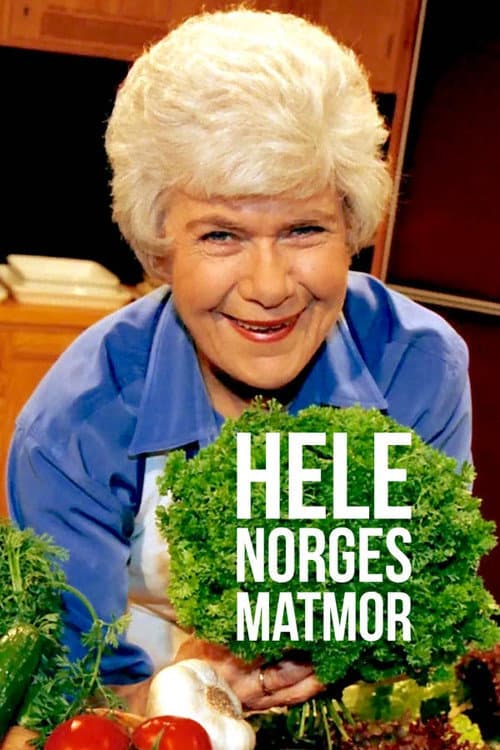
Norway’s beloved home economics teacher and cooking pioneer Ingrid Espelid Hovig charmed viewers for decades, showing everyone how to cook — from everyday meals to the perfect crispy Christmas pork rind. A forty-year career celebrated through classic clips and memorable moments.
Roving foodies Angela May and Bobby Chinn embark on two culinary journeys across Asia. Angela travels to the western coast of India to sample the cuisine and culture of the thriving melting pot that is Goa. Meanwhile, Bobby travels to Manila where he discovers a passionate and humorous people, and their love of food.
Sweat, sun, rain, tears, and green thumbs are all part of the challenge for a young couple attempting to become full-time organic farmers in this illuminating doc.
“Food Relovution: What We Eat Can Make A Difference” is an eye-opening and compelling feature documentary that examines the consequences of the meat culture as concerns grow about health, world hunger, animal welfare and the environmental cost of livestock production. It aims to show how these global issues affect everyone and are interrelated, and how making our food choices with a sense of awareness, knowing what we are buying and what we are eating is the first fundamental step towards a better world.
A documentary that exposes the shocking truths behind industrial food production and food wastage, focusing on fishing, livestock and crop farming. A must-see for anyone interested in the true cost of the food on their plate.
In Ramen Heads, Osamu Tomita, Japan's reigning king of ramen, takes us deep into his world, revealing every single step of his obsessive approach to creating the perfect soup and noodles, and his relentless search for the highest-quality ingredients.
With nutritionally-depleted foods, chemical additives and our tendency to rely upon pharmaceutical drugs to treat what's wrong with our malnourished bodies, it's no wonder that modern society is getting sicker. Food Matters sets about uncovering the trillion dollar worldwide sickness industry and gives people some scientifically verifiable solutions for curing disease naturally.
Savour the top gastronomic delights that every diner should sample in their lifetime, as voted for by members of the public. It's a mouth-watering journey through childhood favourites, exotic dishes and bizarre but delicious fare.
In the year Queen Elizabeth marks her 70th on the throne, Fortnum & Mason has challenged home bakers to create a tart, cake, or pudding to honor her legacy. Seven judges headed by Dame Mary Berry invite the final five bakers to London where over one extraordinary day they bake their cakes, tarts, and trifles – hoping it will be the winning recipe.