Footage from summer of 2018 that explores the passing of time regarding the little things in life.
No Cast found.
Return to 'burn' only to find out you're already in that urn.
No overview available.
Metzer 58 play Punk. They were founded in a meet-up at Lebenshilfe Münster, an NGO that provides housing and other services to people with disabilities. The band consists of disabled people and able-bodied people. That doesn't really affect the topic of their songs or the amount of chaos and excess at their gigs, though. In this documentary, director Tobias Stiegler follows the band on tour and paints an intriguing portrait of Metzer 58
The discovery of a human torso thrown into a waterway, leads the viewer to observe the work of modern criminology and the task of special agents to track and record the psychopath's mentality through the elucidation of techniques present in the reality of the police investigation.
A study of the psychology of a champion ski-flyer, whose full-time occupation is carpentry.
Portrait documentary of the Swedish comedic actor Thor Modéen full of clips from his greatest roles.
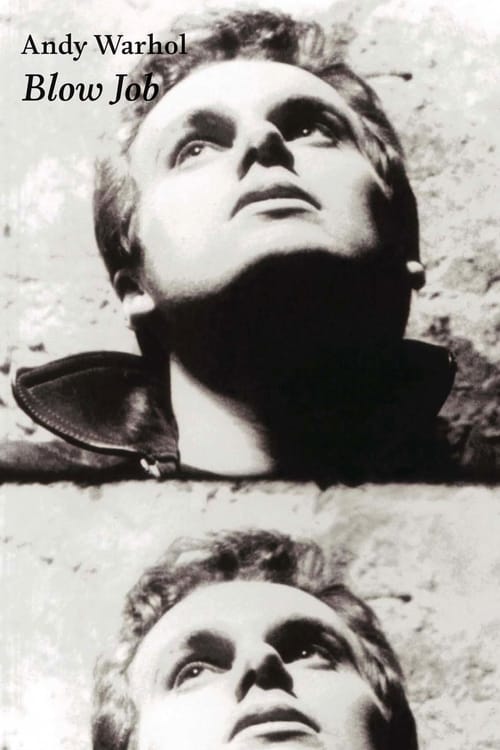
Andy Warhol directs a single 35-minute shot of a man's face to capture his facial expressions as he receives the sexual act depicted in the title.
Your Ecstatic Self is a conversation unfolding in a car with Sajid, the artist’s brother. As the journey progresses Sajid discusses his engagement with the philosophy and practice of Tantra, having spent the majority of his 44 years as a strict Sunni Pakistani Muslim. Placing the idiosyncrasies of western fetishism towards eastern philosophical traditions alongside cultural orthodoxies and ancestral knowledge, Your Ecstatic Self takes up multifaceted expressions of desire, intimacy and sexual agency.
Acting as part ode and through a series of interpretations, Claudette’s Star depicts young artists considering with sheer wonder who is given a voice.
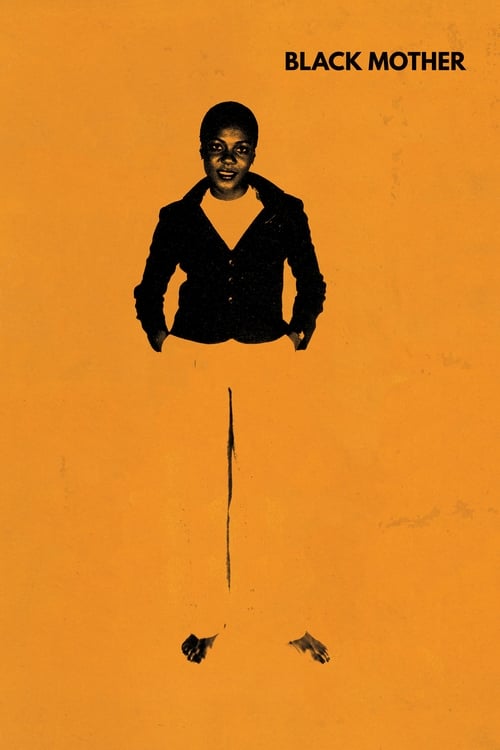
Part film, part baptism, in BLACK MOTHER director Khalik Allah brings us on a spiritual journey through Jamaica. Soaking up its bustling metropolises and tranquil countryside, Allah introduces us to a succession of vividly rendered souls who call this island home. Their candid testimonies create a polyphonic symphony, set against a visual prayer of indelible portraiture. Thoroughly immersed between the sacred and profane, BLACK MOTHER channels rebellion and reverence into a deeply personal ode informed by Jamaica’s turbulent history but existing in the urgent present.
A sampling of forty-nine fragments from Frampton's catalogue of 'actualities', the films from STRAITS OF MAGELLAN: "DRAFTS AND FRAGMENTS" are all silent and unedited. Several invoke, directly, the work of the Lumieres, as in Frampton's reworking of DEMOLITION D'UN MUR (1895) in which a dilapidated farm silo is demolished in place of the Lumieres' wall. He makes reference to his own work and plays homage to the work of contemporaries. A complex range of formal issues are raised in other fragments. Finally, Frampton offers a number of analogues for the act of filming and cinematic seeing that includes a series of appropriated 'lenses' ( a stone portal, a wooden silo) and a set of 'screens' a pool of water, curtains, a dusty window).
An auto-documentary about a disenfranchised Everyman and his struggle to re-integrate himself into society. He fails and turns to crime.
A homage to Andrei Tarkovski made for the Spanish edition of the Chris Marker movie 'Une journée dans la vie d’Andrei Arsenevich'.
A group of friends share a cinematographical experience in a particular region of Spain, Galicia. The goal is simple: to film what they like, without preconceived ideas about what should be filmed. They want their images to reflect the feelings that unite them with the people they find along the way.
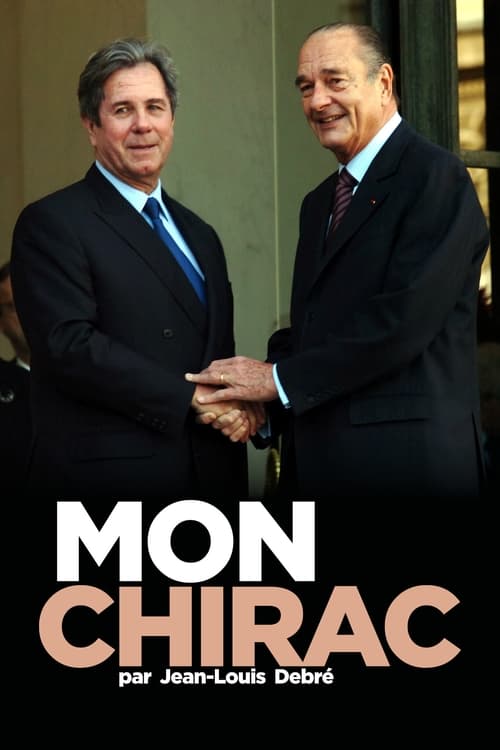
At the close of Jacques Chirac's life, politician Jean-Louis Debré has wished to make a film to celebrate his friend, to tell the story of their friendship and professional understanding, and to make an intimate portrait of the former President of France through the accounts of a few very close friends. Thanks to Jean-Louis Debré's presence, Claude Chirac and some of Jacques Chirac's closest friends, famous or unknown, agreed to talk to the camera, sometimes for the first time, to evoke their untold-before memories and tell about the moments that bonded the two men for a lifetime.
Two women in a living room: smoking, playing cards, listening to the radio. As often in Dwoskin’s films, the use of masks, make-up and costumes allows the characters to playfully transform themselves. Shot in colour film, C-film exuberates swinging London energy. In the second part of the film, the women appear to be watching the rushes of the film on an editing table. ”We are making a movie” we hear them say. As Dwoskin points out, “C-film asks how much is acting acted”, an ongoing question in Dwoskin’s cinema. Produced by Alan Power, with Esther Anderson & Sally Geeson.
An experimental and poetic portrait of a woman.
Anything that complies with standards is a wasted effort to Vlado Kristl: 'I believe in only doing those things that decompose and tear conventional systems apart.' Kristl's métier are borderlines. His paintings and animated films are interspersed with clear dividing lines, only for him to blur and mess them up. His graphics are scribbled over and over again until the whole surface becomes black. His oil paintings, unless someone buys them in time, are painted over and over again. He destroys any form that begins to grow. -Thomas Brandlmeier
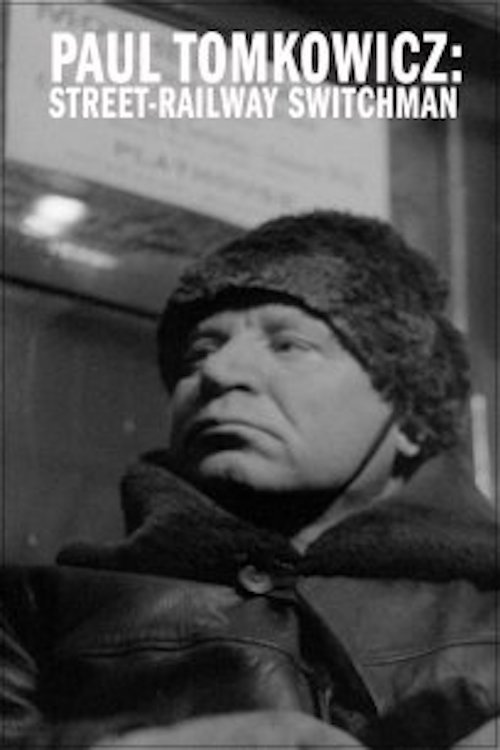
In this film, Paul Tomkowicz, Polish-born Canadian, talks about his job and his life in Canada. He compares his new life in the city of Winnipeg to the life he knew in Poland, marvelling at the freedom Canadians enjoy. In winter the rail-switches on streetcar tracks in Winnipeg froze and jammed with freezing mud and snow. Keeping them clean, whatever the weather, was the job of the switchman.
No Trailers found.