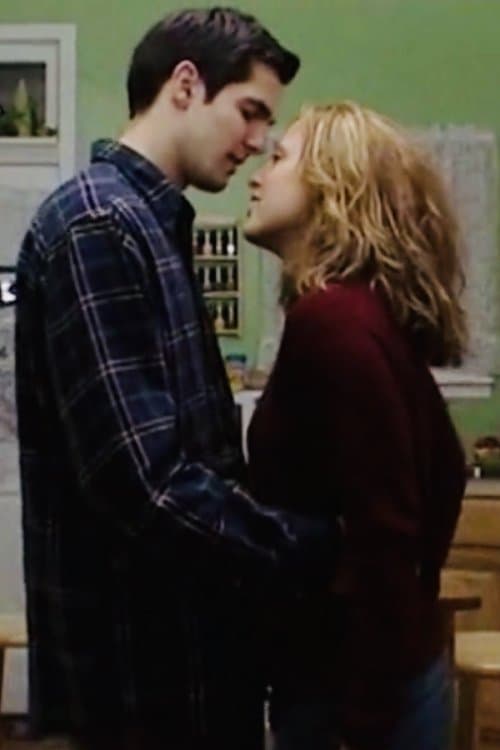
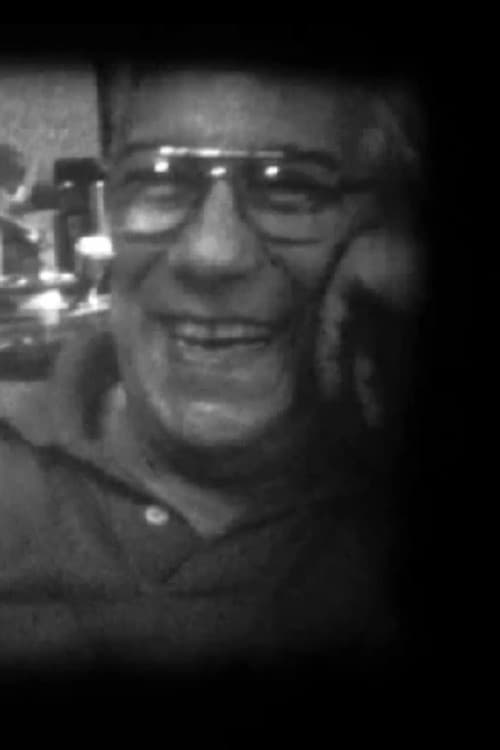
An auto-documentary about a disenfranchised Everyman and his struggle to re-integrate himself into society. He fails and turns to crime.
No Trailers found.
Joe Gibbons
Someone born in the 1990s, who never actually lived in 1990s Istanbul, can only long for what they’ve seen in old videos. But how do you yearn for moments you never experienced... or why do you? In this nostalgic Istanbul we don’t remember, a digital passage unfolds from the European side to the Asian side, told only through the footage recorded on the cameras of those who once lived it.
How many movies have you seen where at the end the main character wakes up, causing he and the audience to simultaneously realize that everything they witnessed beforehand was "just a dream?" This film takes that principal but instead of deceiving, the story invites you to watch the main characters dream away. As a result, "True Dreams" takes the dream sequence to a whole new level: it lets its audience in on the joke, while they watch the two main characters run around unaware of the reality/fantasy of their surroundings. This film can be viewed via Vimeo at https://vimeo.com/132642294 (password: truedreams)
The documentary is a portrait of an artist and a portrait of a deadly disease. Lene Marie Fossen was a gifted photographer who suffered from severe anorexia. Self Portrait is a film about the power of art and survival, but it also raises important questions about what treatment one who suffers from severe anorexia needs.
A vehicle of consciousness navigates the vertiginous labyrinths of San Francisco. ROMAN CHARIOT was filmed over several months with a spy camera mounted on filmmaker David Sherman's son's baby carriage.
Based on the true childhood experiences of Noah Baumbach and his brother, The Squid and the Whale tells the touching story of two young boys dealing with their parents' divorce in Brooklyn in the 1980s.
Disillusioned English banker's wife Mary meets troubled Italian immigrant Bruno, with whom she is captivated by and they set off on a voyage on which they meet a variety of society's dropouts.
Set in Charlottesville during the early 1990s, "Pride" follows an aspiring writer as she finalises stories for the latest issue of "Pride", a student run newspaper at the University of Virginia. Over a hectic two-day period, she puts the finishing touches on the upcoming issue. Despite the looming deadline, she moves with a calm confidence.
Cinema and painting establish a fluid dialogue and begins with introspection in the themes and forms of the plastic work of a woman tormented by the elongated specters, originating from her obsessions and nightmares.
In the present work, the artists appears lying on his back, his eyes mostly closed, dreamingly listening to a walkman that plays, a recording of 'The Best of Lou Reed and the Velvet Underground'. The artist can hear the music through his earphones, but as viewers we are only privy to the sound of his voice that whispers the melody. As we listen to the hypnotic interpretion of the familiar songs - as emblematic for pop music history as 'Psycho' is for film - we are forced to mentally 'reconstruct' the remaining orchestration, instrumentation and vocals. We must attempt to reassemble something we already know to be a fact by negotiating the sticky mess of interpretation, meaning, and memory.
This is the portrait of Cesar, the heir to a tradition of neon lights that ruled in Buenos Aires' marquees and now resists obsolescence.
Los Años is a meditation about time, memory and mortality through our representation in images and our lives' rituals. This short highlights our abstract way of understanding time and collective experiences.
Mix of arthouse, comedy, horror. A man who has committed numerous crimes rescues a dog. An unique experimental movie in which a dog who died in a traffic accident after being tossed around by humans is reborn as a heretic and attempts revenge on humans. Under the guidance of the devil, he is reborn as a scarecrow to bring the Blood Festival. A 35mm independent film by the director who loves to make movies, but is not interested in professional film directors. The director who was shocked to see a picture of a dog abused and abandoned by humans, devoted his passion to this unique work that took seven years to complete.
This is the filmic portrait of Daniel Vicinos, one of the most characteristic figures of Argentina's film industry: inventor, technician, collector, ironwork lover, but above all, in love with cinema.
Film loops with overlapping chromatic density and textures achieved with photochemical development experiments.
Letraset typeset intervention and editing on the projection copy of the film Cuesta Abajo, by Louis J. Gasnier, 1934.
1984, Sandusky, Ohio. A naive 17-year-old navigates heartbreak and self-expression as he explores his sexuality.
A 90-minute special reuniting the main cast of the American sitcom, "The Golden Girls", where they share their favorite moments from the show, behind-the-scenes footage, and plenty of laughs
Filmmakers use archival footage and animation to explore the culture surrounding nuclear weapons, the fascination they inspire and the perverse appeal they still exert.
Found footage anti-war film comprising film documents of the Austro-Hungarian and Italian army on the Alpine front, and from first generation picture material by war-film pioneer Luca Comerio.
They say that when they give you a name, they also assign you a destiny. The director of this documentary inherited hers from an aunt who died very young and whom she did not know. Through an 8mm film from 1962 and interviews with those who knew her, she will try to reveal her secrets and recognize herself a little more.