Return to 'burn' only to find out you're already in that urn.
No Cast found.
Trailer
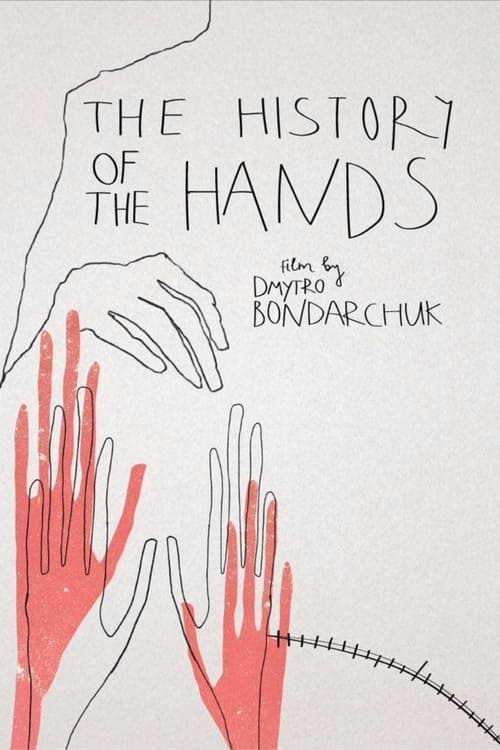
The film is a study of nature and significance of the hands in cinema. Besides review of movements and actions, which creates an independent story, it reveals interactions and interdependence of cinematic traditions of various authors, countries and periods
On the island of Tanna, a part of Vanuatu, an archipelago in Melanesia, strange rites are enacted and time passes slowly while the inhabitants await the return of the mysterious John.
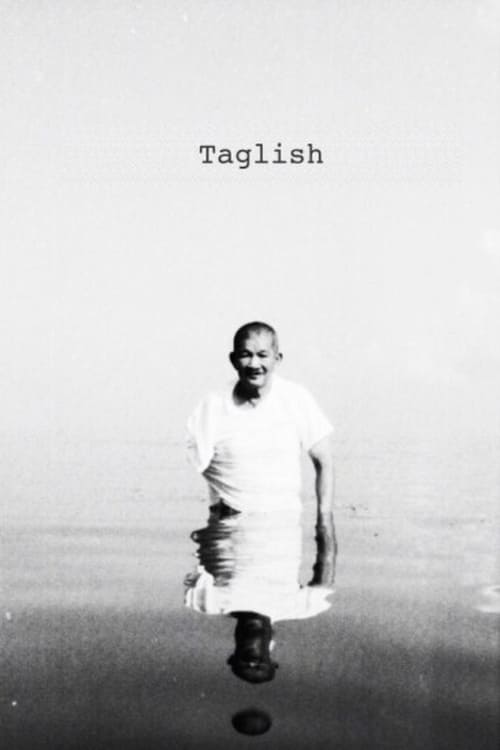
At first, there was Tagalog, Gym Lumbera’s short and, to his mind, unfinished narrative about the infidelity that comes between a husband and wife in their twilight years, shot on film and reflecting his own real-life infidelity.. And then there was a storm, a real storm and not a metaphorical one, that flooded his house and submerged, and subsequently damaged, the only copy of Tagalog. This damaged version, entitled English, became the missing piece that completed the film. The new work is named after Taglish, the bastard hybrid, some say corruption, of Tagalog and English, and has become a meditation on love and language and the ways in which we betray and destroy them.
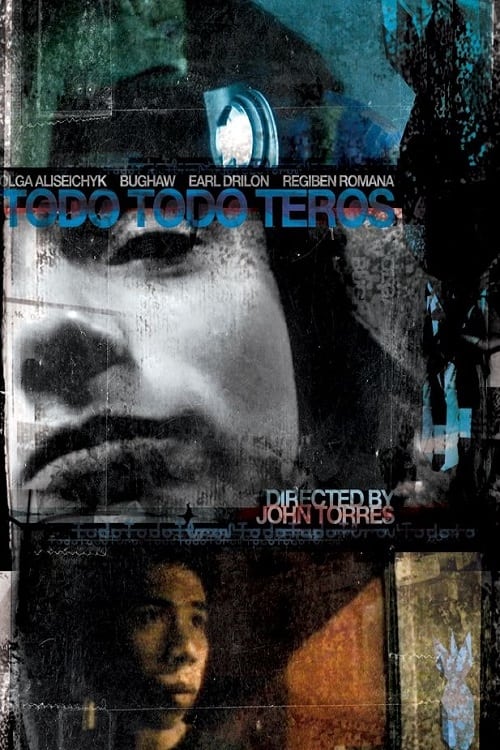
Basically an artist is also a terrorist, the protagonist thinks in an unguarded moment. And if he is a terrorist after all, then he might just as well be one. Not an instant product, but an experimental feature in which diary material is brought together to form an intriguing puzzle.
Sarah is a debt collector who lives among the inhabitants of the village of Guimbal on the island of Panay. She wants to find the young man who appeared to her in a dream and goes to the island of Negros. Here, as she interacts with the inhabitants, Sarah continues her search, gathering memories of life and war, dreams, myths, legends, songs and stories that she takes part in and at times revolve around her. She is the daughter of an ancient mermaid, a revolutionary, a primordial element, a virgin who was kidnapped and hidden away from the sunlight. “The film is a retelling of fragments of the American occupation. Dialogue, shot in the Hiligaynon language, is not translated but used as a tonal guide and a tool for narration. Using unscripted scenes shot where the main character was asked to merely interact with the villagers, I discard dialogue and draw meaning from peoples’ faces, voices, and actions, weaving an entirely different story through the use of subtitles and inter-titles.”
"Mapang-akit" is an offshoot of a documentary project made with an Icelandic filmmaker and uses the outtakes from the Hudas Hudas festival in Antique, where a community bonds over a large effigy of Judas Iscariot during Holy Week. Amidst it is a found story of a man who returns home to his death after pursuing a woman in a neighboring village.
The collective life of the generation born as Jurij Gagarin became the first man in space. Vitaly Mansky has woven together a fictional biography – taken from over 5.000 hours of film material, and 20.000 still pictures made for home use. A moving document of the fictional, but nonetheless true life of the generation who grew up in this time of huge change and upheaval.
Colossal explores the complexities of grief and the process of grieving as understood through the myth of a Man as he ventures through shifting landscapes ruminating.
An experimental, no-dialogue short in which a man comes literally out of a closet, only to be held in bondage by a woman. She finally puts him back into the closet.
This documentary aims to register this unknown side of James Joyce: His Greek Notebooks. Trieste. Bloomsday, 2013. Dance in slow motion, accompanied by text. By deconstructing the body, we turn it into a memory: of the body, of life, of texts. The biographical references to Joyce and Mando Aravantinou, combined with the diagonal slicing of the image, cancel the realism of the landscape, including that of the Narrator’s space/study. As a culmination, Joyce’s letter “A request for a loan in Greek” functions as a timely denunciation. Various routes through cities, such as Trieste, London, New York, and Athens; languages such as Greek and English. In addition to the primal myth of Ulysses, there is another issue: Greek is “the language of the subject of Ulysses”
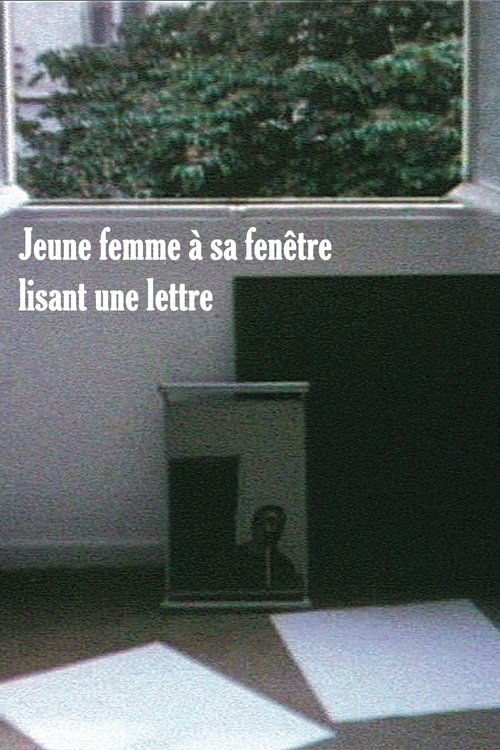
Jean-Claude Rousseau's Jeune femme à sa fenêtre lisant une lettre is not only his first medium-length film, but a chance to discover this filmmaker whom Jean-Marie Straub has called, along with Frans Van de Staak and Peter Nestler, the greatest working in Europe. With this newly restored print there is also a possibility to discover the relationship between Rousseau's art of filming and Jan Vermeer's famous painting. As Prosper Hillairet wrote in 1988, four years after Rousseau had finished Jeune femme ... (for the first time as we know today): «Without adopting the usual systematic spirit and form of cinéma structurel, Rousseau presents us with simple images and leaves it at that. Keeps the image in hand. A minimalist and ascetic expression of cinema: a shot that lasts.»
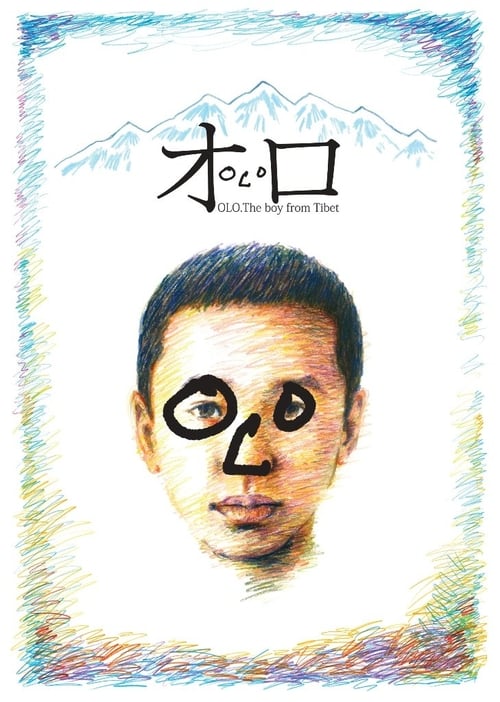
A 6-year-old Tibetan boy leaves his family and flees to a refugee camp in northern India.
An experimental film from Jirí Lehovec, mixing the sound process with animated rhythms.
'It was in San Francisco at a punk festival. I was already high and the air was so thick in the rooms that you could cut it with a knife. I had a photograph camera with me; I stood in a corner of the entrance hall and took 36 pictures on slide film. At home I put the slides into a slide projector. I took out the lens and filmed the slides by filming directly from the projector - using single frames according to a certain plan.'
A feature length autobiographical film showcasing the life story of Melody Contreras-Williams, famed Lyric Video Creator, Artist, and DJ.
One of Han Ok-hee’s renowned pieces called The Hole uses the flicker, oblique angles, the cross-cutting of reality and fantasy to express inner entrapment and the desire for liberation. Han Ok-hee’s The Hole, The Rope and Untitled not only experimented with cinematic forms of expression, but also played an important role in the protest against forms of expression in experimental films and the artistic protest against the social suppression and censorship in 1970s Korea. (Art Cinema OFFoff)
The film contains the despair of an artist’s desire for creation on ruthless censorship, rebel, and anxiety in the mid-70s when it was politically and socially depressed.
Clouds 1969 by the British filmmaker Peter Gidal is a film comprised of ten minutes of looped footage of the sky, shot with a handheld camera using a zoom to achieve close-up images. Aside from the amorphous shapes of the clouds, the only forms to appear in the film are an aeroplane flying overhead and the side of a building, and these only as fleeting glimpses. The formless image of the sky and the repetition of the footage on a loop prevent any clear narrative development within the film. The minimal soundtrack consists of a sustained oscillating sine wave, consistently audible throughout the film without progression or climax. The work is shown as a projection and was not produced in an edition. The subject of the film can be said to be the material qualities of film itself: the grain, the light, the shadow and inconsistencies in the print.
A dark take on media manipulation and political situation in Malaysia. The idea is to convey how normal citizens even though sometimes they know what they read and heard are absurd and not right but still with not much options to react but to accept them in order to maintain their livelihood. And at the same time powerful figures whom understands the mentality of the citizens continues to drives their ridiculous and absurd ideas and opinions to the mass.
Trite, closed memories flagrantly bleed into profuse openings mixed & held together by retaliatory colorations & obfuscations.