An experimental short film from Mi-sen Wu.
No Trailers found.
No Cast found.
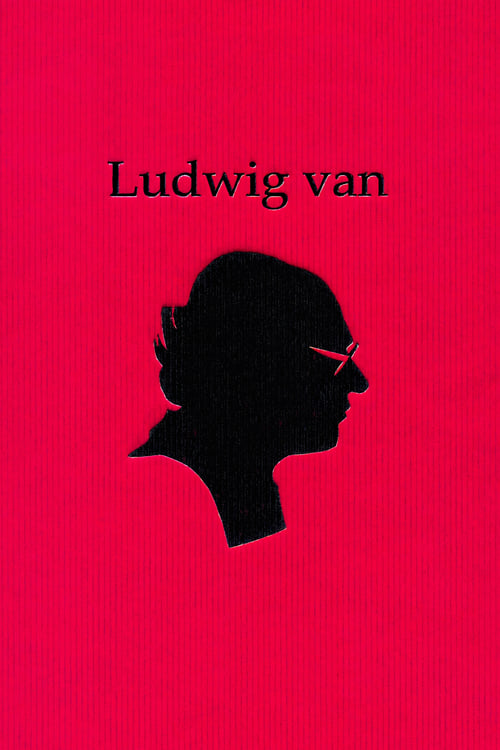
An odyssey through Beethoven’s lasting presence and influence in our modern world – viewed through the eyes of the composer himself.
Produced by WGBH-TV in Boston, the Medium Is the Medium is one of the earliest and most prescient examples of the collaboration between public television and the emerging field of video art in the U.S. WGBH commissioned artists — Allan Kaprow, Nam June Paik, Otto Piene, James Seawright, Thomas Tadlock and Aldo Tambellini — to create original works for broadcast television. Their works explored the parameters of the new medium, from image processing and interactivity to video dance and sculpture.
Canadian Pacific I is made up of a series of slowly dissolved shots done from the same framing over several months. The camera frames a window with a railway yard in the foreground, a bay in the space behind it, and misty mountains in the extreme distance. Trains occasionally pass by in the foreground. Huge ships move across the bay. Blue mists hover over the mountain heads.
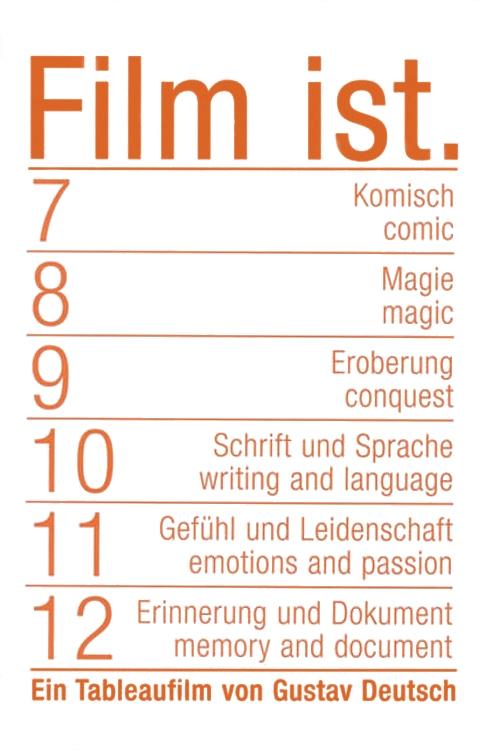
The second half of Gustav Deutsch's experimental Film ist. series, constructing new narratives and moods out of existing footage, mostly from early silent era films.
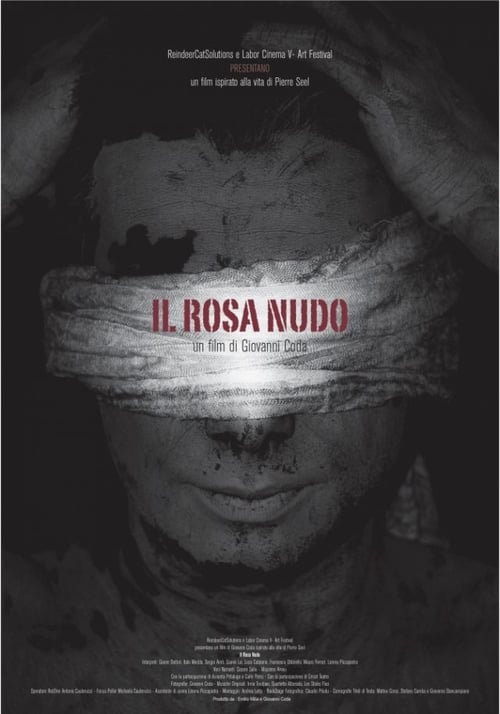
Among the millions of victims of the Nazi madness during the Second World War, Pierre Seel was charged with homosexuality and imprisoned in the Schirmeck concentration camp. He survived this terrifying experience of torture and humiliation, and after the war he married, had three children, and tried to live a normal life. In 1982, however, he came to terms with his past and his true nature and decided to publicly reveal what he and thousands of other homosexuals branded with the Pink Triangle had undergone during the Nazi regime. Il Rosa Nudo (Naked Rose), inspired by the true story of Pierre Seel, depicts in a theatrical and evocative way the Homocaust, focusing on the scientific theories of SS Physician Carl Peter Værnet for the treatment of homosexuality, which paved the way for the Nazi persecution of gay men.
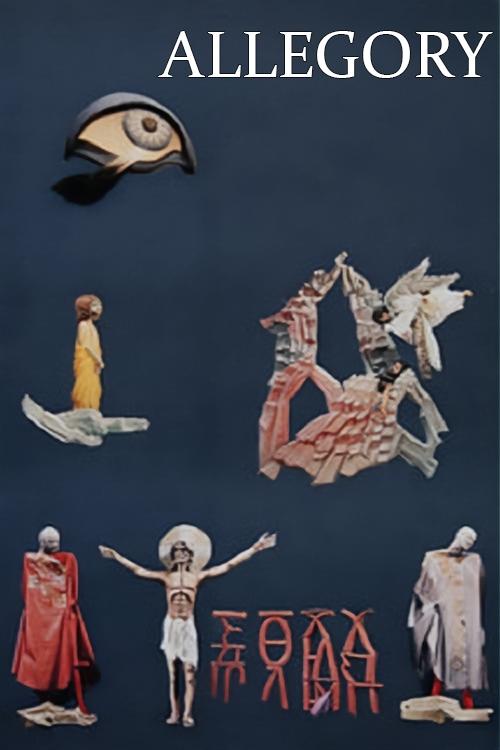
The ruins of paganism and the birth of Christianity portrayed by immobile people along with music.
The story means to develop through an uncovering of layers - strata. As writer Krumbachova stated: "With nature as a prison, an impassable barrier ... where every action is physically and psychically limited by the environment ... people are reduced to fragments of basic instinct and intelligence." Promoted as a psychological thriller, Strata provides little tension nor any real climax. The characters are ideas - not believably real.
A filmmaker gets lost in a world of his own creation, literally. He is plotted against by his outer demons, searches for his lost sex scene and contends with several other versions of himself. A joyful rule-breaking carnival ride through a filmmaker's dreamland.
Migrating by sea from Holland as an eight-year-old, Dirk de Bruyn went on to be a doyen of Australian experimental cinema. But as this intimate film reveals, his work is suffused with the trauma of migration, and the struggle to recognise himself as a ‘new Australian'. In conversation with documentarian Steven McIntyre, Dirk guides us through more than 40 years of his filmmaking: the early years exploring technique and technology, a subsequent phase of unflinching self-examination brought on by upheaval and overseas travel, and more recent projects where he attempts a fusion of personal, cultural, and historical identity. What emerges is an inspiring, rugged, and at times poignant portrait of an artist committed to self-expression and self-discovery through the medium of film.
An experimental short film from Toshio Matsumoto featuring Mona Lisa.
A successful actress with three children takes an artist lover to fill a void in her life. This avant garde feature illustrates the alienation of an individual who is lonely despite the wealth and fame her career has brought to her. Jose Maria Nunes wrote the screenplay which relies heavily on verbiage and philosophical symbolism.
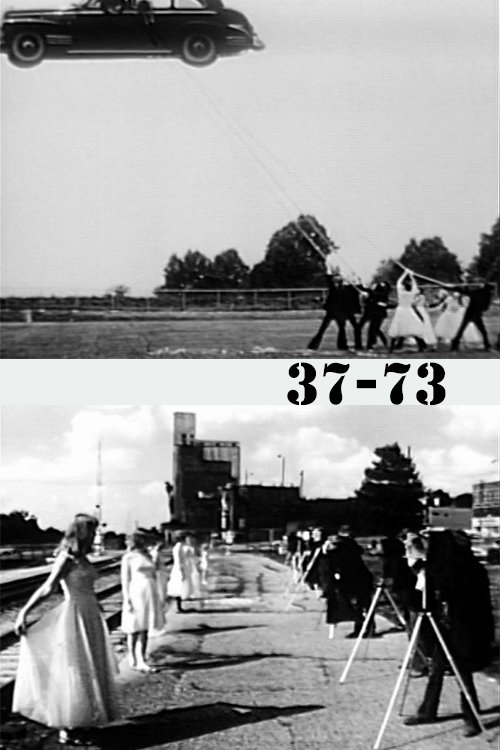
As powerful and complex as is AKRAN, 37-73 is more taut, richer in associative meaning .... 37-73 is about dreams, about memory and its associations with nightmare and magic.
Enigmatic, stop-motion, animated story of a man's day.
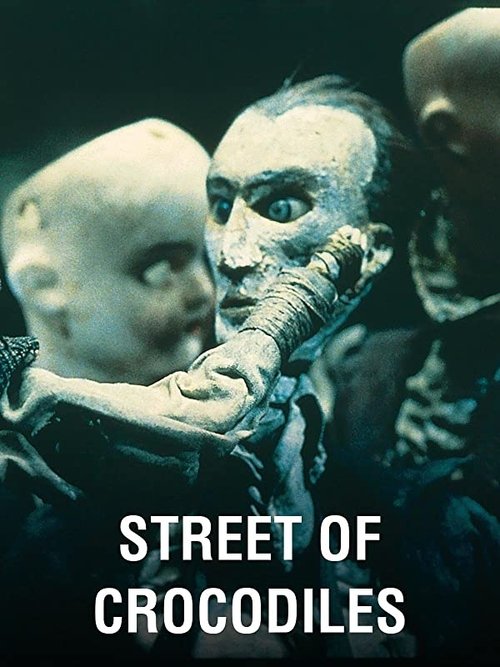
In Prague, a professorial puppet, with metal pincers for hands and an open book for a hat, takes a boy as a pupil. First, the professor empties fluff and toys from the child's head, leaving him without the top of his head for most of the film. The professor then teaches the lad about illusions and perspectives, the pursuit of an object through exploring a bank of drawers, divining an object, and the migration of forms. The child then brings out a box with a tarantula in it: the professor puts his "hands" into the box and describes what he feels. The boy receives a final lesson about animation and film making; then the professor gives him a brain and his own open-book hat.
Stop-motion animated short film in which a puppet on a trike captures a puppet bird-man.
A puppet, newly released from his strings, explores the sinister room in which he finds himself.
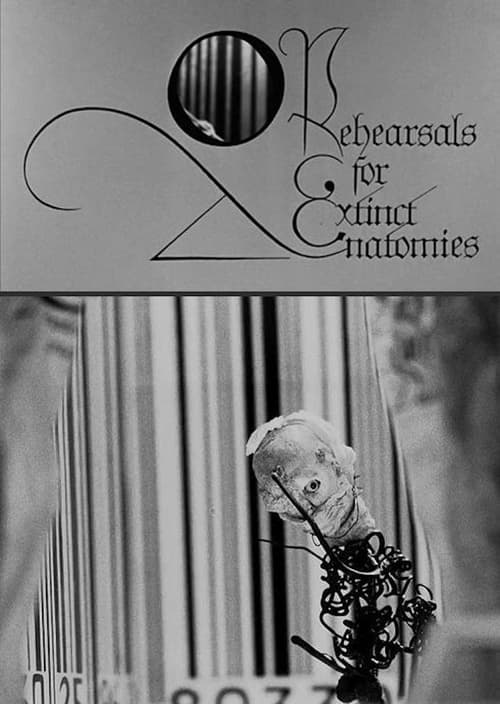
Stop-motion animated short film in which, among other things, a man made of wire looks malevolent.
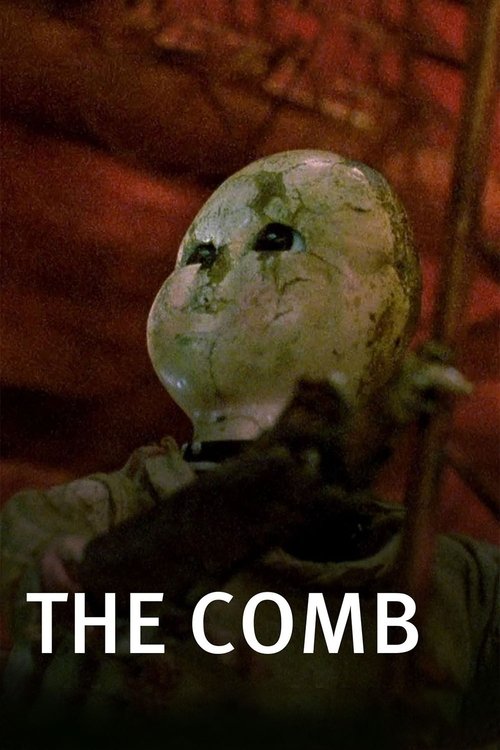
A porcelain doll’s explorations of a dreamer’s imagination.
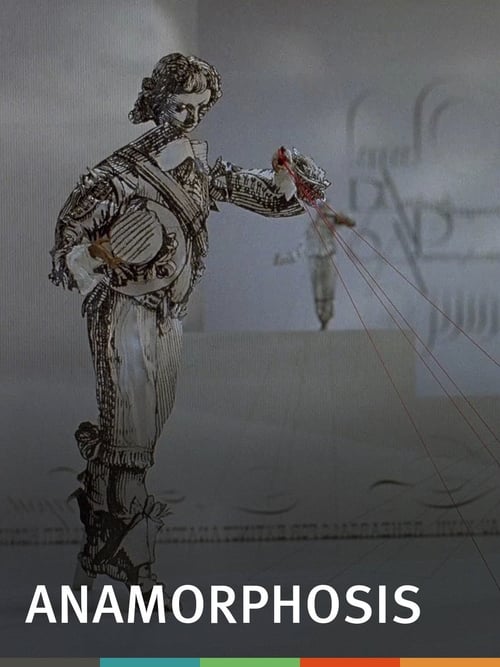
The Quays' interest in esoteric illusions finds its perfect realization in this fascinating animated lecture on the art of anamorphosis. This artistic technique, often used in the 16th- and 17th centuries, utilizes a method of visual distortion with which paintings, when viewed from different angles, mischievously revealed hidden symbols.
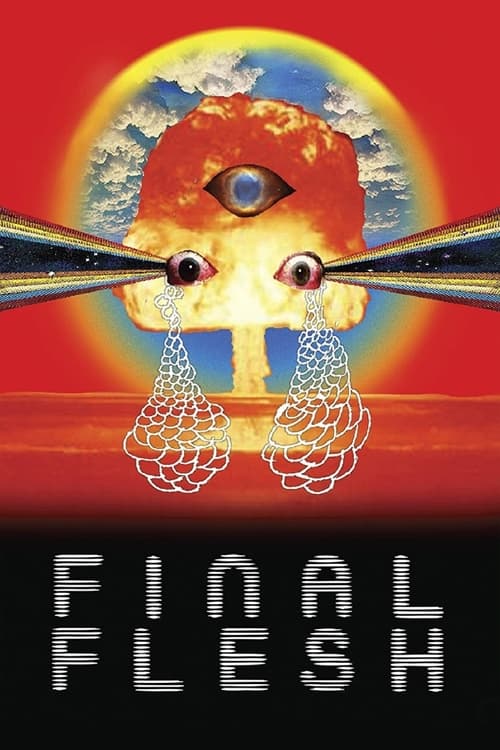
The Pollard family is calmly discussing their impending death by atom bomb when Mrs. Pollard recounts a dream in which she sensually bathes herself in the "Tears of Neglected Children."