Commentary (voice)
No Trailers found.
A Nazi propaganda film about the lead up to World War II and Germany's success on the Western Front. Utilizes newsreel footage of battles and fell into disfavour with propaganda minister Goebbels because of it's lack of emphasis on Adolf Hitler.
Promotional film about the benefits of joint farming in unified agricultural cooperatives in Slovakia.
L, a student in India witness to the government's violent response to university protests, writes letters to her estranged lover while he is away.
Document about the experiences of peasants from the first joint harvests of the unified agricultural cooperative in Vinařice.
Jean-Luc Godard brings his firebrand political cinema to the UK, exploring the revolutionary signals in late '60s British society. Constructed as a montage of various disconnected political acts (in line with Godard's then appropriation of Soviet director Dziga Vertov's agitprop techniques), it combines a diverse range of footage, from students discussing The Beatles to the production line at the MG factory in Oxfordshire, burnished with onscreen political sloganeering.
No overview available.
A record of the series of creative actions and public interventions staged by San Francisco artists in the early 2000’s in response to the escalating rents and evictions brought on by the first wave of tech, the so-called “dot com boom.”
Agitka about a peasant who joined a unified agricultural cooperative when he became convinced of the benefits it provides.
Mr. Prokouk postpones the filming and decides to leave for the agricultural brigade.
Created during the Cold War expansion of nuclear energy, this promotional film uses the story of a woman named Eve to illustrate how atomic power could transform everyday household life through electricity and modern appliances.
In late 2009, the staff of This American Life went on stage to talk for the first time as a group about how the show is put together. Get answers to burning questions like: how close to disaster was the 2008 live show? What is the connection between This American Life and Matt Damon? Will we ever do a swim suit edition of the show? Includes a rare interview with our boss, Torey Malatia, about being made fun of at the end of every episode.
Filmmaker Alain Resnais documents the atrocities behind the walls of Hitler's concentration camps.
One of the finest skate soundtracks of all time... or at least 2003. Blown Out: 2003 Filmed and Directed by Eric Noren Featuring: Colt Cannon, Caswell Berry, Louie Barletta, Ricky Oyola, Brian Emmers, Emmanuel Guzman, Windsor James, Dan Murphy, Tyler Hansen, Jeremiah Babb, Adrian Mallory, Nestor Judkins and more! Produced by Ron Whaley, Jeff Kendall, Krux Trucks, NHS inc.
Fifty years ago in the Bronx, a new genre of music was born, the product of a people searching for their voice and the opportunity to be heard. For decades, the community was bound by the words of leaders like Martin Luther King and Malcolm X before their assassinations attempted to thwart the messaging. While their lives ended, the impact of their words never would, instead paving the way for others. Soon, athletes and entertainers would step to the microphone and boldly become the sound of a new generation and an inspiration to their people. When the world looked to silence them, the culture found a way to speak louder than ever before. From Muhammad Ali to Public Enemy, Jay-Z to Lebron James and beyond, the impact on sports has been indelible.
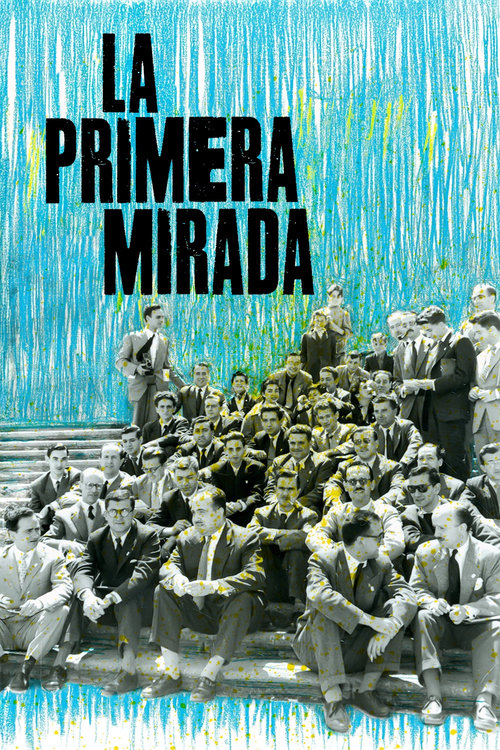
In Spain, a poor country ruined by the recent Civil War (1936-39), and in the midst of Franco's dictatorship, a film school was created in Madrid in 1947, which became, almost unintentionally, a space of freedom and pure experimentation until its closure in 1976.
A volcanic eruption, an act of faith, the empire re-enacted in the Cavalhadas de São Pedro and the technologies of nature monitoring intertwine in a non-reductionist gesture of synthesis.
Director James Nguyen will release his short documentary film, CLIMATE FIX which suggests how carbon removal technology can be used to fix climate change-global warming.