logologo
MovieVerse© 2024
Privacy PolicyTerms of ServiceContact Us
Made with ❤️ by Thathsara
movie poster
Night and Fog
Sign in to create your own watchlist

Night and Fog

Jan 29, 1956
0h 32m
★ 8.2

Overview

Filmmaker Alain Resnais documents the atrocities behind the walls of Hitler's concentration camps.

Genres

Documentary
History

Production Companies

Argos films

Cast

Michel Bouquet

Narrator (voice) (uncredited)

Michel Bouquet

Reinhard Heydrich

Self (archive footage) (uncredited)

Reinhard Heydrich

Heinrich Himmler

Self (archive footage) (uncredited)

Heinrich Himmler

Adolf Hitler

Self (archive footage) (uncredited)

Adolf Hitler

Julius Streicher

Self (archive footage) (uncredited)

Julius Streicher

You may also like

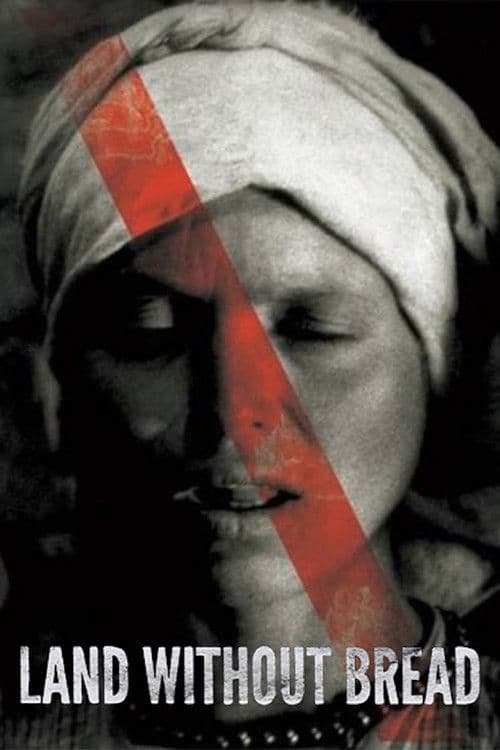
Land Without Bread
7.1

Land Without Bread

Dec 1, 1933

An exploration —manipulated and staged— of life in Las Hurdes, in the province of Cáceres, in Extremadura, Spain, as it was in 1932. Insalubrity, misery and lack of opportunities provoke the emigration of young people and the solitude of those who remain in the desolation of one of the poorest and least developed Spanish regions at that time.

Le Théâtre National Populaire
0.0

Le Théâtre National Populaire

Jun 8, 1956

The T.N.P., the Théâtre National Populaire, an important experimental theater directed by Jean Vilar. Franju combines sequences from theatrical performances with documentary images, creating links and confrontations between theater and the real world.

The Arrival of a Train at La Ciotat
7.1

The Arrival of a Train at La Ciotat

Jun 30, 1896

A group of people are standing along the platform of a railway station in La Ciotat, waiting for a train. One is seen coming, at some distance, and eventually stops at the platform. Doors of the railway-cars open and attendants help passengers off and on. Popular legend has it that, when this film was shown, the first-night audience fled the café in terror, fearing being run over by the "approaching" train. This legend has since been identified as promotional embellishment, though there is evidence to suggest that people were astounded at the capabilities of the Lumières' cinématographe.

Shannon Amen
4.8

Shannon Amen

Sep 26, 2019

Shannon Amen unearths the passionate and pained expressions of a young woman overwhelmed by guilt and anxiety as she struggles to reconcile her sexual identity with her religious faith. A loving elegy to a friend lost to suicide.

The Tin Drum
6.9

The Tin Drum

May 2, 1979

In 1924, Oskar Matzerath is born in the Free City of Danzig. At age three, he falls down a flight of stairs and stops growing. In 1939, World War II breaks out.

Pearl Harbor
6.9

Pearl Harbor

May 21, 2001

The lifelong friendship between Rafe McCawley and Danny Walker is put to the ultimate test when the two ace fighter pilots become entangled in a love triangle with beautiful Naval nurse Evelyn Johnson. But the rivalry between the friends-turned-foes is immediately put on hold when they find themselves at the center of Japan's devastating attack on Pearl Harbor on Dec. 7, 1941.

Olympia Part One: Festival of the Nations
6.9

Olympia Part One: Festival of the Nations

Apr 21, 1938

Starting with a long and lyrical overture, evoking the origins of the Olympic Games in ancient Greece, Riefenstahl covers twenty-one athletic events in the first half of this two-part love letter to the human body and spirit, culminating with the marathon, where Jesse Owens became the first track and field athlete to win four gold medals in a single Olympics.

Olympia Part Two: Festival of Beauty
6.7

Olympia Part Two: Festival of Beauty

Jun 2, 1938

Part two of Leni Riefenstahl's monumental examination of the 1938 Olympic Games, the cameras leave the main stadium and venture into the many halls and fields deployed for such sports as fencing, polo, cycling, and the modern pentathlon, which was won by American Glenn Morris.

The Last Emperor
7.6

The Last Emperor

Oct 4, 1987

A dramatic history of Pu Yi, the last of the Emperors of China, from his lofty birth and brief reign in the Forbidden City, the object of worship by half a billion people; through his abdication, his decline and dissolute lifestyle; his exploitation by the invading Japanese, and finally to his obscure existence as just another peasant worker in the People's Republic.

Workers Leaving the Lumière Factory
6.7

Workers Leaving the Lumière Factory

Mar 22, 1895

Working men and women leave through the main gate of the Lumière factory in Lyon, France. Filmed on 22 March 1895, it is often referred to as the first real motion picture ever made, although Louis Le Prince's 1888 Roundhay Garden Scene pre-dated it by seven years. Three separate versions of this film exist, which differ from one another in numerous ways. The first version features a carriage drawn by one horse, while in the second version the carriage is drawn by two horses, and there is no carriage at all in the third version. The clothing style is also different between the three versions, demonstrating the different seasons in which each was filmed. This film was made in the 35 mm format with an aspect ratio of 1.33:1, and at a speed of 16 frames per second. At that rate, the 17 meters of film length provided a duration of 46 seconds, holding a total of 800 frames.

Andrei Rublev
8.0

Andrei Rublev

Dec 16, 1966

An expansive Russian drama, this film focuses on the life of revered religious icon painter Andrei Rublev. Drifting from place to place in a tumultuous era, the peace-seeking monk eventually gains a reputation for his art. But after Rublev witnesses a brutal battle and unintentionally becomes involved, he takes a vow of silence and spends time away from his work. As he begins to ease his troubled soul, he takes steps towards becoming a painter once again.

Spartacus
7.5

Spartacus

Oct 13, 1960

The rebellious Thracian Spartacus, born and raised a slave, is sold to Gladiator trainer Batiatus. After weeks of being trained to kill for the arena, Spartacus turns on his owners and leads the other slaves in rebellion. As the rebels move from town to town, their numbers swell as escaped slaves join their ranks. Under the leadership of Spartacus, they make their way to southern Italy, where they will cross the sea and return to their homes.

Seven Years in Tibet
7.2

Seven Years in Tibet

Sep 12, 1997

Austrian mountaineer Heinrich Harrer journeys to the Himalayas without his family to head an expedition in 1939. But when World War II breaks out, the arrogant Harrer falls into Allied forces' hands as a prisoner of war. He escapes with a fellow detainee and makes his way to Lhasa, Tibet, where he meets the 14-year-old Dalai Lama, whose friendship ultimately transforms his outlook on life.

Rendezvous in Space
0.0

Rendezvous in Space

Sep 10, 1964

This documentary, the final film directed by Frank Capra, explores America's plans for the future of space exploration. It was produced by the Martin-Marietta Corporation for exhibition in the Hall of Science at the 1964 New York World's Fair.

From Island to Island
0.0

From Island to Island

May 11, 2024

During World War II, Taiwan was part of the Japanese Empire. This documentary explores the experiences of Taiwanese soldiers, doctors, and overseas residents in Southeast Asia during that time. Using cross-generational memory dialogues, family letters, diaries, and videos, the film addresses the complexities of Taiwan's historical memory and diverse identities during that period.

Memoirs of a Geisha
7.6

Memoirs of a Geisha

Dec 6, 2005

In the years before World War II, a penniless Japanese child is torn from her family to work as a maid in a geisha house.

Thot-Fal'N
5.4

Thot-Fal'N

Jun 27, 1978

This film describes a psychological state "kin to moonstruck, its images emblems (not quite symbols) of suspension-of-self within consciousness and then that feeling of falling away from conscious thought. The film can only be said to describe or be emblematic of this state because I cannot imagine symbolizing or otherwise representing an equivalent of thoughtlessness itself. Thus the actors in the film, Jane Brakhage, Tom and Gloria Bartek, Williams Burroughs, Allen Ginsberg, Peter Olovsky and Phillip Whalen are figments of this 'Thought-Fallen Process', as are their images in the film to find themselves being photographed."

Pope Joan
6.8

Pope Joan

Oct 22, 2009

A 9th century woman of English extraction born in the German city of Ingelheim disguises herself as a man and rises through the Vatican ranks.

M/S Gustloff
5.9

M/S Gustloff

Mar 2, 2008

Joseph Vilsmaier Two-part TV movie focuses on the tragic events surrounding the sinking of the Wilhelm Gustloff, a German passenger ship, at the end of World War II. On 30 January 1945, Captain Hellmuth Kehding was in charge of the ship, evacuating wounded soldiers and civilians trapped by the Red Army. Soon after leaving the harbor of Danzig, it was hit by three torpedoes from the Soviet submarine and sank in less than an hour.

Ich. Immendorff
0.0

Ich. Immendorff

May 31, 2007

Documentary film about the painter and sculptor Jörg Immendorff who ranks among the most important German artists. The filmmakers accompanied Immendorff over a period of two years – until his death in May 2007. The artist had been living for nine years knowing that he was terminally ill with ALS. The film shows how Immendorff continued to work with unabated energy and how he tried not to let himself be restrained by his deteriorating health.

Night and Fog Trailers