The first Soviet anti-religious film.
No Trailers found.
Pankrat the priest
Auntie Domna
No overview available.
A woman has second thoughts about her socialite fiancé when she finds a grey veil in his overcoat. When she discovers that the veil belongs to the owner of a beauty shop, she begins to investigate.
The story of two feuding Irish immigrant families living in a tenement.
Lawyer Hanover Priestley plots with his friend Henry Winkley to marry off young heiress Leila Calthorpe to Winkley's nephew, John Warren. When John refuses, preferring to select his own wife, they lure him east by a false report of Winkley's death. Indignant at his rebuff, Leila disguises herself as Perkins, a maid, and romances him, leading him to believe that Aunt Agatha is the heiress. Complications develop, and after saving her from a fire John discovers her identity and agrees to marry her.
Eve Orrin is at the mercy of her possessive mother, who has a case of "nerves" every time her daughter tries to show a mind of her own. Mrs. Orrin and her friend, Mrs. Marchant, have determined that Eve will marry Mrs. Marchant's milquetoast son, Henry, and Eve is willing to go along with it just to placate her mother. But Eve herself finally has an attack of nerves, and she falls in love with Doctor Harmon, the physician called in to care for her.
Hitler no longer believes in himself, and can barely see himself as an equal to even his sheep dog. But to seize the helm of the war he would have to create one of his famous fiery speeches to mobilize the masses. Goebbels therefore brings a Jewish acting teacher Grünbaum and his family from the camps in order to train the leader in rhetoric. Grünbaum is torn, but starts Hitler in his therapy ...
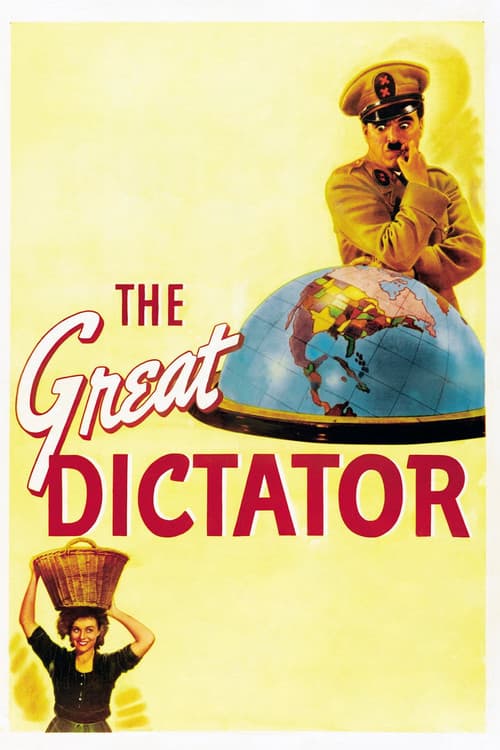
Dictator Adenoid Hynkel tries to expand his empire while a poor Jewish barber tries to avoid persecution from Hynkel's regime.
Based on the novel and play by W. Notari. The movie is not fully preserved, without inscriptions.
A prince makes a socialite think she spent the night in his room.
In Bagdad, Princess Badr al-Budur, the daughter of the Sultan, falls in love with Aladdin, the son of a poor tailor, and rejects the suit of evil alchemist al-Talib, her father's choice. Al-Talib consults his Evil Spirit, who advises him to find the magic lamp hidden in an underground cave. Unable to get it himself, al-Talib hires Aladdin, who secures the lamp but keeps it when he realizes al-Talib's wickedness. With wealth obtained through wishes, Aladdin courts the princess. After the lamp changes hands between al-Talib and Aladdin, al-Talib steals it and abducts the princess to the desert. Aladdin follows with only a gourd of water. Suffering from thirst and exhaustion, Aladdin nearly succumbs, but the horsemen of the Sultan, who learned of his daughter's abduction, ride up and rescue Aladdin.
Jerry Martin quits his dull job as a bank clerk and falls in with a band of hobos. He takes on the guise of Bachelor, the "king of the market," and finds himself pursued by dangerous men who are after the real Bachelor. *Only fragments are known to exist. Preserved by the Academy Film Archive in 2010.
Fight manager takes out an insurance policy on his puny pugilist and then proceeds to try to arrange for an accident so that he can collect.
The first Greek animated film was shot by the cartoonist Stamatis Polenakis (1908-1997) with the title "The Duce tells...". The seven-minute "Mickey-Mouse-style" film, as its creator mentions in the credits, satirizes the Italian invasion of Greece on October 28, 1940, and especially Mussolini, who recounts his exploits, but reality constantly contradicts him. Stamatis Polenakis, one of the leading Greek cartoonists of the 20th century and a pioneer of animation in our country, began drawing the sketches for the film in 1942 in his hometown, Sifnos, where he had taken refuge during the Occupation. He worked under the boot of the Italian conqueror, risking arrest. The film was lost during the Civil War and it was not until 1980 that a negative was found and restored.
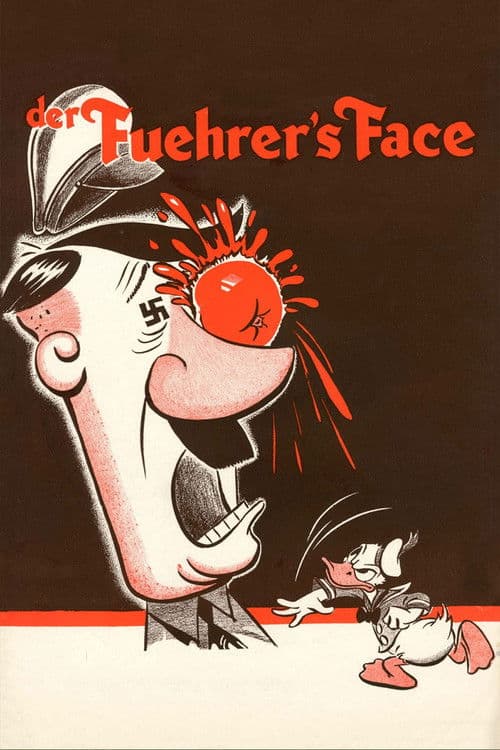
A marching band of Germans, Italians, and Japanese march through the streets of swastika-motif Nutziland, serenading "Der Fuehrer's Face." Donald Duck, not living in the region by choice, struggles to make do with disgusting Nazi food rations and then with his day of toil at a Nazi artillery factory. After a nervous breakdown, Donald awakens to find that his experience was in fact a nightmare.