No Trailers found.
Self
Amid the Holocaust’s unimaginable cruelty, a young boy finds hope in music. Eighty years later, Frank Grunwald shares his true story of survival and resilience, intertwined with American jazz, offering a powerful testament to the strength of the human spirit.
Toronto is regarded as the third largest jazz centre in North America. This film features a cross-section of jazz bands of that city: the Lenny Breau Trio, the Don Thompson Quintet and the Alf Jones Quartet. Their styles show creative self-expression, hard work, and improvisation.
Set to a classic Duke Ellington recording "Daybreak Express", this is a five-minute short of the soon-to-be-demolished Third Avenue elevated subway station in New York City.
No overview available.
Everyone mentions her when asked who the 1st generation of jazz musicians is in Korea, adding that jazz wouldn't have been continued in Korea if not for her. It's Park Seong-yeon, the musician who ran Korea's first jazz club - Club Janus - and she provided it for other musicians to perform. Diva Janus follows the late Park's footsteps through her past and interviews by her peer musicians.
Chet Baker silently wanders through an Antonioniesque landscape in a Felliniesque state of wonderment as his improvised trumpet solos alternate between earnestly offering the obvious and mocking the artiness of the whole affair.
The film chronicles a unique artistic experiment: pianist Stefano Bollani (the director’s husband) brings together an ensemble of Italian jazz legends and rising stars in a home studio to prepare for a one-of-a-kind concert.
During the summer of 1980, the American jazz concert pianist Kazzrie Jaxen writes a 16 pages long letter to director Ingmar Bergman. His film 'From the Life of the Marionettes' have sent her on a dramatic inner journey, making her realize that she is not alone in her own body.
Combining footage unseen since WWI with original scores from the era, this film tells the story of Noble Sissle's incredible journey that spans "The Harlem Hellfighters" of World War I, Broadway Theatre, the Civil Rights movement, and decades of Black cultural development.
In the late 1990s, iconic photographer Bruce Weber barely managed to convince legendary actor Robert Mitchum (1917-97) to let himself be filmed simply hanging out with friends, telling anecdotes from his life and recording jazz standards.
"It must schwing!" was the motto of Alfred Lion and Francis Wolff, two German Jewish immigrants who in 1939 set up Blue Note Records, the jazz label that was home to such greats as Miles Davis, John Coltrane, Herbie Hancock, Thelonious Monk, Art Blakey, Dexter Gordon and Sonny Rollins. Blue Note, the most successful movie ever made about jazz, is a testimony to the passion and vision of these two men and certainly swings like the propulsive sounds that made their label so famous.
"What would the world be like without Beethoven?" That’s the provocative question posed by this music documentary from Deutsche Welle. To answer it, the film explores how Ludwig van Beethoven's innovations continue to have an impact far beyond the boundaries of classical music, 250 years after his birth.
A web documentary that explores Montreal’s incredible contribution to jazz music history through the legendary black musicians of Little Burgundy – the neighbourhood that was a hub of musical creativity, private clubs and speakeasies from the Jazz Age 1920s to the Golden Era of Jazz in the 1940s and 50s. Oscar Peterson, Oliver Jones, Norman Marshall Villeneuve, the Sealey Brothers, Nelson Symonds, and Louis Metcalf are among the greats who lived or played in "Burgundy".
Roma are an important part of Ukraine's population. There are quite a large number of them living in the country—between fifty and one hundred thousand. This documentary shows the peculiarities of the Gypsy people's life in modern society. You will see the stories of five Gypsy barons who will talk about the traditions of their people and reveal some secrets that were previously known only to the Roma.
A Film About Kids and Music is a project arising from a music class. Conducted by Joan Chamorro, the big band brings together children between 6 and 18 years old, around a classic jazz repertoire with lots of swing, which gained the public’s attention and sold-out some of the most important music auditoriums in Spain.
A chronological look at the life and career of jazz musician, composer, and performer Dave Brubeck (1920-2012 ), presented through contemporary interviews, archival footage of interviews and performances, and commentary by family, fellow musicians, and aficionados. Emphases include his mother's influence, his wife's invention of college tours, his skill as an accompanist, the great quartet (with Desmond, Morello, and Wright), his ability to find musical ideas everywhere, his orchestral compositions, his religious conversion, and his unflagging sweet nature.
A biographical film featuring the music and times of Bill Evans with interviews from Tony Bennett, Jack Dejohnette, Billy Taylor, Paul Motian, Jon Hendricks, Orin Keepnews, Bobby Brookmeyer, Pat Evans and more, including family and friends who knew Bill Evans well.
Welcome to the picturesque world of the Kaldarash Roma – a closed community of no more than 1 million people all over the world. 'Concrete Pharaohs' take us on a journey into the lifestyle and traditions of the most hidden and intriguing Roma communities. A charismatic Gypsy baron will walk us through his stories and his new house. We will learn the hot trends in Roma tombstone design. We will go down into the underground homes of African granite, furnished with beds, wardrobes, stereos and a charged cell phone – a direct line to the other world. A celebration of life and afterlife in all of their manifestations.
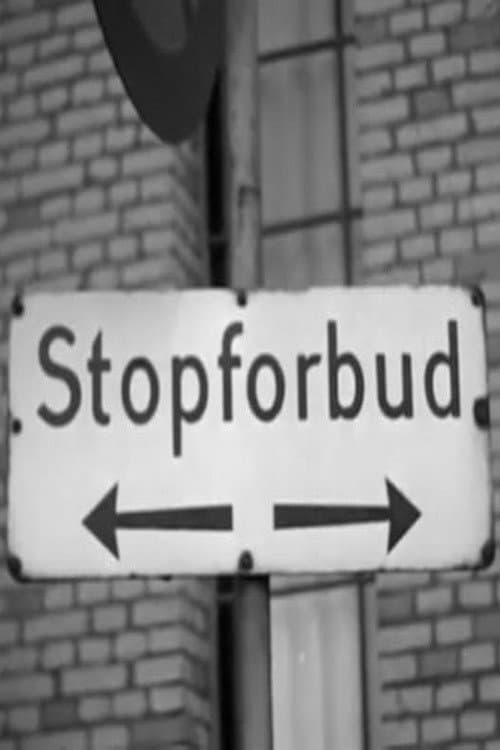
Stop for Bud is Jørgen Leth's first film and the first in his long collaboration with Ole John. […] they wanted to "blow up cinematic conventions and invent cinematic language from scratch". The jazz pianist Bud Powell moves around Copenhagen -- through King's Garden, along the quay at Kalkbrænderihavnen, across a waste dump. […] Bud is alone, accompanied only by his music. […] Image and sound are two different things -- that's Leth's and John's principle. Dexter Gordon, the narrator, tells stories about Powell's famous left hand. In an obituary for Powell, dated 3 August 1966, Leth wrote: "He quite willingly, or better still, unresistingly, mechanically, let himself be directed. The film attempts to depict his strange duality about his surroundings. His touch on the keys was like he was burning his fingers -- that's what it looked like, and that's how it sounded. But outside his playing, and often right in the middle of it, too, he was simply gone, not there."