logologo
MovieVerse© 2024
Privacy PolicyTerms of ServiceContact Us
Made with ❤️ by Thathsara
movie poster
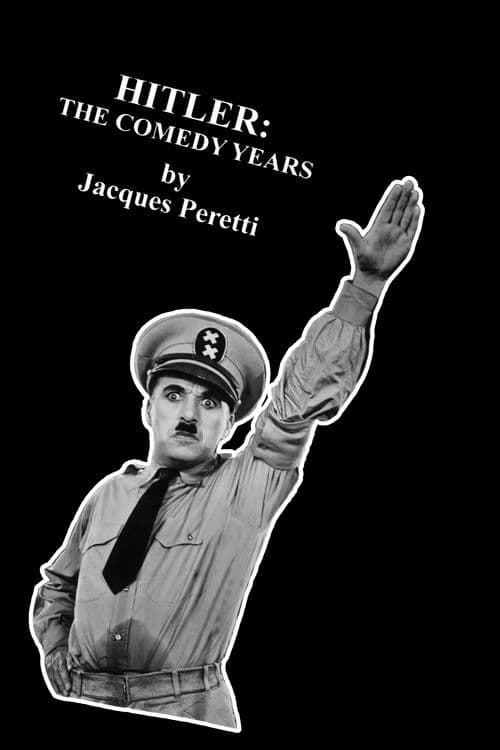
Hitler: The Comedy Years
Sign in to create your own watchlist

Hitler: The Comedy Years

May 10, 2007
0h 48m
★ 5.0

Overview

A documentary about the portrayal of Adolf Hitler in popular culture.

Genres

Documentary

Production Companies

World of Wonder
Channel 4 Television

Hitler: The Comedy Years Trailers

No Trailers found.

Cast

Neil McCaul

Self

Neil McCaul

Guy Siner

Self

Guy Siner

Richard Gibson

Self

Richard Gibson

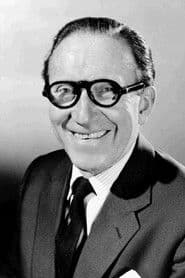
Arthur Askey

Arthur (archive footage) (uncredited)

Arthur Askey

Ronnie Barker

Norman Stanley Fletcher (archive footage) (uncredited)

Ronnie Barker

James Beck

Joe Walker (archive footage) (uncredited)

James Beck

Boris Becker

Self (archive footage) (uncredited)

Boris Becker

Neville Chamberlain

Self (archive footage) (uncredited)

Neville Chamberlain

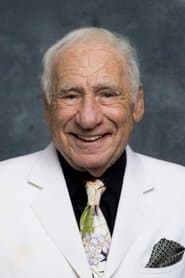
Mel Brooks

Singer in 'Springtime for Hitler' (archive footage) (uncredited)

Mel Brooks

Charlie Chaplin

Adenoid Hynkel (archive footage) (uncredited)
Charlie Chaplin

Graham Chapman

Joachim von Ribbentrop (archive footage) (uncredited)

Graham Chapman

John Cleese

Adolf Hitler / Basil Fawlty (archive footage) (uncredited)

John Cleese

You may also like

Nazis on Drugs: Hitler and the Blitzkrieg
6.2

Nazis on Drugs: Hitler and the Blitzkrieg

Jul 19, 2019

For all its talk of racial, spiritual, and physical purity, the self-anointed “Master Race” harbored a secret…theirs was an axis of drug addicts. This two-hour special explores the origin, impact, and lasting effects of the state-sponsored drug use that helped build—and eventually burned—the Third Reich. Incredible new sources of information, including a detailed journal maintained by Hitler’s personal physician, reveal the extent of not just his, but the entire Nazi Party’s reliance on drugs to power their war effort.

Hitler's Battle Against the Press
7.9

Hitler's Battle Against the Press

May 5, 2018

As early as 1920, the journalists of the "Münchener Post" recognized the danger posed by Adolf Hitler. Consistently and boldly they wrote about National Socialism. The brave journalists and their newspaper are almost forgotten today. A single book has been published about them - in Brazil.

21 rue la Boétie
0.0

21 rue la Boétie

Mar 12, 2017

No overview available.

Hitler's Hollywood
6.5

Hitler's Hollywood

Feb 23, 2017

Film journalist and critic Rüdiger Suchsland examines German cinema from 1933, when the Nazis came into power, until 1945, when the Third Reich collapsed. (A sequel to From Caligari to Hitler, 2015.)

Enchanted
4.0

Enchanted

Jun 30, 1993

Stories of 12 gay and lesbian survivors of Nazism and the Holocaust.

No Image
0.0

Der Judenhetzer – Julius Streicher und "Der Stürmer"

Jan 3, 2001

Even high Nazi leaders like Joseph Goebbels and Hermann Göring were almost contemptuous of this party comrad, and yet he was one of the most influential figures in the Third Reich: Julius Streicher, publisher of the anti-Semitic weekly "Der Stürmer", responsible for the worst propaganda and infamous for his corrupt and violent regime as Gauleiter of Franconia. By the Allies he was considered a symbol of Nazi hatred of the Jews. In 1946 he was sentenced to death in Nuremberg and executed.

Bombshell: The Hedy Lamarr Story
6.9

Bombshell: The Hedy Lamarr Story

Jun 6, 2018

The life and career of the hailed Hollywood movie star and underappreciated genius inventor, Hedy Lamarr.

Goering's Catalogue: A Collection of Art and Blood
7.3

Goering's Catalogue: A Collection of Art and Blood

Mar 14, 2021

For more than a decade, Reichsmarschall Hermann Goering, Adolf Hitler's right-hand man during the infamous Third Reich, assembled a collection of thousands of works of art that were meticulously catalogued.

Mein Kampf
7.9

Mein Kampf

Apr 24, 1960

Using exclusively archival footage, Erwin Leiser traces the rise and collapse of the Third Reich, from Adolf Hitler’s early years to the devastation of Europe and his suicide in 1945. The film draws heavily on material produced and preserved by the Nazi propaganda apparatus to confront the mechanisms, imagery, and consequences of totalitarian power.

June 1940, the Great Chaos
8.0

June 1940, the Great Chaos

Jun 14, 2010

From May 10, 1940, France is living one of the worst tragedies of it history. In a few weeks, the country folds, and then collapsed in facing the attack of the Nazi Germany. On June 1940, each day is a tragedy. For the first time, thanks to historic revelations, and to numerous never seen before images and documents and reenacted situations of the time, this film recounts the incredible stories of those men and women trapped in the torment of this great chaos.

The Death of Hitler: The Story of a State Secret
8.0

The Death of Hitler: The Story of a State Secret

Apr 7, 2017

On April 30, 1945, while the Russian Army surrounded Berlin, Hitler committed suicide in his bunker. His body was discovered a few days later by the Soviets. He would be positively identified after a top secret inquest in which Hitler's personal dentist would play a central role. And yet, at the same time, Stalin publicly declared that his army was unable to find the Führer's body, choosing to let the wildest rumors develop and going so far as to accuse some of his Allies of having aided the monster's probable escape. What secrets were hidden behind this dissimulation? What happened then to the two ladies involved in the identification of Hitler’s body?

Benito Mussolini: Anatomy of a Dictator
6.4

Benito Mussolini: Anatomy of a Dictator

Jan 20, 1962

No overview available.

Karajan: Portrait of a Maestro
7.0

Karajan: Portrait of a Maestro

Sep 22, 2019

An account of the life and work of controversial German orchestra conductor Herbert von Karajan (1908-89), celebrated as one of the greatest musicians of the twentieth century.

Language Does Not Lie
7.3

Language Does Not Lie

Nov 15, 2004

Victor Klemperer (1881-1960), a professor of literature in Dresden, was Jewish; through the efforts of his wife, he survived the war. From 1933 when Hitler came to power to the war's end, he kept a journal paying attention to the Nazis' use of words. This film takes the end of 1945 as its vantage point, with a narrator looking back as if Klemperer reads from his journal. He examines the use of simple words like "folk," "eternal," and "to live." Interspersed are personal photographs, newsreel footage of Reich leaders and of life in Germany then, and a few other narrative devices. Although he's dispassionate, Klemperer's fear and dread resonate

The Lost Album of the SS
8.0

The Lost Album of the SS

Jan 12, 2025

In 2016, an album containing 250 previously unseen photos of Nazi officials was discovered in the USA by Stephan Hördler, a prominent Holocaust historian, who immediately understood the album's inestimable value. The album brings together photographs of a "group of friends," all from the same region of Germany, all of whom became SS men. From 1928 to 1943, the photo album allows us to follow their journey. Hördler conducted the investigation, comparing the photos in the album with other, better-known ones, the faces of these men with those of concentration camp officials, and ultimately revealed that it was at Lichtencburg that these young men were trained, a "school" for future camp executioners, and the bonds of camaraderie and informal network that would allow them to help each other, even after the war.

Fascism in Colour
7.5

Fascism in Colour

Jan 1, 2006

After the World War I, Mussolini's perspective on life is severely altered; once a willful socialist reformer, now obsessed with the idea of power, he founds the National Fascist Party in 1921 and assumes political power in 1922, becoming the Duce, dictator of Italy. His success encourages Hitler to take power in Germany in 1933, opening the dark road to World War II. (Originally released as a two-part miniseries. Includes colorized archival footage.)

Operation Foxley: The Assassination of Hitler
0.0

Operation Foxley: The Assassination of Hitler

Jun 16, 2017

Throughout his time as head of the Nazi party, Adolph Hitler evaded numerous attempts to assassinate him. However the secret Operation Foxely came the closest to succeeding. Based on declassified World War II documents from the British secret service, this award-winning film reconstructs the detailed plan that nearly resulted in the murder of the notorious German Fuhrer, and why it failed.

Who was Hitler
5.7

Who was Hitler

Nov 16, 2017

Hitler's biography told like never before. Besides brief historical localizations by a narrator, only contemporaries and Hitler himself speak: no interviews, no reenactment, no illustrative graphics and no technical gadgets. The testimonies from diaries, letters, speeches and autobiographies are assembled with new, often unpublished archive material. Hitler's life and work are thus reflected in a unique way in interaction with the image of the society in the years 1889 to 1945.

Repetitioner
6.0

Repetitioner

Nov 2, 2005

The theatre 7:3 project was conducted at the Tidaholm prison 1998-1999. What started as an artistic experiment, ended up in police killings at Malexander. The process in the prison were filmed during 6 months.

Dämonische Leinwand - Der deutsche Film der zwanziger Jahre
7.0

Dämonische Leinwand - Der deutsche Film der zwanziger Jahre

Jan 1, 1998

In this film essay, critic Peter Buchka explores the German cinema of the 1920s, ranging from the disquieting images of Fritz Lang's Metropolis to the castrating sexuality of Marlene Dietrich in Die Blaue Engel. The program provides an introduction to Weimar cinema, with Buchka's essay narrated over the images from film clips of 1920s era German films.