One man's quest to defeat drug addiction
The story of one American overcoming the demons of his past by entering the secretive world of Spanish bullfighting.
No Trailers found.
Himself
Herself
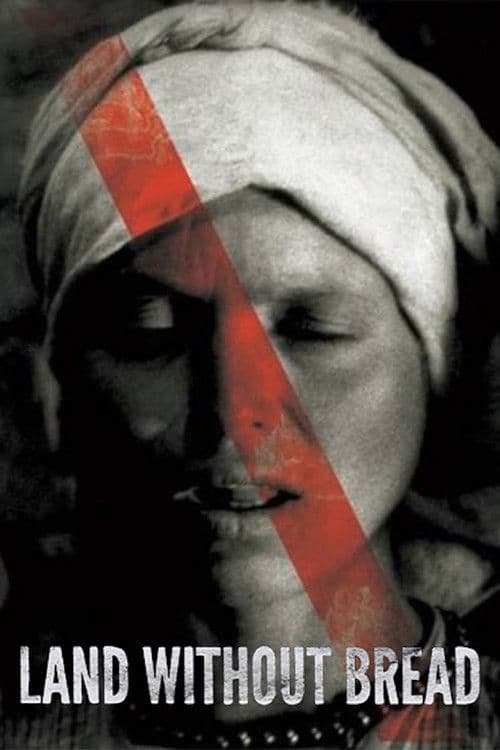
An exploration —manipulated and staged— of life in Las Hurdes, in the province of Cáceres, in Extremadura, Spain, as it was in 1932. Insalubrity, misery and lack of opportunities provoke the emigration of young people and the solitude of those who remain in the desolation of one of the poorest and least developed Spanish regions at that time.
A gentle portrait of the mythical Spanish actor Arturo Fernández (1929-2019) in the hour of his passing, in his own words, through his latest interviews, not previously broadcast, and the words of those who knew him thorough decades of charming and good performance on stage, his true home, as well as in cinema and television.
No overview available.
By telling the human stories behind the entire value chain that gives life to the Spanish wine with the greatest international projection, ‘Rioja, Land of the Thousand Wines’ portrays a currently blooming wine region underpinned by the talent and the work of the new generations of winemakers that operate side by side with the region’s historic wineries. The film puts the focus on the match between territory and product, wisdom and tradition, and lays a bridge between the origins and the future of Rioja. An immersion into a fascinating world that, through captivating cinematography and careful editing, attempts to find the keys to understanding what Rioja wine is and what makes it so special.
Mariano Cruz Ordóñez is an Ecuadorian bullfighter at the end of his artistic career. Mariano was a figure of bullfighting in Ecuador and participated in the most important bullrings of his country and the world. The glory years have passed and prohibitions have arisen regarding bullfighting shows, and the only thing left is, with tenacity and faith, to fight against various adverse circumstances looking for a chance to move foward.
Inspired by an exclusive interview and performance footage of Chavela Vargas shot in 1991 and guided by her unique voice, the film weaves an arresting portrait of a woman who dared to dress, speak, sing, and dream her unique life into being.
A journey through the Spain of the Baroque, the glorious 17th century, an unfortunate era of endless wars and political tribulations; but also of great painters and sculptors who created astonishing pieces of art: el Siglo de Oro.
A history of the political and social repression carried out by the ruthless regime of Spanish dictator Francisco Franco between 1936 and 1975 that focuses on the lives of gays and lesbians during those dark years and the death of the Spanish gay poet Federico García Lorca.
In a world where farming is mechanized and farm animals are fed with products coming from across the globe, a young shepherd is trying to keep his practice sustainable by using ancestral ways to raise his flock.
A walk through the golden age of Spanish exploitation cinema, from the sixties to the eighties; a low-budget cinema and great popular acceptance that exploited cinematographic fashions: westerns, horror movies, erotic comedies and thrillers about petty criminals.
SINOPSIS / SYNOPSIS Every year in Spain, some 16,000 Fiestas are organized, during which animals are used. Honoring the Holy Virgin and the Patron Saints, and with the blessing of religious and political authorities, entire towns -including children- are involved in celebrations of unbelievable cruelty. 60,000 animals are hence abused each year during these “Fiestas of Blood”.
Huelva, Spain, an isolated region lost in time. The grass, the sand and the sky are the same that those foreigners saw in the spring of 1895, when they crossed the sea from a distant country to mark the unspoiled terrain and extract its wealth, when the tower was new, when people could climb to the top of the highest dune and imagine that the city of Tartessos was still there, in the distance, almost invisible in the morning brume.
Sven has a dream. Once in his life he wants to walk the Camino de Santiago - the Way of St. James. But that seems impossible, Sven has Usher syndrome, a disease which slowly, inexorably robs him of hearing and vision. Profoundly deaf and completely blind since 2010, he can only communicate using a special hearing aid in the spoken language.
A first feature based on sexual events. An actress undertakes her desire of directing her first movie, without a budget or any production company funding her project. She gathers a group of professional actors and actresses, and proposes a project based on a very particular experience: stepping on their fears through a metaphorical 'leap of faith'. As the project advances, individual conflicts will arise affecting the shoot, making the movie crew wonder whether or not they should go on. Will they take the leap of faith with all its consequences?
7 female riders, 1 van, 15 days, 4,300km, 416 GB of raw material… culminating in one video, divided into four chapters. The film documents the adventure of the trip, portraying the girls, their lifestyle and their passion for longboard.
Tito del Amo, a passionate 72-year-old researcher, takes the final step to unravel the enigma about the alleged Spanish origin of the American cartoonist Walt Disney, making the same journey that his supposed mother made to give him up for adoption in Chicago. A journey that begins in Mojácar, Almería, Spain, and ends in New York. An exciting adventure, like Alicia's through the looking glass, to discover what is truth and what is not, with an unexpected result.
Famous Spanish film critic Alfonso Sánchez talks about his personal life, his work and Anouk Aimée. A sentimental tribute to one of the most relevant figures on the Spanish film scene.
A humorous observation in Barcelona’s immigrant neighbourhood El Raval. Four barber shops, four places of remembrance, strange time and space capsules inhabited by people who left their home to find a better one, while the Spaniards are about to leave their own country themselves.