First film by Pim de la Parra, about a young Surinamese man in Amsterdam who delivers a “monologue interior” about his dissatisfaction with society and his position as an outsider.
No Trailers found.
Himself
Herself
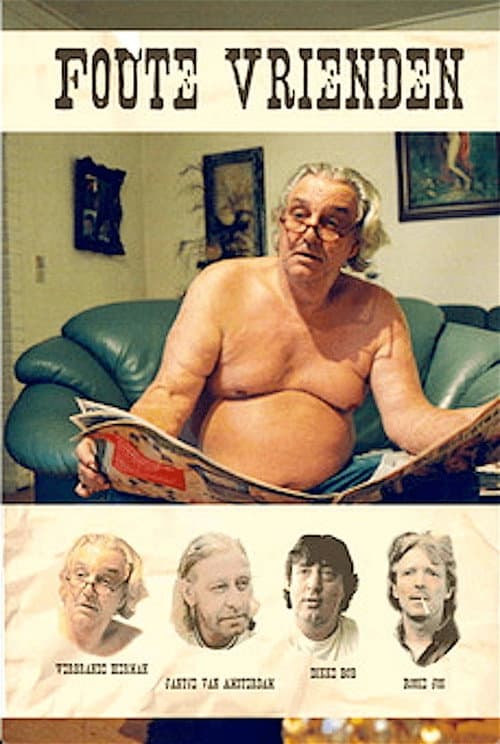
Documentary about four maffia-like friends based in Amsterdam.
Bas Jan Ader rides his bike into a canal in Amsterdam.
Rhythmic composition of moving photographs of cyclists in Amsterdam, ‘set’ to Vivaldi’s The Four Seasons.
Bruin has a new mission: to become a superstar, just like his idol Michael Jackson. Although singing is not his greatest talent, he starts - supported by friends and colleagues - to build a music career.
A ritual of grids, reflections and chasms; a complete state of entropy; a space that devours itself; a vertigo that destroys the gravity of the Earth; a trap that captures us inside the voids of the screen of light: «That blank arena wherein converge at once the hundred spaces» (Hollis Frampton).
Filmmaker Binevsa Bêrîvan travels to Armenia to capture the daily life, customs, and history of the country's Yazidi Kurdish community.
An experiment with three dimensions in a moment of clarity: the focus of the camera's lens towards the present, the speed of the train and the material world distorted by the movements of the train.
Fifteen images of a camera running in a park and in obscurity searching the space of light through distorsion and the sensory of rapid motion.
Private-sector rented accommodation for the Surinamese and Antillean Dutch who increasingly moved to Amsterdam from these former colonies in the early seventies was woefully inadequate. In 1982, André Reeder graduated from The Netherlands Film Academy (NFTVA) with Onderneming onderdak (The Price of Shelter) – a documentary about this appalling situation.
A short animated documentary exploring the immigration experience through the eyes of children learning how to swim with clothes on in the Netherlands.
Twenty images of a camera running next to a chemical platform and capturing abstract light throught improvised gestures and asymmetrical motion
Pak Mokum Terug is the name of a group of Amsterdam activists that refuse to accept that the basic right to housing no longer appears to apply. The group’s name means “Take Back Amsterdam,” Mokum being the traditional nickname for a capital city in which today, for more and more people, a home is becoming unaffordable. Against this background, Hotel Mokum reports on the squatting of a dilapidated hotel in the city center, narrated in the voice of a fictitious activist.
Twenty-four images of a camera running in the woods, a moonlight and a cemetery through improvised gestures, mechanical abstraction and saturated colors
'Fired Up, Ready To Go' follows a number of hopeful and, above all, fanatical grassroots campaigners in New York who are committed to Obama's presidency. A documentary that does not look at Obama's closest associates, but rather at the people on the ground. People who sacrifice a lot to make Obama the first black president of the US.
Presents a day in the life in Amsterdam, a city in transformation, captured shortly after the turn of the millennium, and shortly before the digital revolution would speed up the pace of life considerably. Shot in a fly-on-the-wall style.
Partially staged documentary by Barbara den Uyl investigates the case of Hans Kok, the squatter who was found dead in an Amsterdam police cell in October 1985.
A Losing Game follows three people who ran for office in the 2022 Quebec provincial election, casting a critical eye on its electoral system and the many ways in which it is dysfunctional.
The story of Nisar Ahmed Khan, told through his children and the people he served, a spiritual guide whose followers still visit his tomb on his birth and death anniversaries. And alongside how his family spends a few days at the village keeping his traditions alive.
No overview available.
In Surinamers in Nederland: De terugkeer van het zwarte goud, we see Surinamese people arriving in the Netherlands, unsure of what to expect, and being packed into overcrowded boarding houses. The government's idea is that they should then be integrated into society as quickly as possible. This was to be done by the Centraal Bureau Uitvoering Vestigingsbesluit Rijksgenoten, set up in 1974.