No Trailers found.
The true, harrowing story of a young Jewish girl who, with her family and their friends, is forced into hiding in an attic in Nazi-occupied Amsterdam.
Jakob Yzermans is an American salesman looking for his roots in Rotterdam. He thinks his father (Hendrik Yzermans) has left Holland with the money he took from his collegues. Jakob is trying to get the money together to repay the money. While doing so he encounters more and more problems.
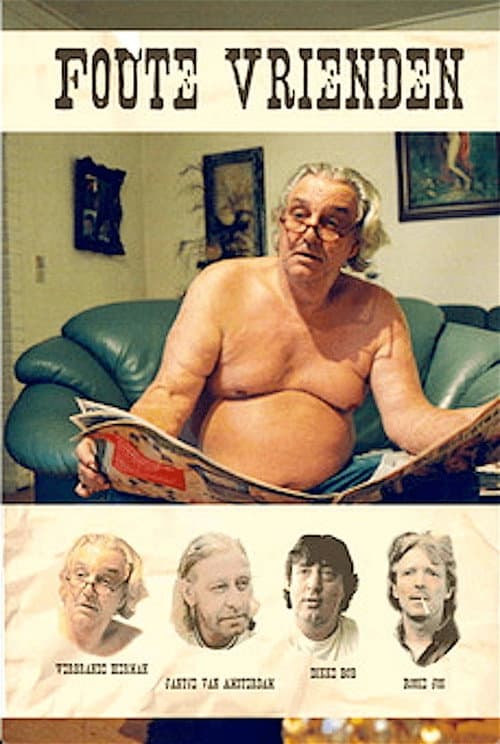
Documentary about four maffia-like friends based in Amsterdam.
Bas Jan Ader rides his bike into a canal in Amsterdam.
A soldier and member of the Dutch resistance investigates stolen art in the wake of the Second World War, including a Vermeer sold to the Nazis by a flamboyant forger.
A short animated documentary exploring the immigration experience through the eyes of children learning how to swim with clothes on in the Netherlands.
Partially staged documentary by Barbara den Uyl investigates the case of Hans Kok, the squatter who was found dead in an Amsterdam police cell in October 1985.
Rhythmic composition of moving photographs of cyclists in Amsterdam, ‘set’ to Vivaldi’s The Four Seasons.
Bruin has a new mission: to become a superstar, just like his idol Michael Jackson. Although singing is not his greatest talent, he starts - supported by friends and colleagues - to build a music career.
This fascinating record of Edwardian Nottingham was filmed from the driver's platform of a tram on a single journey through the city centre between its two main stations. The sequence follows the same route as today's Nottingham Express Transit tramway, taking the viewer along Listergate and Wheelergate into Old Market Square before turning right into Long Row and on into Queen Street.
Jonathan Stavleu explores, in a stream-of-consciousness video essay, the relationship people have with water and what happens when access to it is taken away. For this work, he examines anecdotal histories he has heard from Estonians, as well as stories from his own family history in the Netherlands, weaving them together into a journal-like narrative.
About the work of providing the growing city of Oslo with a network of tramways to the new suburbs: the Lambertseter Line, the Østensjø Line to Bøler, and the Grorud Line. ***** Oslofilm was a series of public information films about life in and around Oslo, produced between 1940 and 1980. Funded by the state, the films offer valuable insight into postwar Norwegian society. A wide range of Norwegian filmmakers contributed to the productions, resulting in a rich variety of styles and expressions. Several of the films also possess notable cinematic qualities, standing out as more than just informational material. The Oslofilms represent a unique and important chapter in Norwegian film history.
When Germany invades Holland in 1940, a British intelligence officer and two Dutch diamond merchants go to Amsterdam to persuade the Dutch diamond merchants to evacuate their diamond supplies to England.
No overview available.
The city from the unique perspective of the many wild animals and plants that inhabit it. Seen through the eyes of the adventurous urban cat, Abatutu.
The dutchified Hungarian Joszef Katús returns, after a months-long absence, to Amsterdam on 29 April 1966. The arrival of the Provos changed a great deal in the Dutch capital. The film follows Katús, mostly roaming the streets, in a loose documentary style. The events are set against the backdrop of four national occasions - The Queen's Birthday, Labour Day, Liberation Day and Remembrance Day.
Private-sector rented accommodation for the Surinamese and Antillean Dutch who increasingly moved to Amsterdam from these former colonies in the early seventies was woefully inadequate. In 1982, André Reeder graduated from The Netherlands Film Academy (NFTVA) with Onderneming onderdak (The Price of Shelter) – a documentary about this appalling situation.
Sanyo Electric Tramway carried 586 million people through Shimonoseki City over the 45 years of operation, from 1926 to 1971. Based on colour footage and photographs taken by former city employee Seiichiro Tomura using an 8 mm camera on the last day of operation, and featuring rare audio recordings of the train interior and the farewell ceremony, this documentary is a nostalgic look at the history of the city.
No Cast found.