No Trailers found.
主持人
Yaqin is a girl eager to see the world. WANG Jiong is a boy who stakes his career on a confession. These two newly graduated friends both want to escape their families and realise their self-worth. But when an imperfect society collides with an imperfect self, when cheerfulness becomes a mask, and when initial aspirations waver in reality, what kind of people will they turn out to be after this stumbling coming-of-age journey?
No overview available.
A documentary that follows two men. One resigned from factory work to study composition because of his love for music. He has more than 100 original songs and once had a music career in Beijing. Eventually he returned to his hometown, Xuzhou, to make a living performing by the roadside because he could no longer afford to eat. The other was born in Taiwan before moving to Xuzhou to stay with his father's family in Xuzhou when he was 15 years old. Soon after his father died he taught himself the piano, music composition, MIDI music production. He had many students, including idols and stars, even as he still lives in a low-rent house, gets by selling e-waste, and educates people who love music for free. They are misfortune, ordinary, dressed in ragged clothes, and sing the most beautiful songs.
This Traveltalk series short visit to New Zealand starts in Auckland, a bustling, modern city. Next is Christchurch, home of Canterbury University, where rowing teams participate in a regatta. Nearby is Lake Wakatipu, which inspires artists to put their impressions on canvas. We then visit Rotorua, a city famous for its geysers, hot springs, bubbling mud pools, and other geothermal activity. At Ferry Springs there is lots of trout for fishing. Later, a group of natives performs a canoe dance.
The captivating tales of the people and events behind one of humanity's greatest achievements in exploration: NASA's Voyager mission.
'Miriam: Home Delivery' is a feature length documentary following one of the longest-practicing midwives in New York City. Miriam has a 'voice and a mission'. We are with her as she drives through the city, enabling those women who have made choices about how and where they give birth, against the cultural norm.
Portrait of Augustinas Baltrušaitis, film and theatre director, as well as actor, who fell into obscurity and has now been relegated to the margins of society, as a result of specific political circumstances. Countdown is a film about the limits of memory, the effects of the implacable passage of time, and a hope that surpasses time.
Karel Plicka was also cinematographer of this short movie. Editor in charge was Alexander Hackenschmied. There is an extraordinary emotional charge, every shot is working on its own, such as photographs, paintings and poetic complement intertitles in this short. From the perspective of nature and the perspective is shifting to the people and their habits, work and clothes. Peculiar documentary shots underscore Ruthenians (men, women and children) who are interested in looking into the camera and the curious "eye" showing off their habits.
An isolated village in the Lithuanian countryside. Seated in her house, an elderly woman recites an old folk story. Then she climbs up the tall ladder that takes her to the rooftop of the church.
An old man bases his livelihood on a very bizarre form of recyling, breeding maggots in his yard, which he uses to feed his animals. This model of self-subsistence serves as his vision of a perfect state. Experimental documentary made during the collapse of the Soviet Union.
The story of Django Reinhardt, famous guitarist and composer, and his flight from German-occupied Paris in 1943.
This FitzPatrick Traveltalk short visits the cities of Casablanca, Rabat, and Marrakesh in Morocco, as well as the city of Algiers in Algeria.
TNA Home Video presents the Best Of The Bloodiest Brawls DVD release, featuring Barbed Wire Massacre, Six Sides Of Steel, Monster's Ball and more with Abyss, Raven, Sabu, Rhino, Team 3D and many more of your favorite superstars!
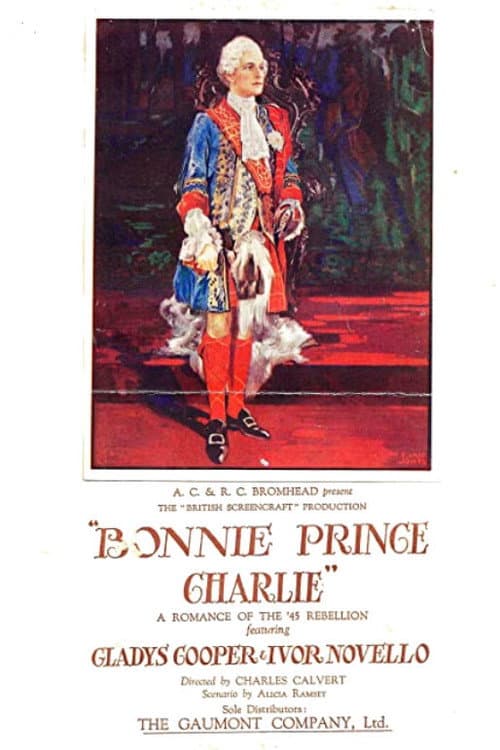
In the Jacobite Rising of 1745, the Young Pretender Bonnie Prince Charlie leads an insurrection to overthrow the Protestant House of Hanover and restore his family, the Catholic branch of the House of Stuart, to the British throne.
Elem Klimov's tribute to his late wife, director Larisa Shepitko, killed in a car accident a year earlier. Features excerpts from all of her films, and archival audio of her discussing life and art.
Chitrakathi is about the folk artists of western India who narrate with the help of leather puppets. Mani takes us to the sleepy Konkan coastal village and introduces us to the family that has preserved this unique art for several centuries.