This FitzPatrick Traveltalk short visits the cities of Casablanca, Rabat, and Marrakesh in Morocco, as well as the city of Algiers in Algeria.
No Trailers found.
Narrator (voice)
Tips for what to expect when taking a vacation aboard a cruise ship, and how to make the most of the trip.
In this remarkable journey, Planet Food travels the world to see how control of the spice trails, over the last five millennia, has made great cities and destroyed ancient civilizations. Our guides travel from the Molucca Islands of Indonesia, the original home of cloves and nutmeg, to the Indian province of Kerala, with its native pepper and cardamom. Additional stops include Venice, Beirut, Cairo and other significant places in the spice trade that created and toppled empires.
Two women hitchhike, couch surf, and camp across the United States, yearning for more out of life. The film documents the duo's encounters with random friends and strangers, often revealing their qualms with modern times.
Alone in a small white house on the edge of national road 1, the Trans-Saharan road, which connects Algiers to Tamanrasset crossing the immensity of the desert, Malika, 74, one day opened her door to the director Hassen Ferhani, who came there to scout with his friend Chawki Amari, journalist at El Watan and author of the story Nationale 1 which relates his journey on this north-south axis of more than 2000 km. The Malika of Amari's novel, which Ferhani admits to having first perceived as a "literary fantasy", suddenly takes on an unsuspected human depth in this environment naturally hostile to man. She lends herself to the film project as she welcomes her clients, with an economy of gestures and words, an impression reinforced by the mystery that surrounds her and the rare elements of her biography which suggest that she is not from the region, that she left the fertile north of Algeria to settle in the desert where she lives with a dog and a cat.
Looking for paradise lost, the "Last Temptation in Thailand" is a mesmerizing odyssey through ancient temples, idyllic islands & enticing dark-eyed ladies of eve in a very sexy, off the beaten track road movie.
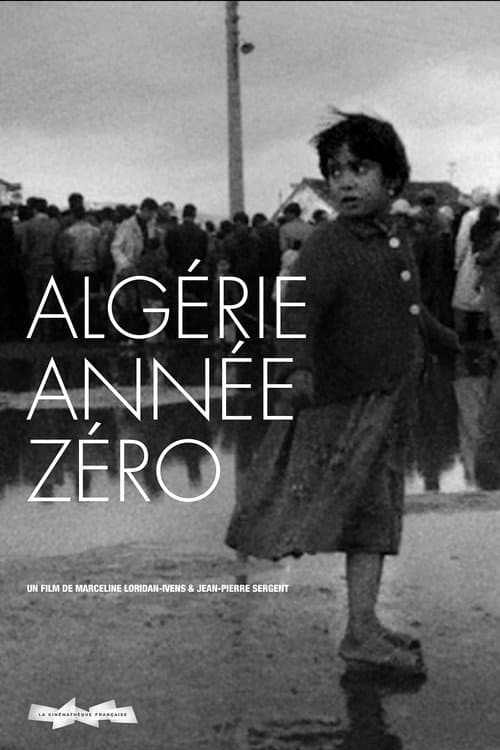
Documentary on the beginnings of Algerian independence filmed during the summer of 1962 in Algiers. The film was banned in France and Algeria but won the Grand Prize at the Leipzig International Film Festival in 1965. Out of friendship, the production company Images de France sent an operator, Bruno Muel, who later declared: "For those who were called to Algeria (for me, 1956-58), participating in a film on independence was a victory over horror, lies and absurdity. It was also the beginning of my commitment to the cinema."
An 18-minute panoramic film showcasing the grandeur, charm and romance of one of Europe’s most enchanting countries.
A stunning trek from the vale of Kashmir, via Sind Valley and Kargil and Lamayaru Monastry.
Malaysia's multiculturalism is unrivaled throughout Southeast Asia and is reflected in its cuisine. Roving foodie Merrilees Parker begins her journey on the Malaysian peninsula with the native Orang Asli people of Kelantan She then heads off to the stunning Islamic East coast to cook a rich curry using freshly caught mackerel. In the ancient spice capital of Melaka, Merrilees cooks up a storm with fiery Laksa soup in the style of the Nyonya. In the Cameron Highlands, 5,000 feet above sea level, there is a notable English influence. The island of Penang is Merilees' next stop then she visits the capital, Kuala Lumpur, one of the fastest growing cities in Southeast Asia.
In this special edition of Globe Trekker Chinatown, Lavinia Tan, Justine Shapiro and Megan McCormick travel worldwide to explore the magic and mystery of Chinatowns across the globe. Lavinia Tan begins the journey in Malaysia and Singapore where overseas traders led the earliest migrations of Chinese people. The journey continues from there to the United States, where Justine Shapiro visits San Francisco. Megan McCormick explores New York s Lower East Side, home to the largest Chinatown in the Western Hemisphere. After a short trip to London s Soho district, Lavinia Tan ends this journey with a visit to Hong Kong exploring the world famous film industry and the 21st century migration of Chinese back to their homeland.
By meeting his former comrades in combat, the film follows the journey of Yves Mathieu, anti-colonialist in Black Africa then lawyer for the FLN. When Algeria became independent, he drafted the Decrees of March on vacant property and self-management, promulgated in 1963 by Ahmed Ben Bella. Yves Mathieu's life is punctuated by his commitments in an Algeria that was then called "The Lighthouse of the Third World". The director, who is his daughter, returns to the conditions of his death in 1966.
No overview available.
Emilie Busquant, a woman with an exceptional destiny, was born on March 3, 1901, in Neuves-Maisons, Lorraine. In 1923, she moved to Paris to find work and met Messali Hadj, who had also come seeking employment. A beautiful love story began; she fell in love with both a man and a cause: the independence of Algeria. Together, in 1926, they founded the first Algerian independence party, the North African Star (Étoile Nord-Africaine). She would support the Algerian people's struggle throughout her life.
Beirut, Lebanon's capital has a long history of political and social unrest that still makes headlines today. Globe Trekker's Beirut City Guide captures the city in more optimistic days, two weeks before the latest outbreak of hostilities in Lebanon between Israeli and Hezbollah forces in July 2006. Globe Trekker Megan McCormick explores the neighborhoods of Basta, Solidere, Gemayze and the Hezbollah District and finds a city in the midst of regeneration. She gets a glimpse at Beirut's future when meeting up with a group of young Arabic hip hop artists, who are eager to live in peace and put the country's political troubles in the past.
Bruce Brown's The Endless Summer is one of the first and most influential surf movies of all time. The film documents American surfers Mike Hynson and Robert August as they travel the world during California’s winter (which, back in 1965 was off-season for surfing) in search of the perfect wave and ultimately, an endless summer.
Warsaw's Central Railway Station. 'Someone has fallen asleep, someone's waiting for somebody else. Maybe they'll come, maybe they won't. The film is about people looking for something.
This Traveltalk series short takes us to Edinburgh, Scotland. We learn the importance of religion, science and the arts here and see various historic sites including Edinburgh Castle.
This Traveltalk series short visit to New Zealand starts in Auckland, a bustling, modern city. Next is Christchurch, home of Canterbury University, where rowing teams participate in a regatta. Nearby is Lake Wakatipu, which inspires artists to put their impressions on canvas. We then visit Rotorua, a city famous for its geysers, hot springs, bubbling mud pools, and other geothermal activity. At Ferry Springs there is lots of trout for fishing. Later, a group of natives performs a canoe dance.