Immigrant workers build a shopping mall for the upcoming 1972 Olympic Games in Munich. In 2016, nine people with migrant backgrounds are killed in a racist attack at the same mall.
No Cast found.
Trailer
Architecture in Beirut was the second greatest victim of the civil war, with pages of ancient and modern history erased by the end of the conflict. This documentary interviews citizens calling for a reconstruction plan that would preserve Beirut’s spirit of culture and openness.
In 1967, de Andrade was invited by the Italian company Olivetti to produce a documentary on the new Brazilian capital city of Brasília. Constructed during the latter half of the 1950s and founded in 1960, the city was part of an effort to populate Brazil’s vast interior region and was to be the embodiment of democratic urban planning, free from the class divisions and inequalities that characterize so many metropolises. Unsurprisingly, Brasília, Contradições de uma Cidade Nova (Brasília, Contradictions of a New City, 1968) revealed Brasília to be utopic only for the wealthy, replicating the same social problems present in every Brazilian city. (Senses of Cinema)
Afonsinho, Paulo Cézar Caju and Nei Conceição started their careers in the mid-1960s, a time of strong political repression in Brazil. Originally teammates of a celebrated generation of the Botafogo football team superstars, they did not give up their freedom when the military dictatorship decided to take control of the field.
The story of Zineb El Rhazoui, a young Moroccan woman who, in the wake of the Charlie Hebdo attack, finds her life radically transformed : from a censored journalist in Morocco she becomes the most protected woman of France.
This gripping documentary tells the powerful story of men, women and children who happened to be in the wrong place at the wrong time. In Israel it's not a matter of if, but when another terror strike will happen. This is the reality that Israelis face every day as they go to work, send their children to school on buses, or sit in a cafe and wonder if they are safe, if their lives are in danger.
No overview available.
Documentary about the Lyon sex workers who occupied the church of St. Nizier on June 3, 1975.
After filming the construction site of the Berlitz Palace (2nd), Pierre Chenal shows us in contrast other contemporary architectural achievements which, using the same technical processes, do not sacrifice the structure of iron and concrete for decoration. A documentary to the glory of the modern designs of Mallet-Stevens and Le Corbusier.
A short film about traditional crafts and culture that can still be found in the Wallachian mountains today.
Over the course of two years, filmmaker Jamie Roberts meets those spreading extremist Islamic fundamentalism in Britain, including a bouncy castle salesman who is now one of the world's most wanted men.
Documentary describing events leading up to the February 1996 shoot down by Cuban Air Force Migs of 2 U.S. registered Cessna 337 aircraft operated by the Cuban exile organization Brothers To The Rescue based in Miami, USA.
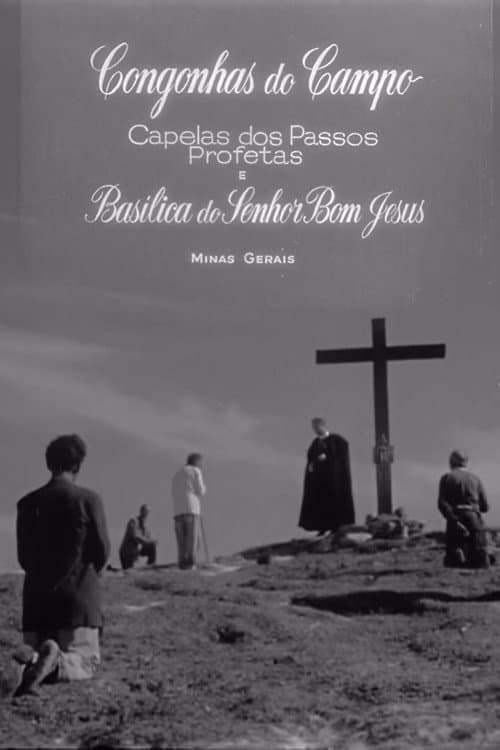
Aspects of the city of Congonhas do Campo. The preponderance of baroque architecture, the Basilica of Senhor Bom Jesus de Matozinho, the six chapels on the terrace leading to Morro do Maranhão. Each chapel contains statues representing moments of the Passion of Christ. While in the first chapel there is Santa Ceia figuration, in the second there is the Passo Horto scene. The kiss of betrayal and the imprisonment of Christ before the scene of the third chapel. In the fourth, two scenes are gathered: the coronation and the flagellation. On the fifth, the Christ bears the cross and the crucifixion is featured in the sixth chapel. The twelve apostles of Aleijadinho and the Latin inscriptions of each one. The interior of the Basilica and its main altar, with the figure of the Lord Dead.
Oil extraction in the Amazon region is contaminating the land and water of a natural paradise. A slow process that threatens the health and traditional culture of local communities. Thirteen women raise their voices against the destruction of their land. Through protests and silent resistance, they confront an opaque global power structure.
A docu-art film about Kyiv and the contemporary problems of the capital. The film raises the issue of the dilapidated state of Kyiv's old buildings and the search for effective mechanisms to preserve the city's architectural heritage.
Elliot Page brings attention to the injustices and injuries caused by environmental racism in his home province, in this urgent documentary on Indigenous and African Nova Scotian women fighting to protect their communities, their land, and their futures.
Between 1979 and 1987, a far-left group wreaked havoc across France. Robberies, bombings, assassinations. They struck hard and disappeared in a cloud of explosives, leaflets scattered in the wind, and relentless ideological demands. Their name? Action Directe. More than 80 attacks, 26 wounded, and 12 dead in less than ten years. Stunned French citizens discovered posters plastered everywhere showing portraits of these young women and men who looked like everyone else and whom nothing seemed to be able to stop. A long and intense manhunt began, culminating in the arrest of the group's leadership.
An in-depth interview with José Antonio Urrutikoetxea, known as Josu Ternera, one of the most relevant leaders of the terrorist gang ETA.
A group of young architects, confined to a forest in Barcelona during the COVID crisis, explore the problems generated by the ambition of wanting to be completely self-sufficient.
In 2021, the border area between Poland and Belarus became a forbidden zone, three kilometers wide, where refugees found themselves brutally trapped. They had become the stakes in a political game: Belarus supposedly guaranteed free passage to the EU, but in Poland the refugees met with pushbacks, forcing them back across the border. Once in Belarus again, they were driven back towards Poland—a horrific stalemate in an inhospitable landscape of treacherous marshes.