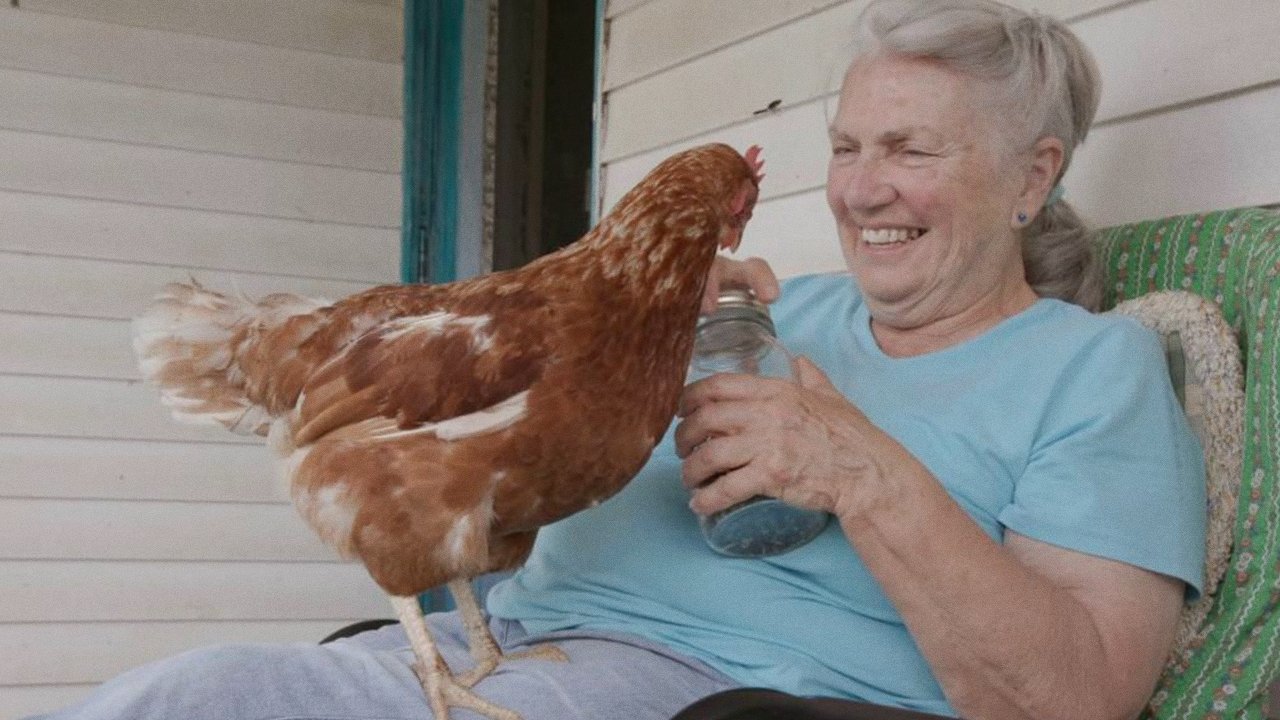
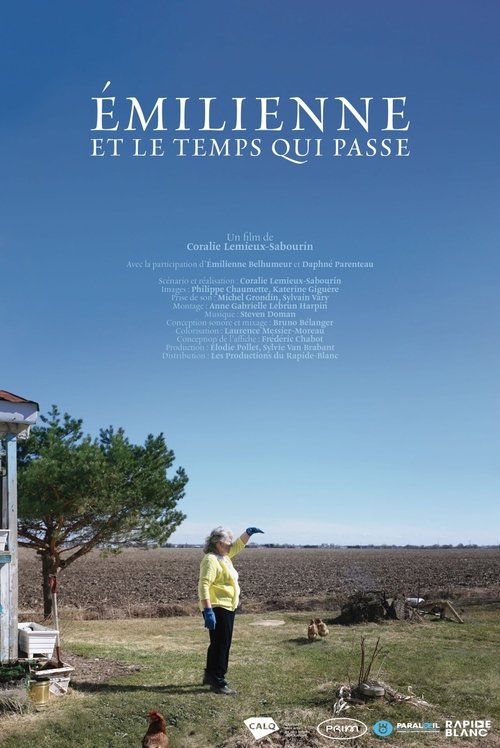
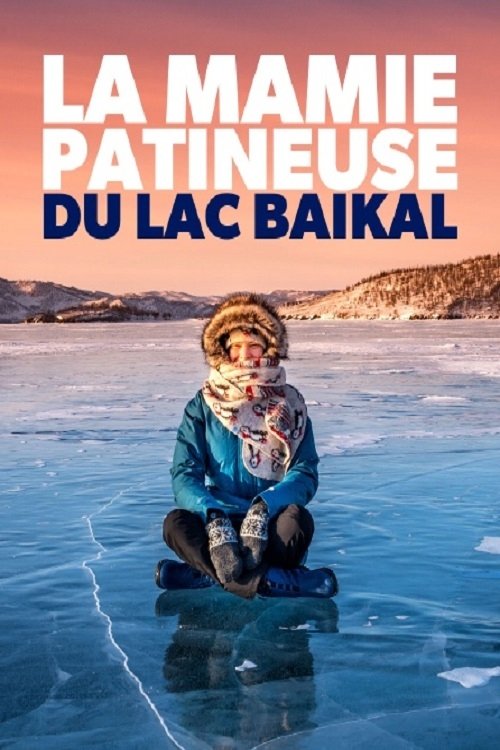
Former flight attendant Émilienne, 76, lives on a small farm in Centre-du-Québec. As the seasons go by, she helps us discover a way of life in symbiosis with the living and the passing of time.
No Trailers found.
Maverick soulmates Ged and Dave are on a mission through the winding lanes and hidden tracks of North Devon, to record the lives and experiences of people living without mains electricity.
No overview available.
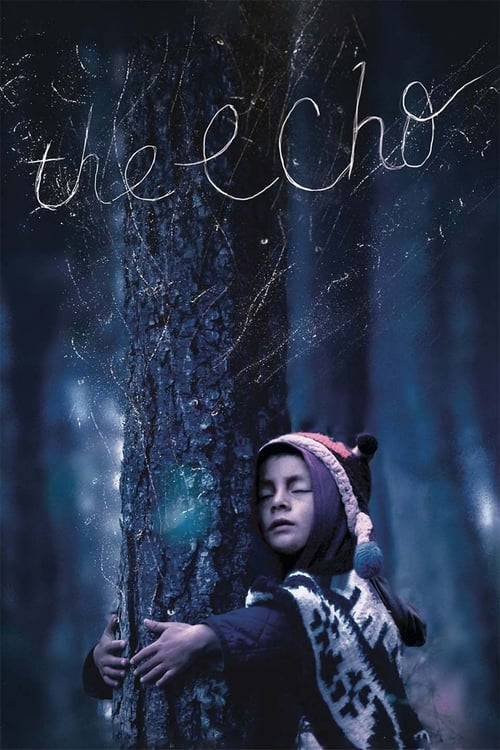
In the remote village of El Echo that exists outside of time, the children care for the sheep and their elders. While the frost and drought punish the land, they learn to understand death, illness and love with each act, word and silence of their parents. A story about the echo of what clings to the soul, about the certainty of shelter provided by those around us, about rebellion and vertigo in the face of life. About growing up.
Exploring the reports of a spectral mansion on the outskirts of Rougham, a village in the Eastern county of Suffolk. The film delves into local folklore surrounding these sightings as villagers recount their haunting experiences against the desolate backdrop of rural Britain. It reflects on themes of memory, place, and the fading tradition of oral storytelling, evoking the eerie atmosphere of a fractured England and our growing disconnect from the natural environment.
SINOPSIS / SYNOPSIS Every year in Spain, some 16,000 Fiestas are organized, during which animals are used. Honoring the Holy Virgin and the Patron Saints, and with the blessing of religious and political authorities, entire towns -including children- are involved in celebrations of unbelievable cruelty. 60,000 animals are hence abused each year during these “Fiestas of Blood”.
Esperanza and Teodula are calling for justice in rural Peru, part of 300,000 people sterilised without consent more than 18 years ago. The Quipu Project is their phone line that allows the affected across the country to share their shocking testimonies and ensure those responsible are punished.
A real-time portrait of 2020 unfolds as an Asian-American family in Trump’s rural America fights to keep their restaurant and American dream alive in the face of a pandemic, Neo-Nazis, and generational scars from the Cambodian Killing Fields.
An atmospheric and dreamy picture poem from Argentina's vast La Pampa region, where ancient stories of spirits are evoked in dark and evocative images between reality and the beyond.
After traveling the globe to highlight low-tech, Corentin de Chatelperron has set himself a new challenge: to live independently, alone for four months, on a bamboo raft floating in Phang Nga Bay, Thailand. On his 70 square meter platform, the engineer, passionate about ecology and system D, puts into practice what he has learned in order to feed himself and produce his own energy.
Set in the sparsely populated lobster fishing villages of southern Nova Scotia, Plains is a cinema vérité approach to documenting the curious lives of Jon and Cat, a young couple who are developing politically left-leaning virtual reality video games. Against the busy backdrop of their art practice, we sit in on their quiet rural life, which, in its proximity to nature and the vast green and oceanic spaces that surround, echoes the romanticism of a simpler time. As the decaying world of physical labour and the mechanical industry faces up to an expanding digital empire, Jon gradually retreats into the alternative realities of his own design.
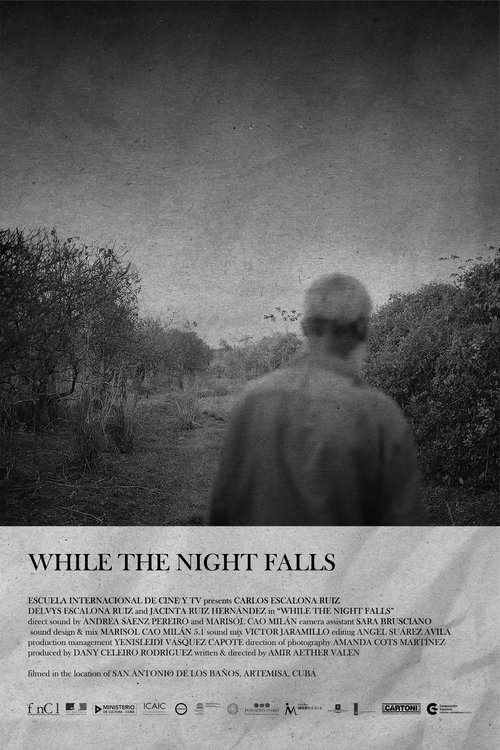
An intimate portrait of the lives of Delvys and Carlos, siblings who live alone with their elderly mother in a rural part of a small Cuban town. The film portrays a family engulfed in their inner worlds. Between the sacrifices they make out of love for those who are present, and their longing for things that are absent, they struggle to find meaning as they reflect, contemplate, and carry the weight of existence, trying together, to move forward.
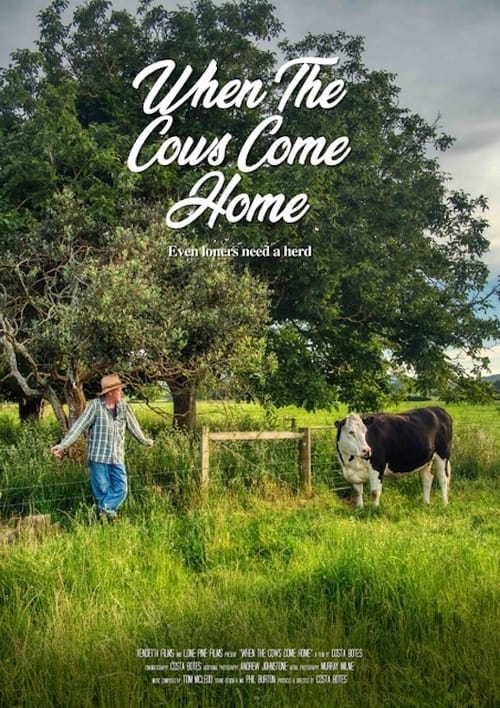
When the Cows Come Home introduces audiences to Tilly and Maggie, a pair of cows that musician, journalist, artist and cow whisperer, Andrew Johnstone has befriended and subsequently saved from slaughter. The garrulous herdsman is enthusiastic to expound his views on animal husbandry, bovine communication and the vagaries of life in general, before the film walks us back through the events that have shaped the singular farmer-philosopher. From personal family tragedy to warring with Catholic school authorities, innovating in Hamilton’s nascent music scene to creating guerrilla art installations; Johnstone’s life has had a truly idiosyncratic trajectory. Mental health issues may have seen him retreat to life on the farm, but the film makes clear its subject’s restless inquisitiveness is far from being put out to pasture.
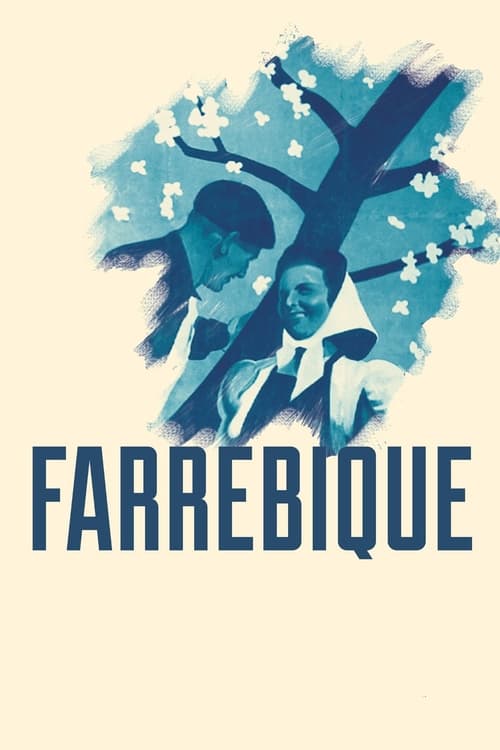
Farrebique, the first feature-length effort of French documentary filmmaker Georges Rouqier, is widely regarded as his finest film. Rouqier concentrates on a single French farm family, following them through the four seasons. As in the works of Robert Flaherty, the human characters and the land surrounding them are "one", and Rouqier never misses an opportunity to parallel their lives with the eons-old phases of nature. The final symbolic images of Spring, achieved through time-lapse photography, are almost unbearably beautiful. The winner of several festival awards, Farrebique nonetheless did not immediately result in an outpouring of financing for Rouqier's follow-up films (this was a common problem in the financially strapped French film industry of the 1940s). Perhaps as a result, Rouqier did not make his sequel, Biquefarre (filmed in the same region, with some of the same "actors"), until 1983.
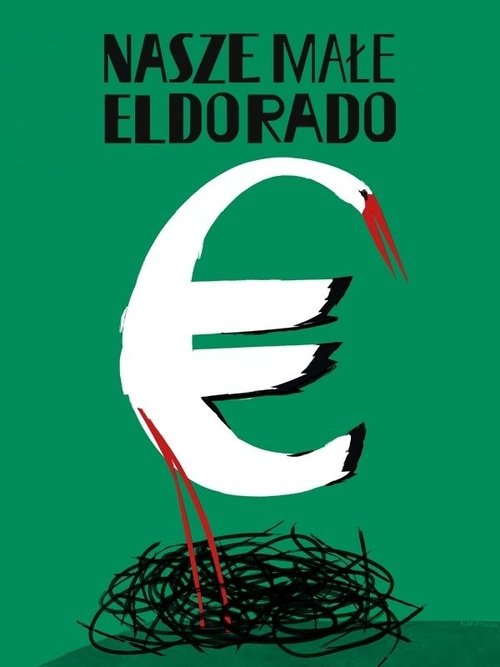
The village commune is struggling with huge debt incurred by it's overambitious mayor, who once suffered a personal tragedy. Did this affect his overly ambitious actions? A warm and humorous observation of the life of a village near Krakow.
When Werner Herzog was still a child, his father was beaten to death before his eyes. His mother was overwhelmed with his upbringing and thereupon shipped him off to one of the toughest youth welfare institutions in Freistatt. This was followed by a career as a bouncer in the city's most notorious music club and an attempt to start a family. Today, the 77-year-old from Bielefeld lives with his dog Lucky in a lonely house in the country. Despite adverse living conditions, he has survived in his own unique and inimitable way.
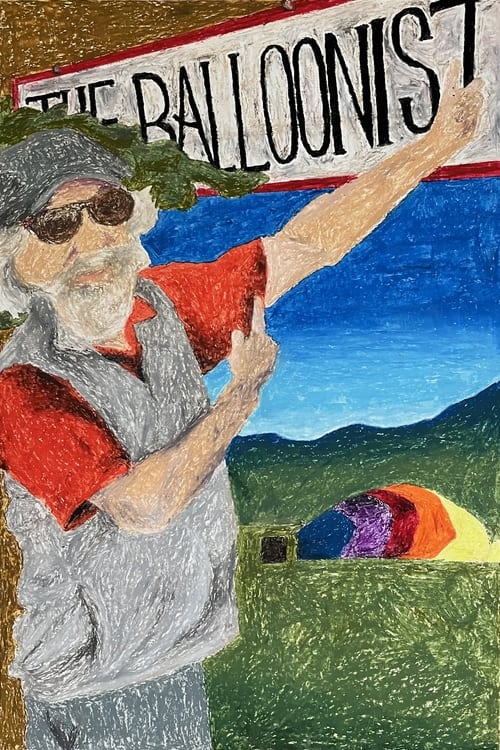
Meet Brian Boland—the beloved, eccentric hot air balloonist and artist from the rural Upper Valley of Vermont.
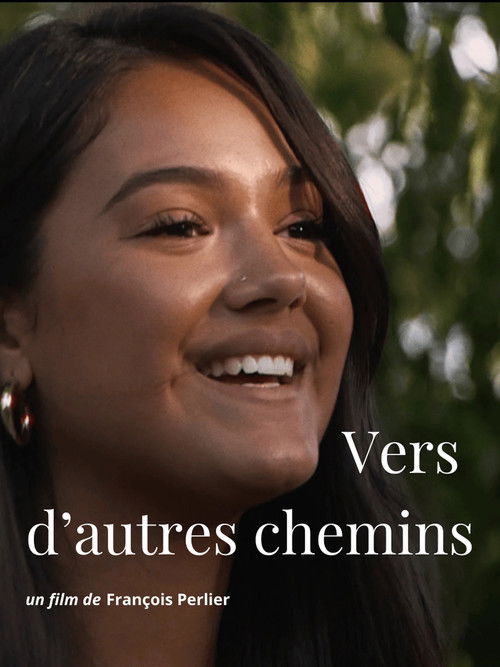
Milana, Sephora, and Mario are between seventeen and twenty-six years old. They grew up in modest, stigmatized rural Manouche families. Unlike their parents, they have degrees and work as employees. They have dreams to fulfill.