WWII Propaganda Film
No Cast found.
No Trailers found.
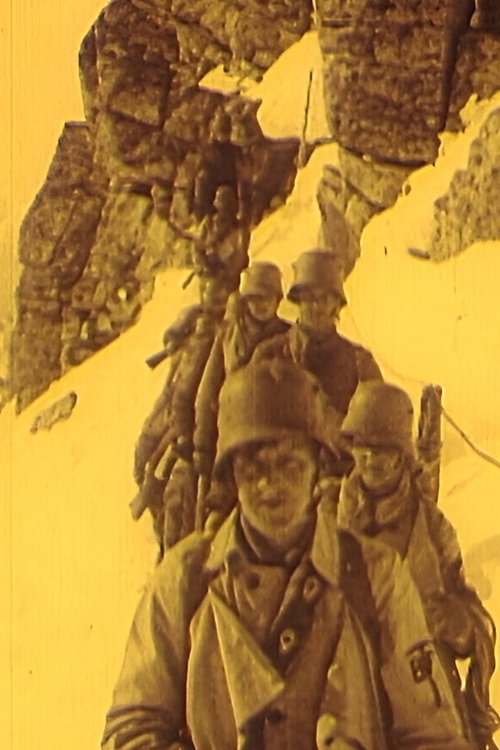
Heroic Struggle in Snow and Ice is a 1917 Austro-Hungarian propaganda newsreel film produced by Sascha-Film for the Imperial and Royal War Press Headquarters. The film is hand-colored and presented in two parts. It depicts the fighting on the Alpine Front between Italy and Austria-Hungary.
In the early days of World War II, a German U-boat is sunk in Canada's Hudson Bay. Hoping to evade capture, a small band of German soldiers led by commanding officer Lieutenant Hirth attempts to cross the border into the United States, which has not yet entered the war and is officially neutral. Along the way, the German soldiers encounter brave men such as a French-Canadian fur trapper, Johnnie, a leader of a Hutterite farming community, Peter, an author, Philip and a soldier, Andy Brock.
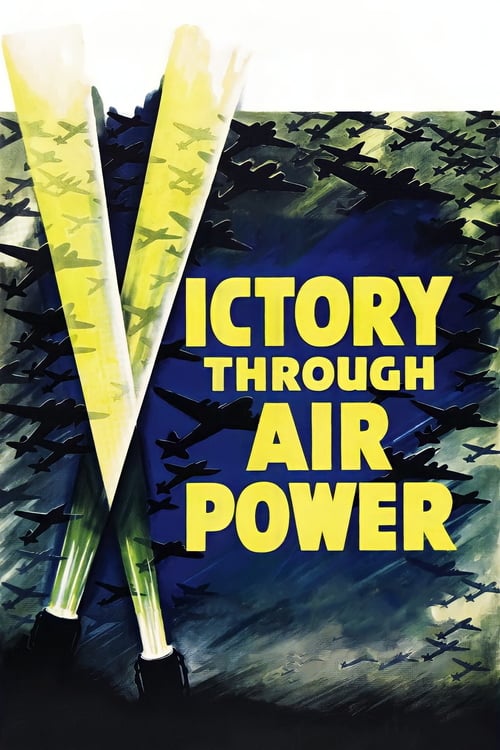
Based on the book by Major Alexander de Seversky's about his theories of the practical uses of long range strategic bombing. Using a combination of animation humorously telling about the development of air warfare, the film shows de Seversky illustrating his ideas of how air power could win World War II for the Allies.
Lugansk region, May 2014. The Novozhilov family, by chance, finds itself in the thick of events in Lugansk. Vlad Novozhilov is a former participant in the war in Afghanistan. He knows firsthand what war is. Having seen enough of the horrors of war in his time, in principle he does not even want to touch a weapon. In a situation, he sees only one way out - to leave the country. But you can't run away from the war, the border is already closed. To save his family, he will have to make difficult moral choices.
The stunning princess desires an inextinguishable fair of love as proof of true feelings. Brave suitors fly to the four corners of the world to look for it.
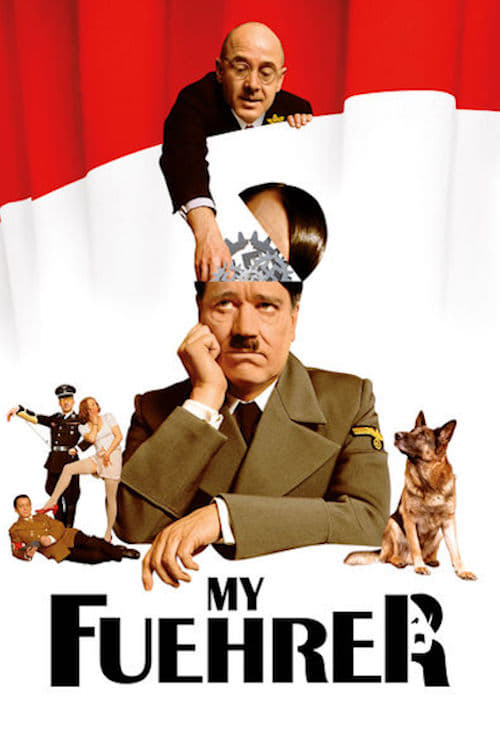
Hitler no longer believes in himself, and can barely see himself as an equal to even his sheep dog. But to seize the helm of the war he would have to create one of his famous fiery speeches to mobilize the masses. Goebbels therefore brings a Jewish acting teacher Grünbaum and his family from the camps in order to train the leader in rhetoric. Grünbaum is torn, but starts Hitler in his therapy ...
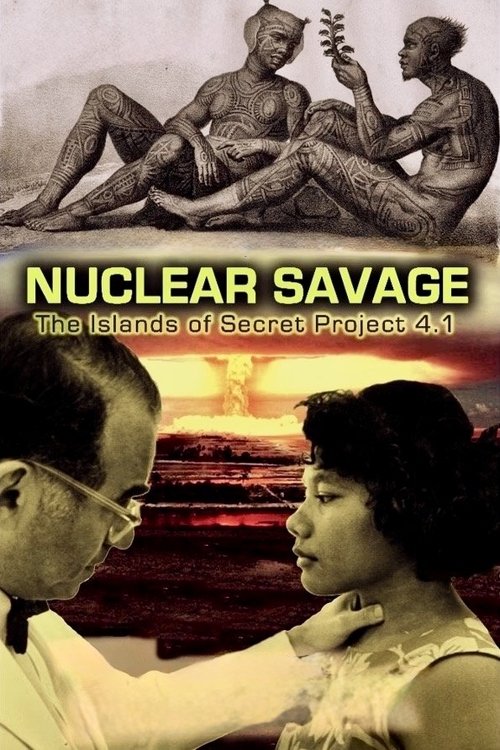
A shocking political exposé, and an intimate ethnographic portrait of Pacific Islanders struggling for survival, dignity, and justice after decades of top-secret human radiation experiments conducted on them by the U.S. government.
A marching band of Germans, Italians, and Japanese march through the streets of swastika-motif Nutziland, serenading "Der Fuehrer's Face." Donald Duck, not living in the region by choice, struggles to make do with disgusting Nazi food rations and then with his day of toil at a Nazi artillery factory. After a nervous breakdown, Donald awakens to find that his experience was in fact a nightmare.
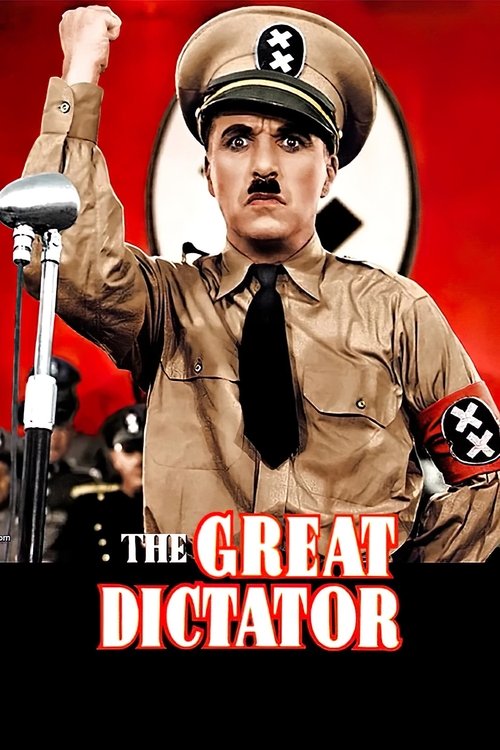
Dictator Adenoid Hynkel tries to expand his empire while a poor Jewish barber tries to avoid persecution from Hynkel's regime.
A pragmatic U.S. Marine observes the dehumanizing effects the U.S.-Vietnam War has on his fellow recruits from their brutal boot camp training to the bloody street fighting in Hue.
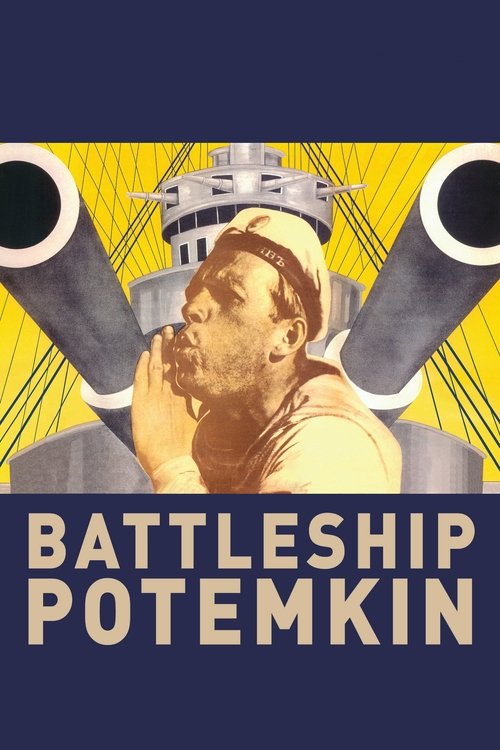
A dramatized account of a great Russian naval mutiny and a resultant public demonstration, showing support, which brought on a police massacre.
Director Quentin Tarantino tasked Eli Roth to craft a mini-movie called Stolz der Nation (Nation's Pride) that will be included in the theatrical cut of Inglourious Basterds. To help promote Inglourious Basterds via the film-within-a-film, Roth has slapped together a trailer for Nation's Pride blending black and white photography with modern multi-layered camera effects.
Old rivals are pitted against each other in basic training and fight for the same woman.
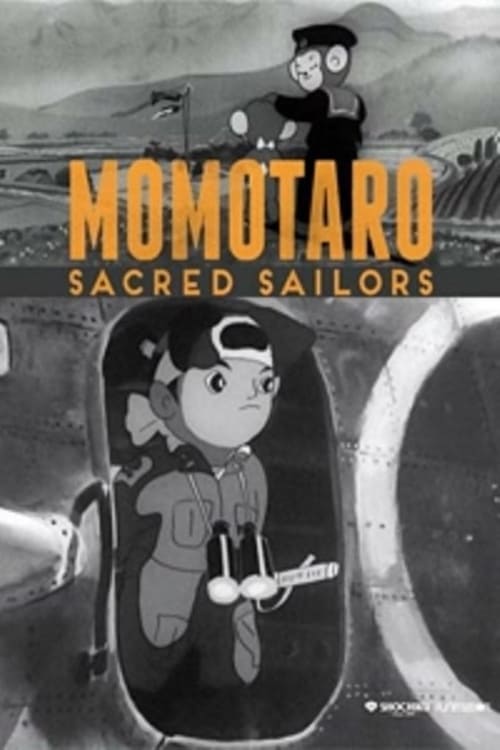
The first Japanese feature-length animated film. It was directed by Mitsuyo Seo, who was ordered to make a propaganda film for the war by the Japanese Naval Ministry. Shochiku Moving Picture Laboratory shot the 74-minute film in 1944 and screened it on April 12, 1945. It is a sequel to Momotarō no Umiwashi, a 37-minute film released in 1943 by the same director. It is black and white. The whole movie also depicts the Japanese "liberation of Asia", as proclaimed by the Government at the time. Seo tried to give dreams to children, as well as to instill the hope for peace, with hidden movie's hints of dreams and hopes, under the appearance of war propaganda.
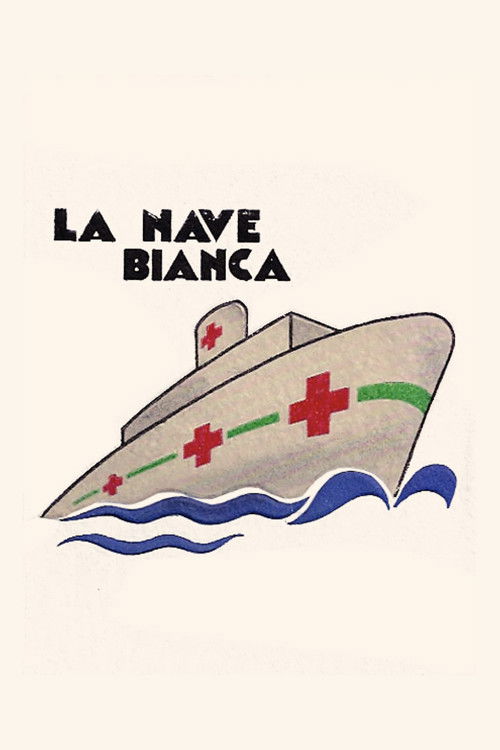
Although released anonymously, as was the custom with all films produced by the Italian Navy, La Nave Bianca is the first feature-length effort directed by Roberto Rossellini; it is also very much the work of its co-writer and supervisor Francesco De Robertis. The film combines a documentary look at the Italian Navy during World War II with newsreel combat footage and a scripted love story performed by non-professional actors.
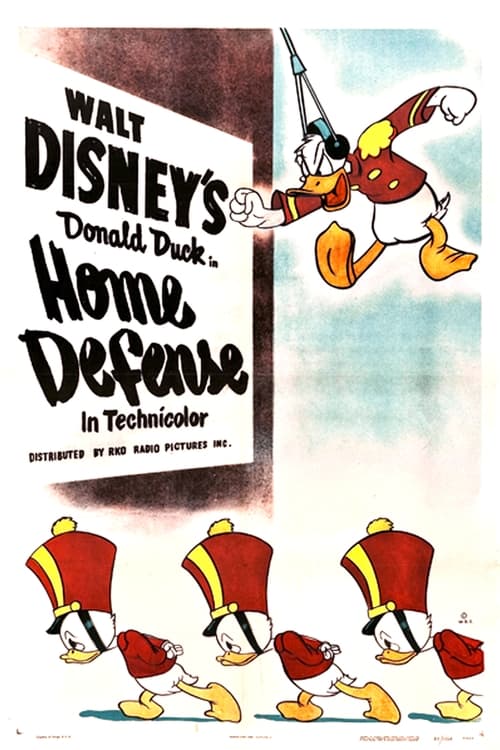
Donald is manning a listening post and falls asleep; he blows trumpet calls in his sleep and wakes his nephews. For their revenge, they send up a model airplane filled with gingerbread men with parachutes; Donald shoots it down, and cowers in fear when he sees the parachutes (and hears a simulated battle), until one lands on his beak. Donald kicks his nephews out until he mistakes a bee for an airplane, and calls them back to fight this menace.
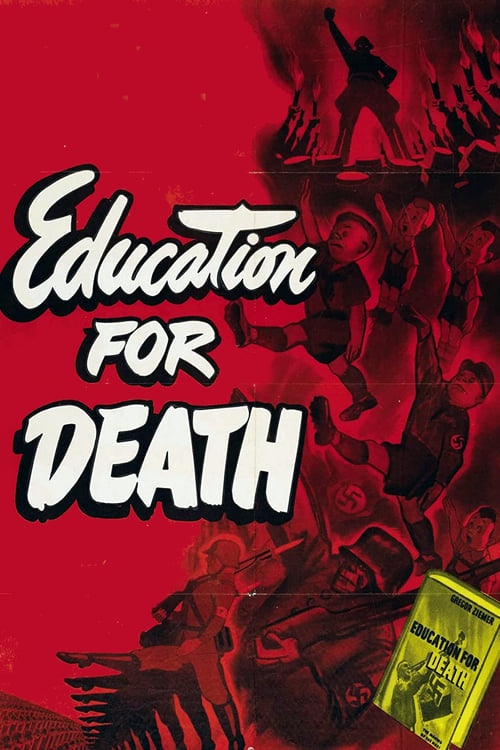
A propaganda film during World War II about a boy who grows up to become a Nazi soldier.
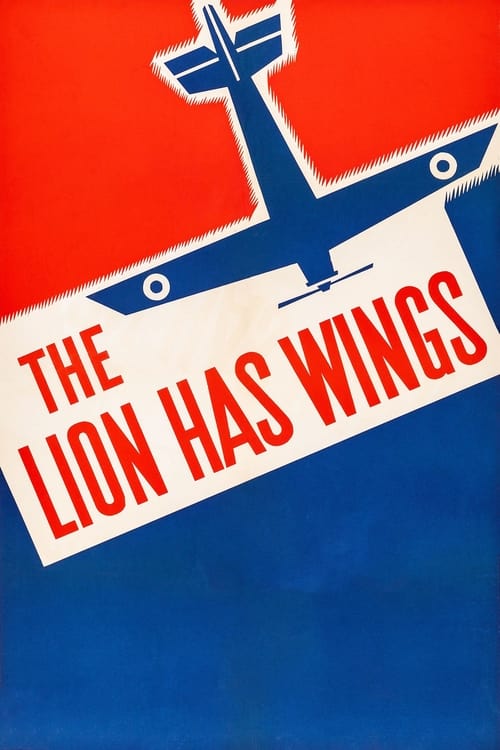
This early, influential propaganda film blends documentary and studio footage to show the valiant efforts of the Royal Air Force to defend the British people against the Nazis.
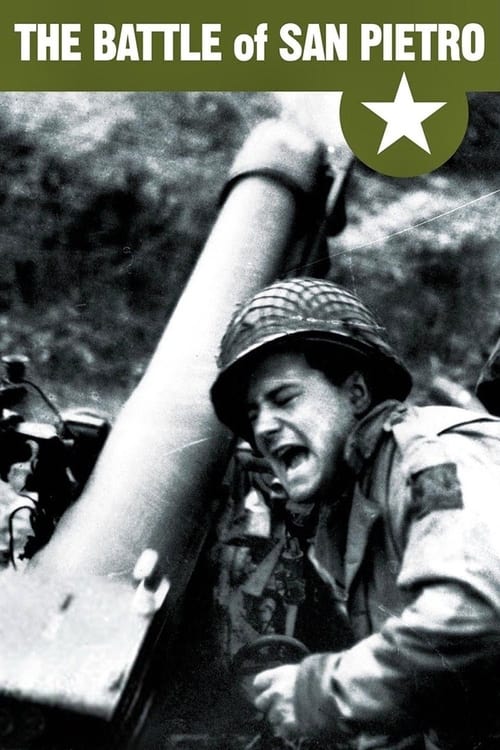
This documentary movie is about the battle of San Pietro, a small village in Italy. Over 1,100 US soldiers were killed while trying to take this location, that blocked the way for the Allied forces from the Germans. Preserved by the Academy Film Archive in 2005.
A soldier is informed that enemies are headed towards his post, only moments before they arrive.