logologo
MovieVerse© 2024
Privacy PolicyTerms of ServiceContact Us
Made with ❤️ by Thathsara
movie poster
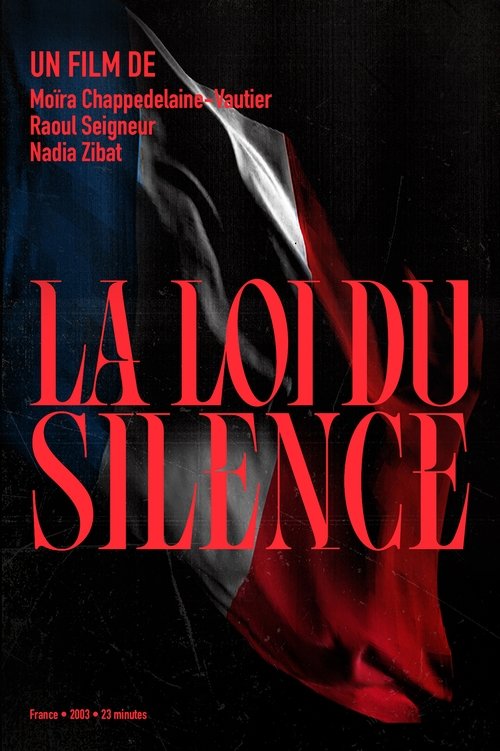
The Law of Silence
Sign in to create your own watchlist

The Law of Silence

Oct 10, 2003
0h 23m
★ 9.0

Overview

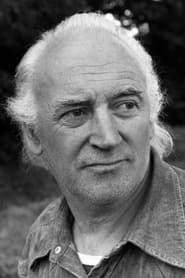
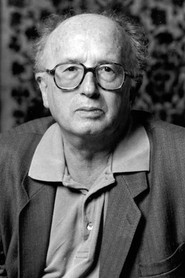
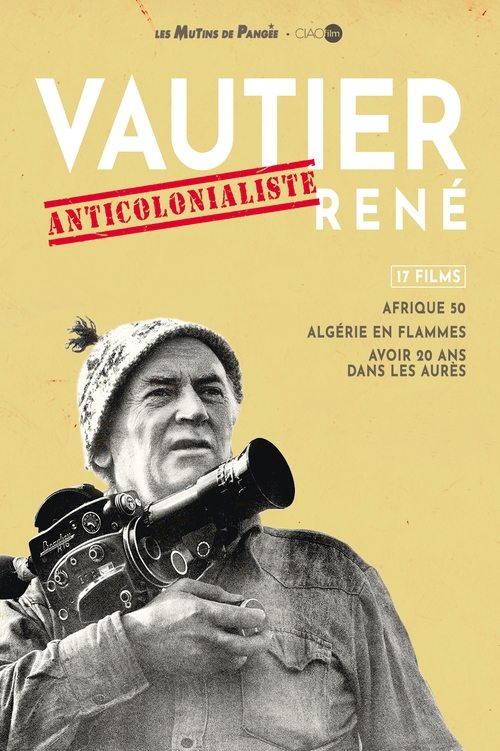
The Law of Silence, a final-year documentary by Moïra Chappedelaine-Vautier at Femis, examines the 1963 Amnesty Law and the consequences it had on studies of the Algerian War. It brings together interviews conducted in 2002 with Henri Alleg, editor of the daily newspaper Alger Républicain from 1951 to 1955, and Pierre Vidal-Naquet, historian and essayist. It also features incredible statements from General Massu and lawyers unraveling the various legal defenses of people like Jean-Marie Le Pen. Not only does Moïra have her father, René Vautier, speak, but she also includes footage he himself filmed forty years earlier. A very interesting report, which notably reminds us that the Amnesty is not a pardon but the erasure of the sentence and also of the crime itself.

Genres

Documentary

Production Companies

La Fémis

The Law of Silence Trailers

No Trailers found.

Cast

René Vautier

Self

René Vautier

Henri Alleg

Self

Henri Alleg

Pierre Vidal-Naquet

Self

Pierre Vidal-Naquet

You may also like

Occupation 101: Voices of the Silenced Majority
7.5

Occupation 101: Voices of the Silenced Majority

Mar 25, 2006

A thought-provoking documentary on the current and historical causes of the Israeli-Palestinian conflict and U.S. political involvement.

L'Avenir est ailleurs
10.0

L'Avenir est ailleurs

Mar 28, 2007

No overview available.

Two Lives for Algeria and All the Wretched of the Earth
8.0

Two Lives for Algeria and All the Wretched of the Earth

Jan 15, 2025

In 1994, at over seventy years old, Gilberte and William Sportisse, threatened by the FIS, arrived from Algeria. Of Jewish faith, he of Arabic mother tongue, they formed a fighting couple, started for the independence of Algeria, always with an unshakeable faith in humanity. They enjoy recounting the participation of Algerian Jews in the Second World War and the struggle for Algerian independence. They provide us with previously unpublished information on the public and clandestine struggles of the Algerian Communist Party before and after independence, and on the repression of activists who, like William and Gilberte Sportisse, were tortured and imprisoned after Colonel Boumédiène came to power. The film is an ode to understanding between people of different origins or cultures and a tribute to a couple whose youthful character and enthusiasm still astonish.

Sur les pas de Robespierre
0.0

Sur les pas de Robespierre

Oct 22, 2019

No overview available.

A Propos D'Un Crime
10.0

A Propos D'Un Crime

Jan 1, 1967

In 1967, Visconti came to Algiers for the filming of The Stranger with Mastroianni and Anna Karina. Camus, during his lifetime, had always refused to allow one of his novels to be brought to the screen. His family made another decision. The filming of the film was experienced in Algiers, like a posthumous return of the writer to Algiers. During filming, a young filmmaker specializing in documentaries Gérard Patris attempts a report on the impact of the filming of The Stranger on the Algerians. Interspersed with sequences from the shooting of Visconti's film, he films Poncet, Maisonseul, Bénisti and Sénac, friends of Camus, in full discussions to situate Camus and his work in a sociological and historical context. “The idea is for us to show people, others, ourselves as if they could all be Meursault, or at least the witnesses concerned to his drama.”

Cao Bang, les soldats sacrifiés d'Indochine
0.0

Cao Bang, les soldats sacrifiés d'Indochine

Apr 27, 2014

No overview available.

La Bataille d'Alger, l'empreinte
10.0

La Bataille d'Alger, l'empreinte

Jan 1, 2018

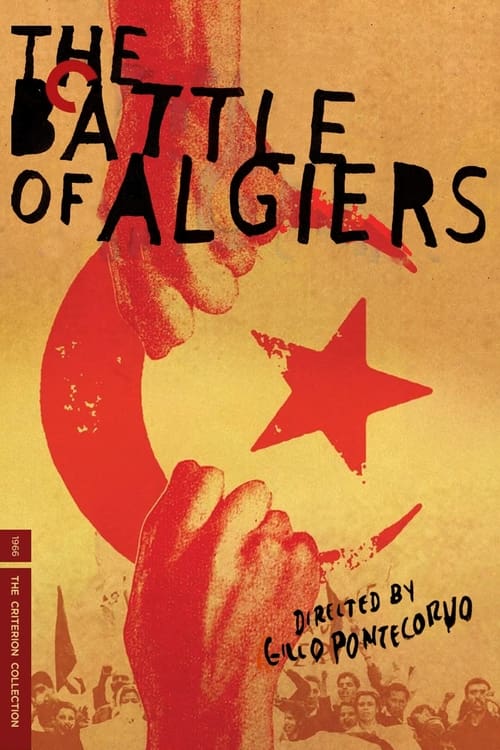
Cheikh Djemaï looks back on the genesis of Gillo Pontecorvo’s feature film, The Battle of Algiers (1965). Through archive images, extracts from the film and interviews with personalities, the filmmaker retraces the journey of a major work - from the events of the Algiers Casbah (1956-1957) to the presentation of the Lion of 'Or causing the anger of the French delegation in Venice - which left its mark as much in the history of cinema as in that of Algeria.

Le Grand Désert
10.0

Le Grand Désert

Dec 1, 1950

In 1950, the explorer Roger Frison-Roche made a crossing of more than a thousand kilometers on the back of a camel with the photographer Georges Tairraz II, in the heart of the Sahara, from Hoggar then Djanet in Algeria to Ghat in Libya. From their journey they brought back a large number of color films and documents. Among thousands of photos, they selected 47 images which reflect the various aspects of these immense spaces which occupy a third of Africa in the book "The Great Desert". “The Great Desert, 1000 kilometers on camelback” is the eponymous 85-minute documentary of this epic, released in 1950.

Leningrad. Stimmen einer belagerten Stadt
7.8

Leningrad. Stimmen einer belagerten Stadt

Jan 9, 2024

It was one of the great crimes of the Second World War: from 1941 to 1944, a total of 872 days, the siege and starvation of Leningrad by the German Wehrmacht on Hitler's orders lasted. Over a million people fell victim to the blockade, most of them dying of hunger. Countless of these starving people wrote diaries with the last of their strength, and cameramen filmed in the paralyzed city. Evidence from the hell of the siege, many of the film recordings, but above all the written memories on which this documentary on the occasion of the 80th anniversary of the liberation is based, remained under lock and key after the war. The voices of those who had suffered through this terrible time should not be heard by anyone, because they did not fit the pathos of the Leningrad heroic song that was officially sung. Most of the recordings come from women. The writers feared neither the enemy nor the Communist Party or Stalin, who often proved incompetent in providing for the population.

The Death of Hitler: The Story of a State Secret
8.0

The Death of Hitler: The Story of a State Secret

Apr 7, 2017

On April 30, 1945, while the Russian Army surrounded Berlin, Hitler committed suicide in his bunker. His body was discovered a few days later by the Soviets. He would be positively identified after a top secret inquest in which Hitler's personal dentist would play a central role. And yet, at the same time, Stalin publicly declared that his army was unable to find the Führer's body, choosing to let the wildest rumors develop and going so far as to accuse some of his Allies of having aided the monster's probable escape. What secrets were hidden behind this dissimulation? What happened then to the two ladies involved in the identification of Hitler’s body?

Drugged and Abused: No More Shame
8.0

Drugged and Abused: No More Shame

Jan 21, 2025

Caroline Darian, Gisèle Pelicot's daughter, looks back on the tragedy that shook her family: for ten years, her father drugged her mother to subject her to rapes committed by strangers recruited on the Internet. This case exposes the scandal of chemical submission, a practice where attackers, generally close to the victims, use prescription or over-the-counter medications to commit their crimes. This phenomenon, far from being marginal, affects victims with varied profiles...

Korengal
6.6

Korengal

May 30, 2014

Korengal picks up where Restrepo left off; the same men, the same valley, the same commanders, but a very different look at the experience of war.

The Architects of Hope: The First Steps in Rebuilding Ukraine
0.0

The Architects of Hope: The First Steps in Rebuilding Ukraine

Feb 24, 2024

This feature documentary follow 5 architects on their determined journeys to continue building during wartime, as they seek a new people-focused identity for Ukrainian architecture. While Russia continues to turn former Ukrainian cities to dust, Ukraine’s leading architects are already building upwards & advanced new buildings are rising again as symbols of hope.

Expédition Hoggar 79
10.0

Expédition Hoggar 79

May 31, 1979

TSR documentary on the 1979 expedition to Algeria in the Atakor massif (Hoggar desert), organized by Geneva mountaineer Michel Vaucher and Jean-Blaise Fellay. The climbers make a dozen ascents including the famous summit of Adaouda (which means "finger" in Tamasheq, the Tuareg dialect), by several routes. Then a new route on the peaks of the southern Tezoulegs. They discover the volcanic geological characteristics of the Atakor massif and meet the nomadic inhabitants of the region, the Tuaregs, who are increasingly settling in the town of Tamanrasset.

June 1940, the Great Chaos
8.0

June 1940, the Great Chaos

Jun 14, 2010

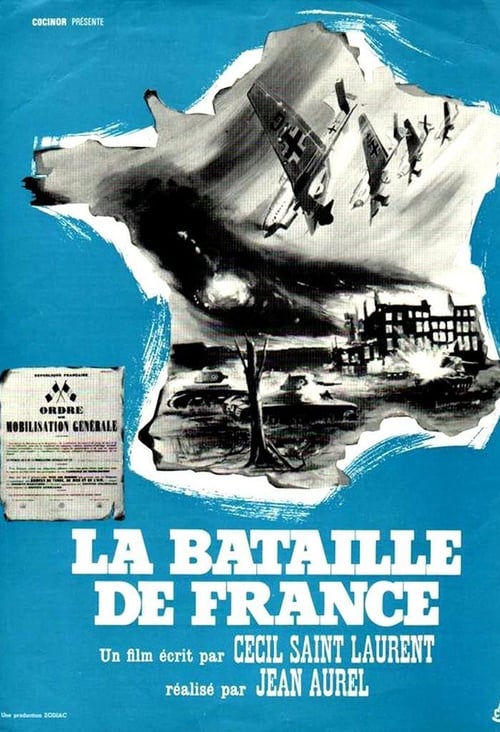
From May 10, 1940, France is living one of the worst tragedies of it history. In a few weeks, the country folds, and then collapsed in facing the attack of the Nazi Germany. On June 1940, each day is a tragedy. For the first time, thanks to historic revelations, and to numerous never seen before images and documents and reenacted situations of the time, this film recounts the incredible stories of those men and women trapped in the torment of this great chaos.

Anatomy of a First
10.0

Anatomy of a First

Jan 1, 1966

In February 1966, Pierre Mazeaud and Lucien Berardini attempted a difficult first ascent to one of the summits of Garet El Djenoun, in the Hoggar massif, a mountain range located west of the Sahara, in the south of Algeria. The mountain has been preserved intact since Roger Frison-Roche's expedition in 1935. The documentary, superbly filmed by René Vernadet, won the Grand Prix at the Trento Film Festival in 1966.

Avant de franchir la ligne d'horizon
0.0

Avant de franchir la ligne d'horizon

Jan 1, 2010

Habiba Djahnine went to meet activists who continue to take action. To meet them, to capture them in the spaces where they live, work or fight. They inscribe a few words of our tormented history. Memory, memory gaps, background noise, demonstrations... The film bears witness to 20 years of political mobilization/repression in Algeria.

Auschwitz: Countdown To Liberation
7.0

Auschwitz: Countdown To Liberation

Jan 26, 2025

No overview available.

Nuremberg: The Nazis Facing their Crimes
8.4

Nuremberg: The Nazis Facing their Crimes

Oct 25, 2006

The documentary of the Nuremberg War Trials of 21 Nazi dignitaries held after World War II.

Money, Freedom, a Story of CFA Franc
6.7

Money, Freedom, a Story of CFA Franc

Nov 9, 2022

The former French colonies in Central and West Africa have been independent since 1960, but most of these countries still use the currency of the former oppressor: the CFA franc. It was linked to the French franc when it was introduced, so the national bank in Paris controlled monetary policy. Now the currency has a fixed exchange rate with the euro. The link with the European currency strongly influences the monetary policy of CFA countries. And that means the value of the CFA franc is defined by political decisions taken elsewhere, rather than by the domestic economy.