The Ripple Effect is a powerful documentary primarily centred around St Kilda legend and proud Noongar Nicky Winmar's generation-defining stand against racism at Victoria Park in 1993.
Trailer
A portrait of wildlife rescue experts devoting their lives to saving kangaroos in tension with professional hunters seeking to harvest them.
For millenniums, Aborigines used tracking to survive. Their ancient skills now help police capture murderers and save people's lives. Will modern technology replace an art based on the intimate bond between man and nature?
A small city in the tropical north of Queensland, Cairns boasts a life that is leisurely and comfortable. The tempo quickens, however, at cane-cutting time when the sugar is harvested, and in winter when tourists come north to escape the cold. The Life In Australia series portrays Australian cities and rural centres as happy, lively places where good homes, abundant jobs, schools, hospitals and amenities provide the foundation for a relaxed lifestyle where sport, shopping, religion and even art combine to create a homogenous and prosperous society.
In the pinnacle of their Stack Is The New Black national tour, Short Stack play the Sydney Opera House in a sold out mega-show.
The stranger-than-fiction true story of George Lazenby, a poor Australian car mechanic who, through an unbelievable set of circumstances, landed the role of James Bond despite having never acted a day in his life.
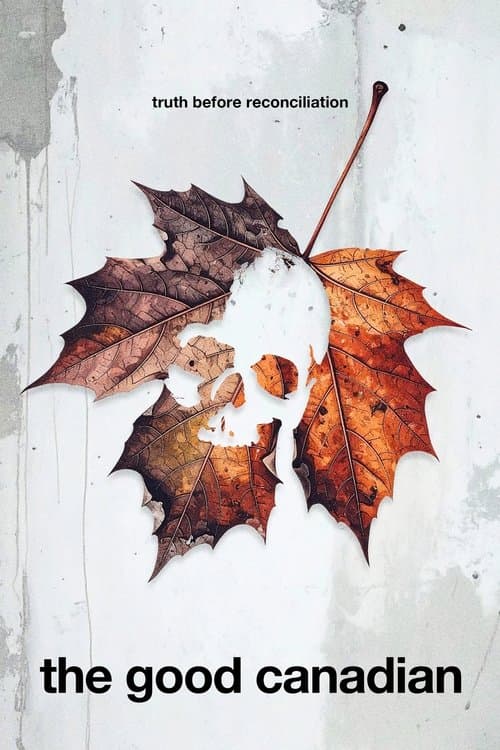
The world knows the image of the good Canadian. But what if there was a dark secret behind a national identity? THE GOOD CANADIAN exposes the truth behind the idea of a True North strong and free. In this unflinching and eye-opening documentary, directors Leena Minifie and David Paperny move us through the corridors of systemic inequity, from the Indian Act to residential schools, to modern-day family separation. Fusing shocking footage with detailed interviews with experts, advocates, whistleblowers and politicians, THE GOOD CANADIAN challenges national myth-making, while offering Canadians the chance to forge a new identity from the truth.
It's about the legendary 2005 Ashes series, which is arguably the greatest test series ever played, and made 'Freddy' Flintoff an England superstar forever
Through the lens of sport, AFL legend Michael O'Loughlin shines a light on the history and experience of the Indigenous Australian people. Current AFL players, Michael Walters and Tarryn Thomas, join O'Loughlin to unpack racism, discrimination and the unbreakable bond they each share with their indigenous communities.
A documentary focused on Melbourne's music scene around the year 2006. Features bands such as HTRK, The Stabs, Cosmic Psychos, Rod Cooper, and Love of Diagrams.
An audio-visual experience through the perspective of an iPhone depicting a harmonious city during the day quickly descend into technological madness as night falls.
A colourful look into the life of Canary Islands Immigrant Montse, her journey in Australia, and the story of connecting with your culture as a means of connecting with yourself.
A visual journey into the life and legacy of one of Australia's most celebrated artists, Brett Whiteley.
Eight men escape from the most isolated prison on earth. Only one man survives and the story he recounts shocks the British establishment to the core. This story is the last confession of Alexander Pearce.
This film takes us on an emotional journey from sacred ground above Byron Bay to Antarctica, Indonesia to Pakistan, and is sure to light a fire under the strongest climate change denier. THE POWER OF ACTIVISM focuses on six highly spirited female activists as they are put under the microscope to ascertain the financial impact of their environmental solutions… and the results are astonishing. From shark conservation to indigenous practices, intensive farming to plastic pollution; all their ‘causes' fall under the umbrella of "climate change", but they should also fall under the umbrella of "saving tax payers hundreds of millions of dollars!”
It's 1974. Muhammad Ali is 32 and thought by many to be past his prime. George Foreman is ten years younger and the heavyweight champion of the world. Promoter Don King wants to make a name for himself and offers both fighters five million dollars apiece to fight one another, and when they accept, King has only to come up with the money. He finds a willing backer in Mobutu Sese Suko, the dictator of Zaire, and the "Rumble in the Jungle" is set, including a musical festival featuring some of America's top black performers, like James Brown and B.B. King.
A contrast between two kinds of attitudes to gay liberation in Adelaide.
Exploring how punk influenced politics in late-1970s Britain, when a group of artists united to take on the National Front, armed only with a fanzine and a love of music.
Australia: Land Beyond Time takes viewers on a breathtaking journey back in time to witness the birth and evolution of a mysterious land that harbors remnants of Earth's earliest life and many of it's strangest creatures that exist nowhere else on the planet.
An hour-long documentary on the life and career of actor David Gulpilil.
In Australia, sharks have recently been recorded with unusual prey-including other sharks. In order to figure out what has caused this shift in diet, Dr. Charlie Huvaneers and team head to shark infested waters to find out what's in the stomach of a great white - and why.
Self