logologo
MovieVerse© 2024
Privacy PolicyTerms of ServiceContact Us
Made with ❤️ by Thathsara
movie poster
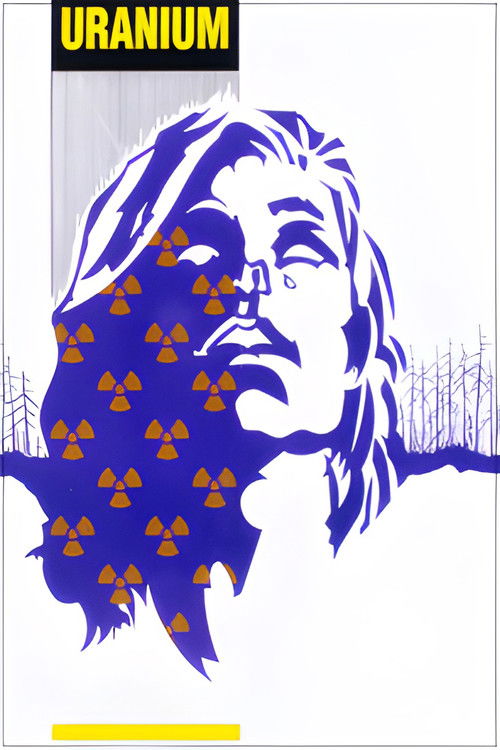
Uranium
Sign in to create your own watchlist

Uranium

Nov 7, 1990
0h 48m
★ 0.0

Overview

Explores the consequences of uranium mining in Canada. Toxic and radioactive waste pose profound, long-term environmental hazards. Miners suffer a substantially increased risk of getting cancer. Most mining occurs on Indigenous People's land, violating their traditional economic and spiritual lives. Given our limited knowledge of the risks associated with uranium mining, why continue?

Genres

Documentary

Production Companies

ONF | NFB

Uranium Trailers

No Trailers found.

Cast

Buffy Sainte-Marie

Self - Narrator (voice)
Buffy Sainte-Marie

You may also like

No Image Available
0.0

Mechanisace dolů

Jan 1, 1951

No overview available.

The Apocalypse of the Animals
0.0

The Apocalypse of the Animals

Jun 5, 1973

A documentary about the life of wild animals.

Under the Cloud
7.0

Under the Cloud

Aug 30, 2023

An investigation into the unfolding history of nuclear testing, uranium mining, and nuclear waste disposal on indigenous lands in the US. It raises the voices of those who witnessed and experienced the consequences of nuclear colonialism and those who still resist.

Seven Rivers Walking - Haere Mārire
9.0

Seven Rivers Walking - Haere Mārire

Aug 19, 2017

Documentary about the degraded rivers of Canterbury, New Zealand.

Koyaanisqatsi
7.9

Koyaanisqatsi

Apr 27, 1983

Takes us to locations all around the US and shows us the heavy toll that modern technology is having on humans and the earth. The visual tone poem contains neither dialogue nor a vocalized narration: its tone is set by the juxtaposition of images and the exceptional music by Philip Glass.

The Cost of Forever
0.0

The Cost of Forever

Sep 27, 2024

In "The Cost of Forever", we uncover the hidden and costly dangers of ‘forever chemicals’ in our rivers and drinking water sources, following Riverkeepers and water protectors as they strive to protect communities—and themselves—from PFAS contamination.

No Image Available
0.0

Action 37

Jan 1, 1959

No overview available.

Suspension
6.5

Suspension

Nov 23, 2019

In the depths of the Colombian jungle, the skeleton of an immense abandoned cement bridge is tucked away. It has turned into a delusional tourist attraction.

Live and Let Live
8.0

Live and Let Live

Nov 3, 2013

Live and Let Live is a feature documentary examining our relationship with animals, the history of veganism and the ethical, environmental and health reasons that move people to go vegan.

Wolsong: Vanishing Town
0.0

Wolsong: Vanishing Town

Dec 12, 2019

No overview available.

No Image Available
0.0

Uranium Drive-In

May 25, 2013

A new uranium mill -- the first in the U.S. in 30 years -- would re-connect the economically devastated rural mining community of Naturita, Colorado, to its proud history supplying the material for the first atomic bomb. Some view it as a greener energy source freeing America from its dependence on foreign oil, while others worry about the severe health and environmental consequences of the last uranium boom.

An Inconvenient Truth
7.0

An Inconvenient Truth

May 24, 2006

A documentary on Al Gore's campaign to make the issue of global warming a recognized problem worldwide.

Plastic People
5.9

Plastic People

Mar 9, 2024

Are we becoming Plastic People? Our ground-breaking feature documentary investigates our addiction to plastic and the growing threat of microplastics on human health. Almost every bit of plastic ever made ends up ground down into "microplastics". These microscopic particles drift in the air, float in the water and sit in the soil. And now, leading scientists are finding them in our bodies: organs, blood, brain tissue and even the placentas of new mothers. What is the impact of these invisible invaders on our health? Ziya Tong, author and science journalist, makes it personal by visiting leading scientists and undergoing experiments in her home, on her food, and on her body.

You Think the Earth Is a Dead Thing
7.6

You Think the Earth Is a Dead Thing

Oct 22, 2019

Just one of the many far-reaching impacts of the slave trade on human history is on agriculture and horticulture. While the French plantation owners on the Caribbean island of Martinique had their gardens laid out, Versailles-style, their enslaved workers continued their tradition of using medicinal wild herbs. Nowadays these herbs represent one of several resources through which the people of Martinique counter the health and ecological ravage caused by the use of pesticides on the banana plantations. Farmers are reclaiming uncultivated lands to grow indigenous vegetables, without any industrial pesticides; they fight boldly for simple biodiversity.

No Image Available
0.0

Anticosti: La chasse au pétrole extrême

May 5, 2014

No overview available.

The Ants and the Grasshopper
7.3

The Ants and the Grasshopper

May 26, 2021

Anita Chitaya has a gift: she can help bring abundant food from dead soil, she can make men fight for gender equality, and maybe she can end child hunger in her village. Now, to save her home in Malawi from extreme weather, she faces her greatest challenge: persuading Americans that climate change is real. Traveling from Malawi to California to the White House, she meets climate sceptics and despairing farmers. Her journey takes her across all the divisions that shape the USA: from the rural-urban divide, to schisms of race, class and gender, and to the American exceptionalism that remains a part of the culture. It will take all her skill and experience to help Americans recognise, and free themselves from, a logic that is already destroying the Earth.

No Image Available
5.1

Th (Part 11: Dr. Helen Caldicott)

May 28, 2014

Dr. Helen Caldicott is the most prominent anti-nuclear activist in the world. She's been featured on CNN, 60 Minutes, CBC and Democracy Now. In the 80s, Helen Caldicott campaigned against nuclear weapons testing in the pacific (still responsible today for the majority of tritium we're exposed to), and against the notion of a winnable nuclear war. She was nominated for a Nobel Peace Prize for her efforts. She has always made inaccurate statements regarding civilian nuclear power. But, since the Fukushima-Diachii radiation release has caused (and is projected to cause) zero fatalities... http://www.unis.unvienna.org/unis/en/... ...her tone has changed when speaking to supporters. This has not been acknowledged by prime-time media, as they continue to use her as a source. Any person or media outlet should check Caldicott's history of statements (on any subject) against a domain expert before using her as a source.

Thank You for the Rain
8.0

Thank You for the Rain

Mar 20, 2017

Five years ago Kisilu, a Kenyan farmer, started to use his camera to capture the life of his family, his village and the damages of climate change. When a violent storm throws him and a Norwegian filmmaker together we see him transform from a father, to a community leader and activist on the global stage.

Westray
0.0

Westray

Sep 14, 2001

In this feature documentary, filmmaker Paul Cowan offers an innovative, moving account of the Westray coal mine disaster that killed 26 men in Nova Scotia on May 9, 1992. The film focuses on the lives of three widows and three miners lucky enough not to be underground that day when the methane and coal dust ignited. But their lives were torn apart by the events. Meet some of the working men, who felt they had no option but to stay on at Westray. And wives, who heard the rumours, saw their men sometimes bloodied from accidents and stood by them, hoping it would all turn out all right. This is a film about working people everywhere whose lives are often entrusted to companies that violate the most fundamental rules of safety and decency in the name of profit.

Watershed: Exploring a New Water Ethic for the New West
6.0

Watershed: Exploring a New Water Ethic for the New West

Mar 24, 2012

As the most dammed, dibbed, and diverted river in the world struggles to support thirty million people and the peace-keeping agreement known as the Colorado River Pact reaches its limits, WATERSHED introduces hope. Can we meet the needs of a growing population in the face of rising temperatures and lower rainfall in an already arid land? Can we find harmony amongst the competing interests of cities, agriculture, industry, recreation, wildlife, and indigenous communities with rights to the water? Sweeping through seven U.S. and two Mexican states, the Colorado River is a lifeline to expanding populations and booming urban centers that demand water for drinking, sanitation and energy generation. And with 70% of the rivers’ water supporting agriculture, the river already runs dry before it reaches its natural end at the Gulf of California. Unless action is taken, the river will continue its retreat – a potentially catastrophic scenario for the millions who depend on it.