logologo
MovieVerse© 2024
Privacy PolicyTerms of ServiceContact Us
Made with ❤️ by Thathsara
movie poster
Blind Bombing, Filmed by a Bat
Sign in to create your own watchlist

Blind Bombing, Filmed by a Bat

Apr 28, 2020
0h 32m
★ 0.0

Overview

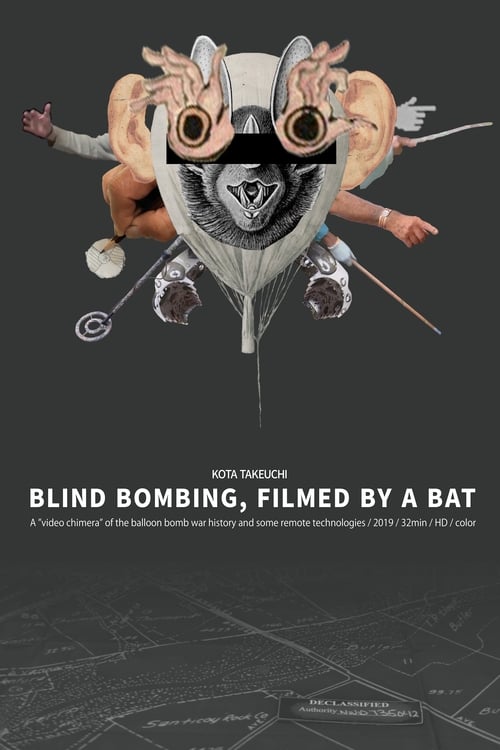
During WWII, the Japanese army developed experimental balloons able to cross the Pacific Ocean and reach the West Coast of North America in 3-6 days. Armed with explosives, they were given the code name fu-go, or fusen bakudan (“fire balloons,” or balloon bombs) in an attempt to instill a culture of fear like that caused by the far more deadly American firebombing of Japanese cities. The U.S. responded by enacting a censorship campaign, requesting newspapers avoid reports of fu-go landings or sightings. Living near the remains of a fu-go launch site in Fukushima Prefecture, Takeuchi mimics their flight take-off using a drone camera, and, traveling to North America, follows their arrival across the shoreline and rural landscapes, using a bat’s echolocation as narrative device to place fu-go and Fukushima as echos across history.

Genres

History
Documentary

Cast

No Cast found.

You may also like

Japan's War in Colour
8.0

Japan's War in Colour

Jan 17, 2005

Using never-before-seen footage, Japan's War In Colour tells a previously untold story. It recounts the history of the Second World War from a Japanese perspective, combining original colour film with letters and diaries written by Japanese people. It tells the story of a nation at war from the diverse perspectives of those who lived through it: the leaders and the ordinary people, the oppressors and the victims, the guilty and the innocent. Until recently, it was believed that no colour film of Japan existed prior to 1945. But specialist research has now unearthed a remarkable colour record from as early as the 1930s. For eight years the Japanese fought what they believed was a Holy War that became a fight to the death. Japan's War In Colour shows how militarism took hold of the Japanese people; describes why Japan felt compelled to attack the West; explains what drove the Japanese to resist the Allies for so long; and, finally, reveals how they dealt with the shame of defeat.

The Truce
0.0

The Truce

Oct 10, 2025

Karlag, short for Karaganda Corrective Labor Camp, was one of the largest labor camps within the Soviet Gulag system. Established in 1931, it was located in the Karagandy Region of Kazakhstan. The film will explore the hardships faced by people during the 1930s-1950s and the resilience of human dignity despite the daily struggle for survival. The atmosphere of Karlag will be conveyed through costumes, props, and sets created after extensive research in archives and museums.

High Road to China
5.9

High Road to China

Mar 18, 1983

A biplane pilot is saddled with a spoiled industrialist's daughter on a search for her missing father through Asia that eventually involves them in a struggle against a Chinese warlord.

Why I'm Alive
8.5

Why I'm Alive

Nov 4, 2021

Mariupol. Pre-war life in a small Ukrainian town on the shore of the Azov Sea, with a good family life, quarrelsome neighbors, amateur opera, denunciations to the NKVD, and a dance floor in the city garden, the persecution of religion and, of course, with love.

No Image Available
0.0

El desastre de Annual

Jan 1, 1970

No overview available.

Wie konnte es geschehen? - Teil 1: "Deutschland erwache..." (1914 - 1938)
0.0

Wie konnte es geschehen? - Teil 1: "Deutschland erwache..." (1914 - 1938)

Jan 1, 2006

In 1945, 160 German cities lay in ruins and the loss of millions of lives, billions in material assets and countless cultural treasures was mourned throughout Europe... With the question “How could it happen?”, the film goes back to the year 1914, when the “primal catastrophe of the 20th century” took its course with the First World War.

Sunshine
6.5

Sunshine

Sep 13, 1999

The fate of a Hungarian Jewish family throughout the 20th century.

The Yellow Tie
8.0

The Yellow Tie

Nov 14, 2025

The extraordinary life of Sergiu Celibidache, from his childhood in Romania to his exile in pursuit of a career in music, his struggle for survival in wartime Germany and his rise, fall and rise again, in an unimaginable life journey.

Desconocida Leyendo En Un Autobús
5.0

Desconocida Leyendo En Un Autobús

Feb 18, 2025

A girl reads during a bus ride

Three Minutes: A Lengthening
7.2

Three Minutes: A Lengthening

Dec 2, 2022

The story of the only three minutes of footage —a home movie shot by David Kurtz in 1938— showing images of the Jewish inhabitants of Nasielsk (Poland) before the beginning of the Shoah.

How I See Sunsets
0.0

How I See Sunsets

Aug 29, 2017

A poetic, semi-autobiographical short film of the sun setting over a village, shot from behind the curtains of a small, dimly lit room.

The Battle of the River Plate
6.3

The Battle of the River Plate

Oct 30, 1956

In the early years of the World War II, the Royal Navy is fighting a desperate battle to keep the Atlantic convoy routes open to supply the British Isles, facing the great danger posed by the many German warships, such as the Admiral Graf Spee, which are scouring the ocean for cargo ships to sink.

Cope 2 Kings Destroy
0.0

Cope 2 Kings Destroy

Jan 23, 1999

NYC Graffiti Documentary "Kings Destroy" straight from the boogie down Bronx and right into your living room, with guest appearances by KRS-1, FAT JOE, CASE II, SEEN, and many more...

Yamato
5.5

Yamato

Dec 17, 2005

Directed by Junya Sato and based on a book by Jun Henmi, "Yamato" has a framing story set in the present day and uses flashbacks to tell the story of the crew of the World War II Japanese battleship Yamato. The film was never released in the United States, where reviewers who have seen it have compared the military epic to "Titanic" and "Saving Private Ryan."

6-18-67
5.8

6-18-67

Jul 7, 1967

6-18-67 is a short quasi-documentary film by George Lucas regarding the making of the Columbia film “Mackenna's Gold”. This non-story, non-character visual tone poem is made up of nature imagery, time-lapse photography, and the subtle sounds of the Arizona desert.

Days of Glory
6.7

Days of Glory

Sep 27, 2006

1943. They have never stepped foot on French soil but because France was at war, Said, Abdelkader, Messaoud and Yassir enlist in the French Army, along with 130,000 other “indigenous” soldiers, to liberate the “fatherland” from the Nazi enemy. Heroes that history has forgotten…

Memoirs of a Geisha
7.7

Memoirs of a Geisha

Dec 6, 2005

In the years before World War II, a penniless Japanese child is torn from her family to work as a maid in a geisha house.

Sophie Scholl: The Final Days
7.1

Sophie Scholl: The Final Days

Feb 13, 2005

In 1943, as Hitler continues to wage war across Europe, a group of college students mount an underground resistance movement in Munich. Dedicated expressly to the downfall of the monolithic Third Reich war machine, they call themselves the White Rose. One of its few female members, Sophie Scholl is captured during a dangerous mission to distribute pamphlets on campus with her brother Hans. Unwavering in her convictions and loyalty to the White Rose, her cross-examination by the Gestapo quickly escalates into a searing test of wills as Scholl delivers a passionate call to freedom and personal responsibility.

Leningrad. Stimmen einer belagerten Stadt
7.8

Leningrad. Stimmen einer belagerten Stadt

Jan 9, 2024

It was one of the great crimes of the Second World War: from 1941 to 1944, a total of 872 days, the siege and starvation of Leningrad by the German Wehrmacht on Hitler's orders lasted. Over a million people fell victim to the blockade, most of them dying of hunger. Countless of these starving people wrote diaries with the last of their strength, and cameramen filmed in the paralyzed city. Evidence from the hell of the siege, many of the film recordings, but above all the written memories on which this documentary on the occasion of the 80th anniversary of the liberation is based, remained under lock and key after the war. The voices of those who had suffered through this terrible time should not be heard by anyone, because they did not fit the pathos of the Leningrad heroic song that was officially sung. Most of the recordings come from women. The writers feared neither the enemy nor the Communist Party or Stalin, who often proved incompetent in providing for the population.

Every Wall is a Door
5.0

Every Wall is a Door

Mar 25, 2017

Drawing on VHS tapes of a programme hosted by her mother on Bulgaria’s national television, the filmmaker gives a pop-style and in-depth chronicle of the gentle – even “over-gentle” – 1989 revolution.

Blind Bombing, Filmed by a Bat Trailers

No Trailers found.