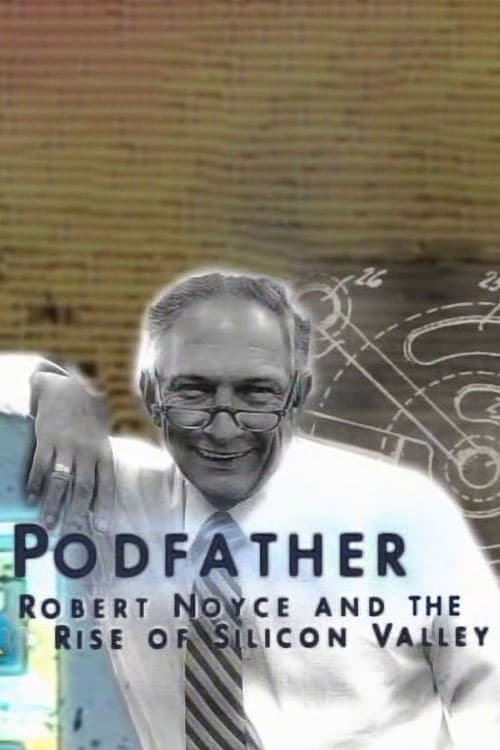
Documentary telling the story of silicon chip inventor Robert Noyce, godfather of today's digital world. Re-living the heady days of Silicon Valley's seminal start-ups, the film tells how Noyce also founded Intel, the company responsible for more than 80 per cent of the microprocessors in personal computers.
A team of scientists search for the lost island of Testerep in front of the Belgian coast, venturing into artificial landscapes and virtual realities.
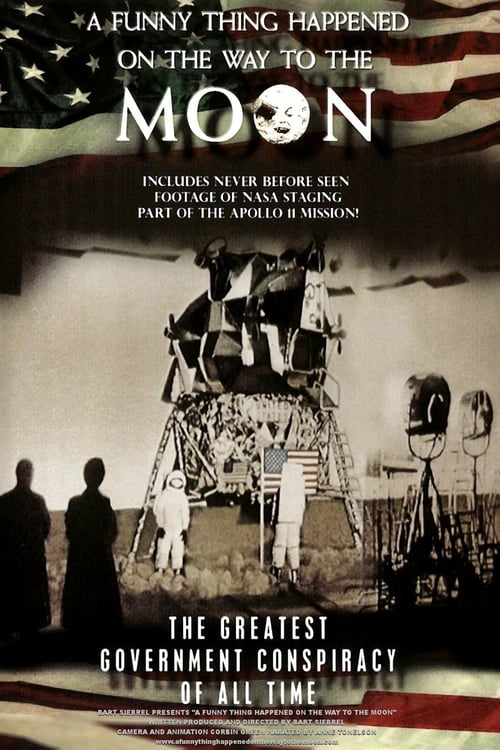
Are the manned moon landings of Apollo one of the greatest hoaxes ever devised - perhaps even the greatest government conspiracy of all time? Were the moon walks filmed in a secret studio? Do you believe in the Moon Landing Hoax? The evidence will surprise you!
"What's on your mind?" It's the friendly Facebook question which lets you share how you're feeling. It's also the question that unlocks the details of your life and helps turn your thoughts into profits.
Artificial intelligence is taking on different roles in the filmmaking space. The questions we must ask ourselves are: what are the pros and cons of this advancement? How can we work with it, and what power do we have as human beings in the face of this technology?
Pioneers in Skirts is an Emmy-nominated 60-min documentary following filmmaker Ashley Maria’s quest to peel back the layers of obstacles that can limit a woman or girl's pioneering ambition.
No overview available.
This program reveals the daily battle between the Internet’s outlaws and the hackers who oppose them by warding off system attacks, training IT professionals and police officers, and watching cyberspace for signs of imminent infowar. Through interviews with frontline personnel from the Department of Defense, NYPD’s computer crime squad, private detective firm Kroll Associates, X-Force Threat Analysis Service, and several notorious crackers, the program provides penetrating insights into the millions of hack attacks that occur annually in the U.S.—including one that affected the phone bills of millions and another that left confidential details of the B-1 stealth bomber in the hands of teenagers. The liabilities of wireless networks, the Code Red worm, and online movie piracy are also discussed. A Discovery Channel Production. (51 minutes)
A dinosaur-obsessed teen and his filmmaker father travel the world interviewing paleontologists about the latest discoveries, tracking down the crew of Jurassic Park, digging up 150-million-year-old bones, and meeting dino fanatics of all walks of life.
Photo sequence of the rare transit of Venus over the face of the Sun, one of the first chronophotographic sequences. In 1873, P.J.C. Janssen, or Pierre Jules César Janssen, invented the Photographic Revolver, which captured a series of images in a row. The device, automatic, produced images in a row without human intervention, being used to serve as photographic evidence of the passage of Venus before the Sun, in 1874.
The sun sends us light and energy, enabling life and growth. But it also causes scientists great concern: gigantic, unpredictable solar storms are increasingly threatening our power supply and networks. The US space agency NASA has built a space probe to investigate the causes of these mysterious storm phenomena.
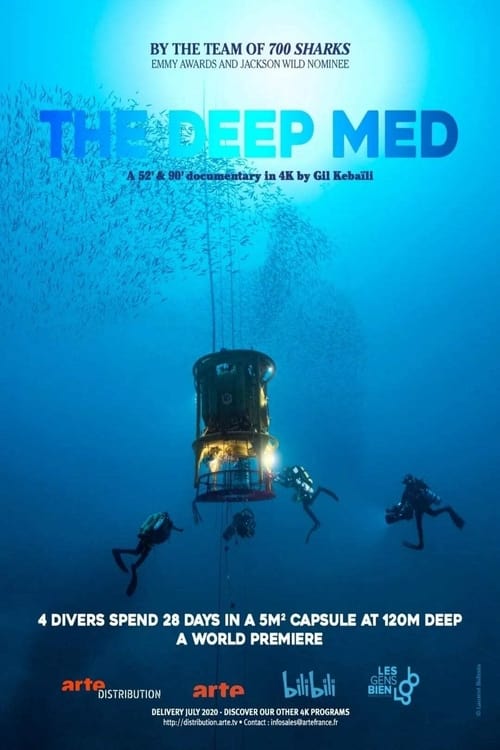
The Mediterranean. Because people have been travelling there for thousands of years, it is believed to be without secrets. And yet, far below its surface, lie vast unexplored territories, luxurious gardens worthy of the finest tropical coral reefs. These natural wonders are inaccessible to the traditional diver, in a twilight zone, between 60 and 120 m, where there’s less than 1% of sunlight. If diving at such depths is always a challenge, staying there is a fantasy, a utopia that becomes reality in Planet Mediterranean. In the tradition of Commander Cousteau and his "houses under the sea," the team of diver-photographer Laurent Ballesta is undertaking a new world-record setting mission in complete freedom and without time limit.
Dr. Heinz Haber, a noted scientist in the field of atomic energy, hosts this look at the possibility of an exciting new power source. He starts by comparing atomic energy to a genie in a bottle, both of which capable of doing both good and evil, and it is up to humankind to develop safe controls over this largely unexplored science.
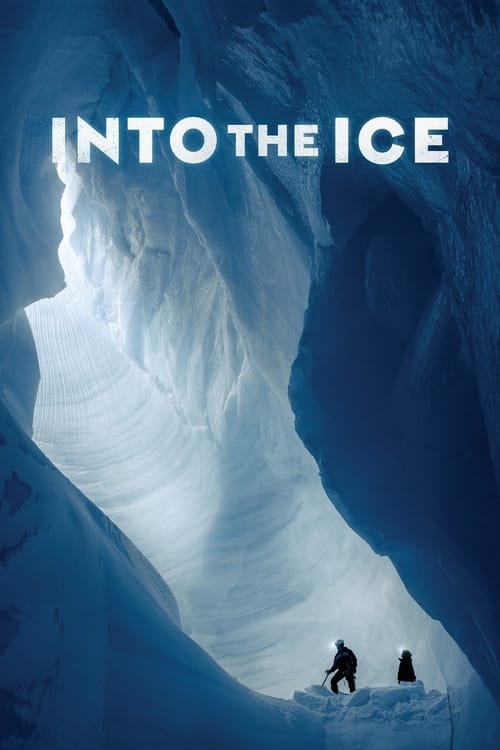
In the Greenland ice sheet we can see our future. The film travels with three pioneering glaciologist on their expeditions INTO the inland ice of Greenland. Top-notch science meets breathtaking visuals when one of them descends into a 200 meter deep moulin hole to find out about the bottom of the ice sheet. What they find may sound the alarm for our planet's climate and is a clear call to act now.
Follow three rocket and satellite companies – Astra Space, Rocket Lab, and Planet Labs – and the quests of their idiosyncratic founders to conquer the burgeoning space industry.
From the cabinets of curiosities created in Italy during the 16th century to the prestigious cultural institutions of today, a history of museums that analyzes the social and political changes that have taken place over the centuries.
July 20, 1969. Apollo 11 lands on the surface of the Moon. Such a feat was apparently performed to the greater glory of all mankind, but actually it marked the end of the space race disputed by the two great superpowers of the time in their eagerness to arrive before and the beginning of the spread of the Cold War into space. Nowadays, the struggle continues, but the main competitors and their purposes are others.
Immortality and eternal life: Will this great human dream come true? In any case, cryonics is making ever greater progress, human cloning no longer seems impossible and research is being carried out into the digital reproduction of the brain. Taking stock in the USA, Canada, Europe and Russia. The documentary delves into a world in which all-too-human people refuse to simply be wiped out by death. It shows how difficult it is to resist the promises of eternal life and also highlights the economic interests behind such endeavors. Google's push is just one sign of a possible two-tier society of the future: on the one hand, the rich who have access to such "offers", on the other, the rest of society.
The "gravity" nightmare is becoming a reality: tons of rocket and satellite parts have been scattered into space over the past 60 years. The fragments collide with other objects, producing more and more scrap - a proliferation that has long since gotten out of control and poses an acute danger to rocket launches and space stations.
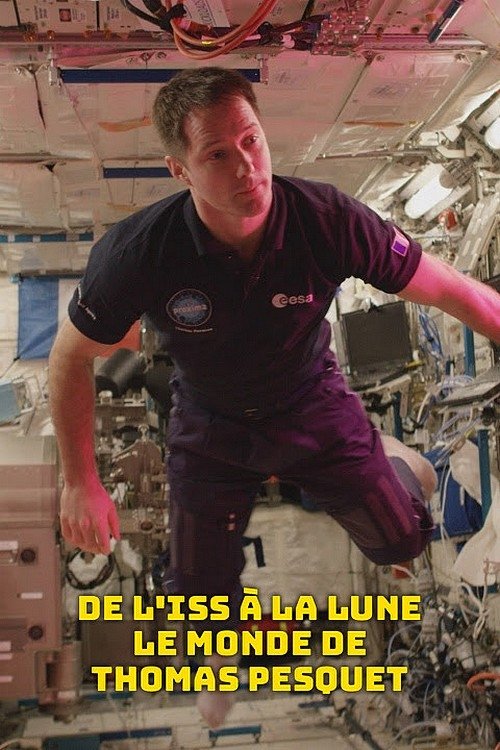
From space, 400 kilometers above our heads, one man has won the hearts of the French: Thomas Pesquet. Traveling to the stars is an almost impossible dream, but for Thomas Pesquet it is a reality that he recounts in detail in an exclusive interview. You will discover the magic of living in space, the wonder of our planet, but also the reality of everyday life in zero gravity: how they sleep, how they wash, what happens to their bodies. Why do they have to exercise for two hours a day? How do they communicate with their families? With Thomas Pesquet and the help of specialists, scientists, doctors, instructors, directors, and computer-generated images, you will discover what goes on behind the scenes of a mission and understand how the International Space Station works.
No Trailers found.
No Cast found.