A documentary made with homemade videos of the spanish exiled due to the dictatorship in Spain from 1939 to 1977.
No Trailers found.
No Cast found.
In Spain, a poor country ruined by the recent Civil War (1936-39), and in the midst of Franco's dictatorship, a film school was created in Madrid in 1947, which became, almost unintentionally, a space of freedom and pure experimentation until its closure in 1976.
A history of the political and social repression carried out by the ruthless regime of Spanish dictator Francisco Franco between 1936 and 1975 that focuses on the lives of gays and lesbians during those dark years and the death of the Spanish gay poet Federico García Lorca.
Documentary film about the Spanish Civil War.
A journey through the Spain of the Baroque, the glorious 17th century, an unfortunate era of endless wars and political tribulations; but also of great painters and sculptors who created astonishing pieces of art: el Siglo de Oro.
Pedro Urraca, Spanish policeman and Gestapo agent led the persecution of numerous Spanish Republican loyalists exiled in France during the Nazi occupation. The portrait of a sinister character through the testimony of his granddaughter.
A gentle portrait of the mythical Spanish actor Arturo Fernández (1929-2019) in the hour of his passing, in his own words, through his latest interviews, not previously broadcast, and the words of those who knew him thorough decades of charming and good performance on stage, his true home, as well as in cinema and television.
After more than 75 years, Vicente Montejano tells us first-hand about his experience of more than 14 years in the Russian Gulag after the end of the Spanish Civil War.
After the Civil War, between 20,000 and 30,000 Spaniards went into exile in Mexico. This was the country that welcomed the most exiles, after France.
Caudillo is a documentary film by Spanish film director Basilio Martín Patino. It follows the military and political career of Francisco Franco and the most important moments of the Spanish Civil War. It uses footage from both sides of the war, music from the period and voice-over testimonies of various people.
This documentary, filmed clandestinely, is based on several interviews with the executioners who worked in Spain during the early 1970s, as well as families of people executed by them.
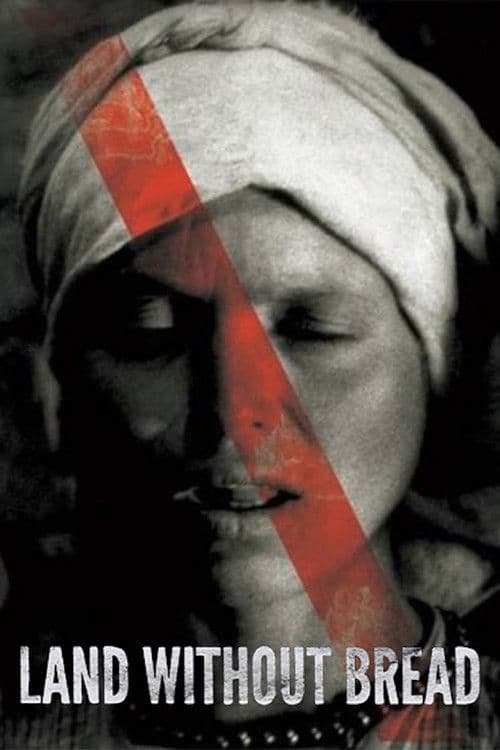
An exploration —manipulated and staged— of life in Las Hurdes, in the province of Cáceres, in Extremadura, Spain, as it was in 1932. Insalubrity, misery and lack of opportunities provoke the emigration of young people and the solitude of those who remain in the desolation of one of the poorest and least developed Spanish regions at that time.
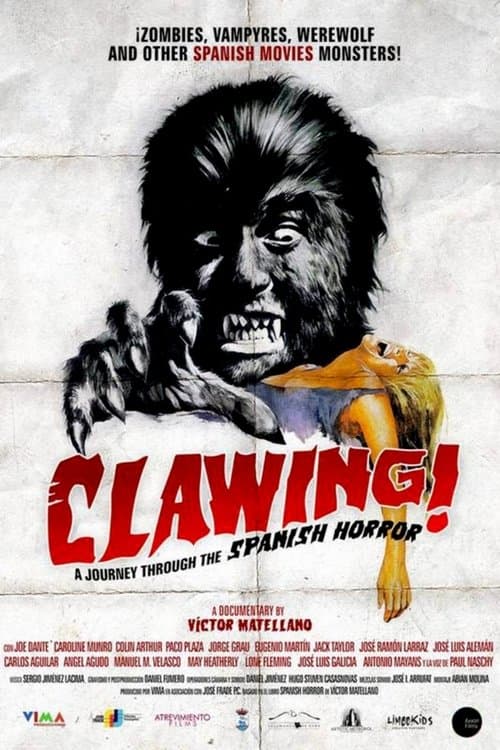
In the late sixties, Spanish cinema began to produce a huge amount of horror genre films: international markets were opened, the production was continuous, a small star-system was created, as well as a solid group of specialized directors. Although foreign trends were imitated, Spanish horror offered a particular approach to sex, blood and violence. It was an extremely unusual artistic movement in Franco's Spain.
The marks of the violence of the Chilean state, against its own compatriots. Flicker Film. 35mm B & W Still Photography. Silent.
In 2019, Nicolás was archiving photographs for J.M. Blanch when he discovered a secluded, uncataloged image depicting an artifact that resembled a ticking time bomb. Intrigued by the photo, Nicolás recorded an interview with Blanch to learn the story behind the mysterious object.
On the night of July 19, 1977, Inés was traveling by bus when a military patrol detained all the passengers. That morning, almost everyone was released except Inés. Her father began a never-ending search that led him to the very center of Argentina's repressive apparatus. The judicial path and the love of a family that never stops.
Huelva, Spain, an isolated region lost in time. The grass, the sand and the sky are the same that those foreigners saw in the spring of 1895, when they crossed the sea from a distant country to mark the unspoiled terrain and extract its wealth, when the tower was new, when people could climb to the top of the highest dune and imagine that the city of Tartessos was still there, in the distance, almost invisible in the morning brume.
No overview available.
In 1944 Crimean Tatars has suffered a long road in exile. It was accompanied by famine, illness and loss. In the first years of exile, almost half of deported Crimean Tatars died. But those, who survived, dreamed of only one thing - to return to Crimea. The documentary 1944 tells about the tragedy of all Crimean Tatars through several separate life stories. They are cherished by each Crimean Tatar family and must be remembered by all generations to come.
Inspired by an exclusive interview and performance footage of Chavela Vargas shot in 1991 and guided by her unique voice, the film weaves an arresting portrait of a woman who dared to dress, speak, sing, and dream her unique life into being.
The story of a group of actresses who, in the Spain of the seventies, and in the midst of the democratic Transition, decided to appear nude in the films of that time of radical political change, defying the rigid and deeply rooted social rules.