the door is opening
No Trailers found.
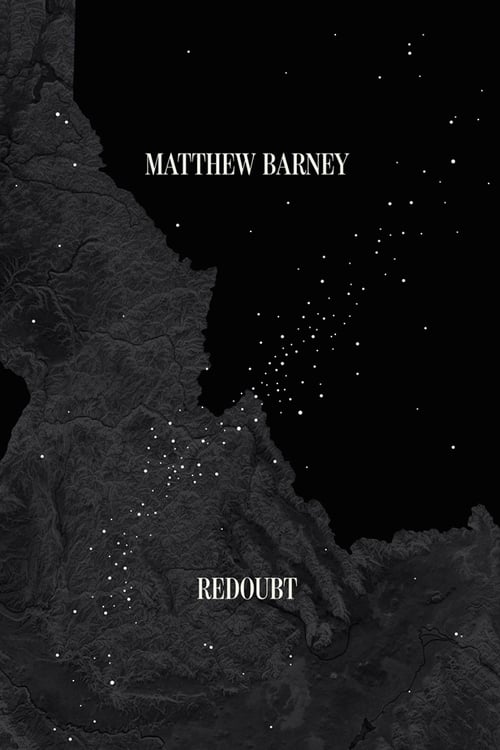
The goddess Diana and her two attendants traverse the rugged terrain of Idaho’s Sawtooth Mountains in pursuit of the elusive wolf. An Engraver (Matthew Barney) furtively documents their actions in copper engravings and provokes a series of confrontations. The characters communicate through dance, letting movement replace language as they pursue each other and their prey.
A vlogger whose life is seemingly controlled by an unknown presence begins to spiral as he falls further into surrealism and imaginary worlds.
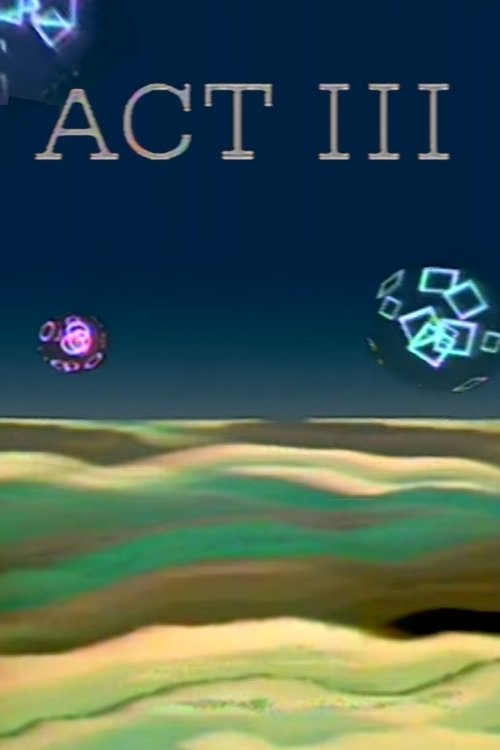
This is a didactic film in disguise. A progression of brilliant geometric shapes bombard the screen to the insistent beat of drums. The filmmaker programmed a computer to coordinate a highly complex operation involving an electronic beam of light, colour filters and a camera. This animation film, without words, is designed to expose the power of the cinematic medium, and to illustrate the abstract nature of time.
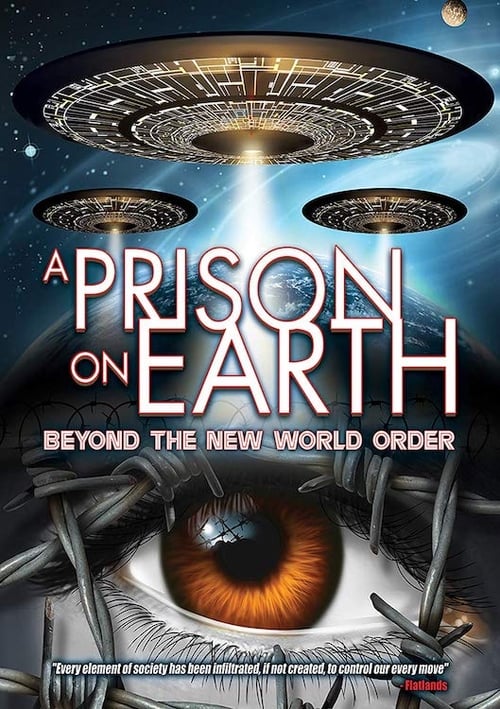
A documentary purporting to expose the interdimensional alien beings who have enslaved humanity for centuries.
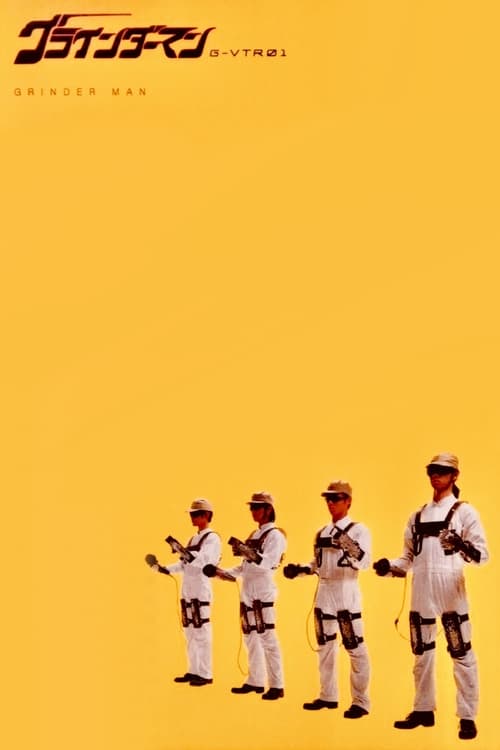
A 19-minute short film featuring the six performances of the Japanese performance art group Grinder-Man. Only released on VHS.
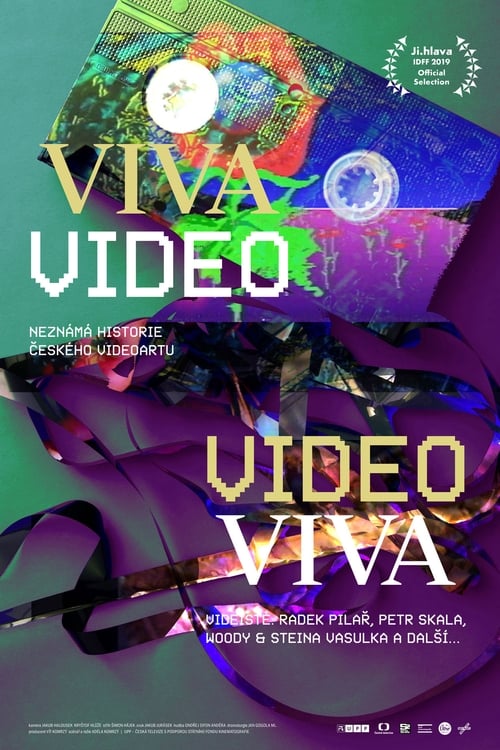
Today, analogue video is attractive primarily thanks to the distinctive aesthetic quality of its pixelated image and raster errors. But for Czech artists who first explored the possibilities offered by video art in the late 1980s, this medium represented a path towards freedom. Through a portrait of her grandfather Radek Pilař, one of the pioneers of Czech video art, the director explores her own legacy of imperative creative fascination. Her film’s main story, i.e., the process of reconstructing the 1989 exhibition Video Day, contrasts this enchantment with life in the final days of the totalitarian regime, which different sharply with the adventures of those who decided to emigrate – whom the filmmaker also visits in order to discover forgotten works, get to know their creators, and re-establish broken ties.
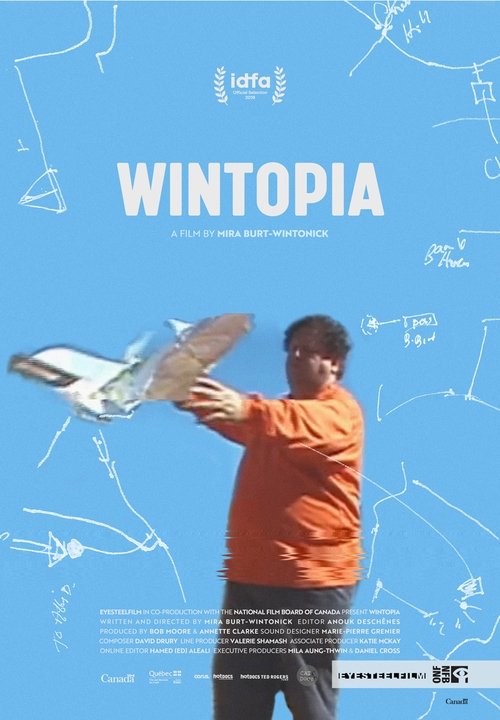
IDFA and Canadian filmmaker Peter Wintonick had a close relationship for decades. He was a hard worker and often far from home, visiting festivals around the world. In 2013, he died after a short illness. His daughter Mira was left behind with a whole lot of questions, and a box full of videotapes that Wintonick shot for his Utopia project. She resolved to investigate what sort of film he envisaged, and to complete it for him.
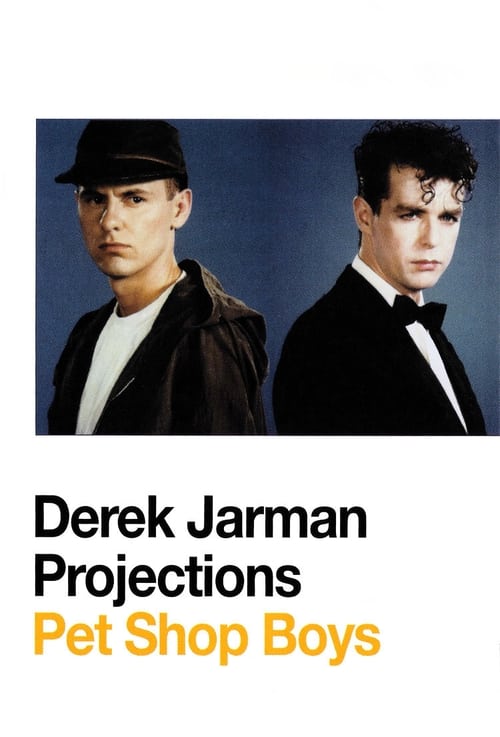
The innovative and influential British filmmaker Derek Jarman was invited to direct the Pet Shop Boys' 1989 tour. This film is a series of iconoclastic images he created for the background projections. Stunning, specially shot sequences (featuring actors, the Pet Shop Boys, and friends of Jarman) contrast with documentary montages of nature, all skillfully edited to music tracks.
Abstract video art set to the music of Philip Glass.
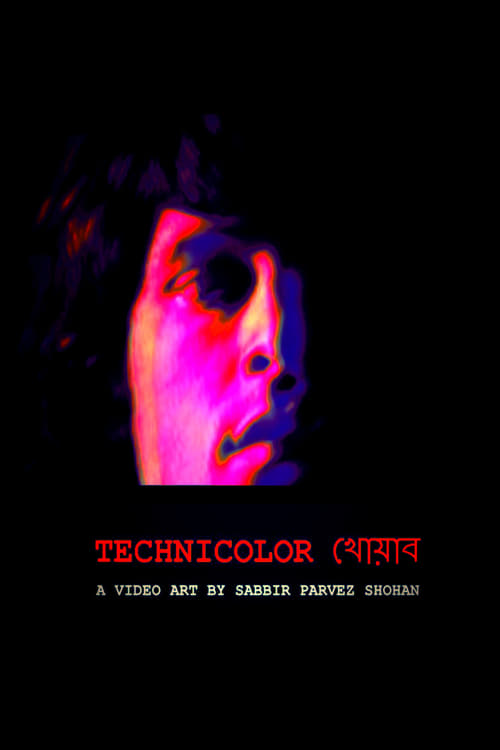
TECHNICOLOR DREAM is a video art of vivid imagery and symbolic scenarios. It is a portrayal of passion,agony,memories and melancholy through unorthodox fusion of sight and sound.
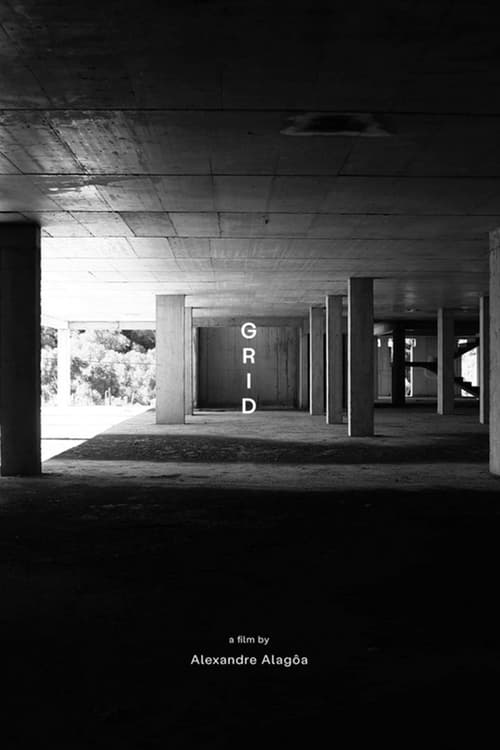
A ritual of grids, reflections and chasms; a complete state of entropy; a space that devours itself; a vertigo that destroys the gravity of the Earth; a trap that captures us inside the voids of the screen of light: «That blank arena wherein converge at once the hundred spaces» (Hollis Frampton).
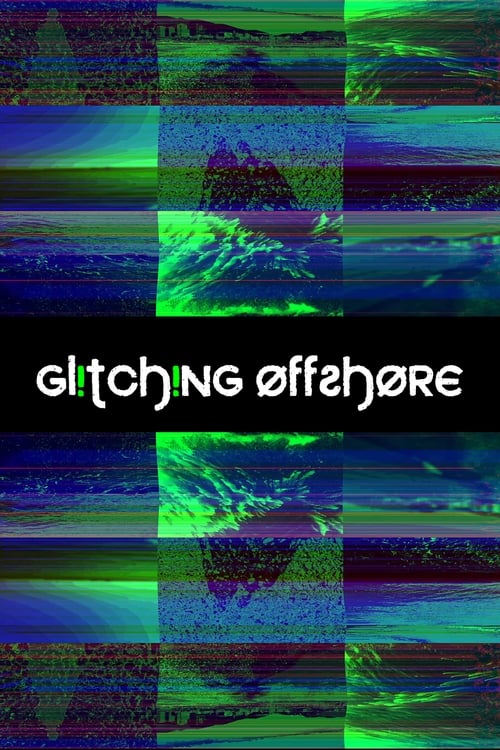
If a machine would possess a soul it might be a beach. Every single sand corn symbolizes a data-set of a memory captured in the world wide web saved deep down in the ocean. From there the bytes condense and finally reach the cloud. But how would it feel for a machine to see the glitch waves and feeling the shore stones on its case? What would be the colours of the coastline? Glitching Offshore tries to portrait the soul of an AI and the universe behind it. Glitching offshore, alike drifting away as in a psychogeographical dérive (furthermore, away from the "rive": bank) where human intentional yet chaotic action is substituted by pixels' stirrings of the soul.
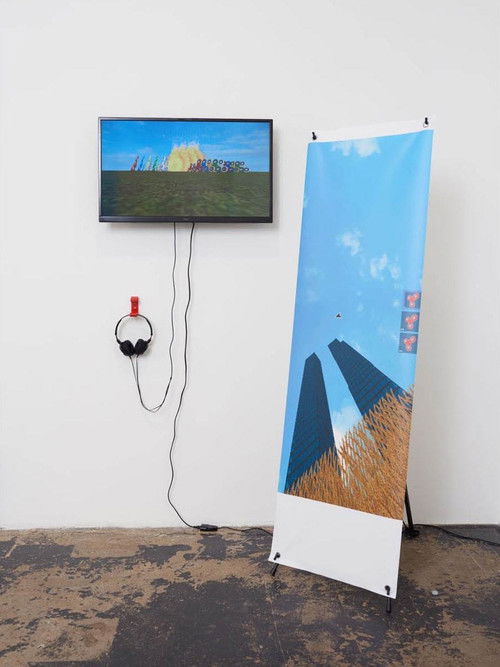
CGI collage short film originally premiered as part of the 'Extinction Renaissance' exhibition at the Loyal Gallery in Stockholm.
A woman strolls through nature, embraces trees, and enjoys stunning views. She dances around a large tree, then suddenly falls into darkness, wakes up in a completely different setting, and wonders if she was dreaming or if this is her dream.
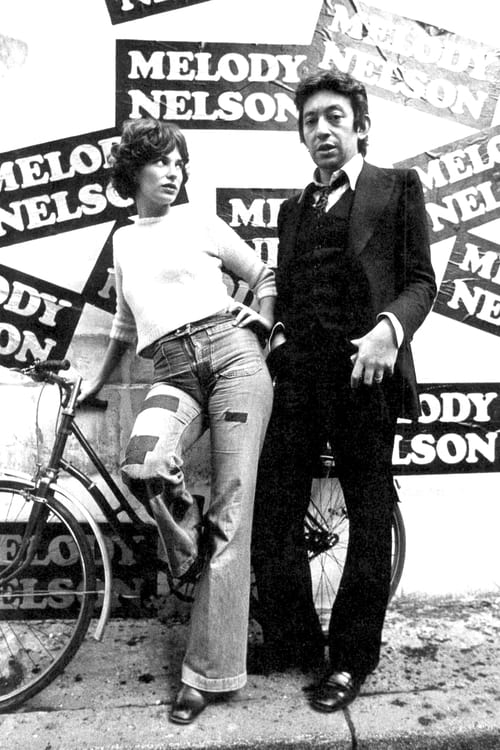
Although Gainsbourg and Birkin had appeared in a string of films since their magnetic collision in Pierre Grimblat’s Slogan, Melody was a bit of diversion from their collaborations since it’s a series of interwoven videos inspired by the Gainsbourgalbum. For '71 it’s a novel concept to bring visual life to an LP, but even more surprising are the short film’s amazing visuals that director Averty crafted using a wealth of video filters, overlays, camera movements and chroma key effects. Averty applies these in tandem with the increasing tone of Gainsbourg’s songs, which more or less chronicle an older man's affair with a young girl. Each song is comprised of steady, sometimes brooding poetic delivery, with refrains timed to the phrase repeats of each song, while Alan Parker’s buzzing guitar accompanies and wiggles around Gainsbourg’s resonant voice. The bass is fat and groovy, the drums easy but steady, and the periodic use of strings or rich vibrato makes this short a sultry little gem.
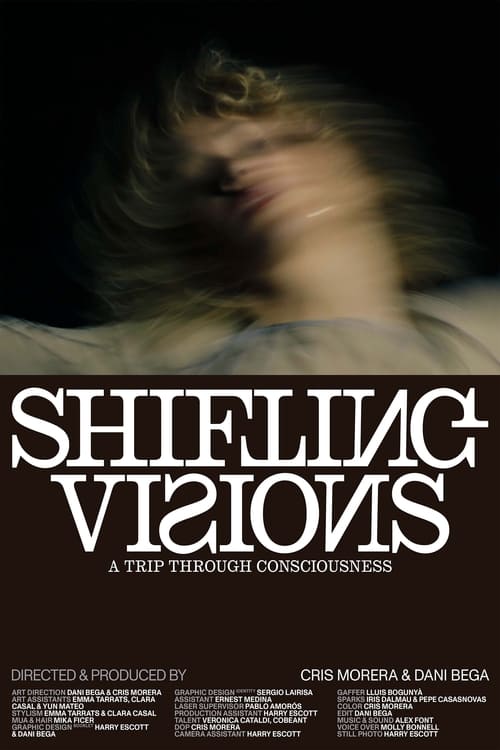
SHIFTING VISIONS is a video essay that revolves around the transition between the different stages of human consciousness. From the most intense state of full attention to the most abstract and dreamlike state, passing through all its nuances. We know that the mind remains a mystery to science, but, through combining neuroscientific theory and personal perceptions, we represent these mental dynamics transferred to images, sounds and metaphors. We thoroughly analyse each of these stages to translate concepts and create audiovisual imaginaries through symbolic mental limbos. A piece that drags the viewer on an inner journey to their own lucidity.
After concluding the now-legendary public access TV series, The Pain Factory, Michael Nine embarked on a new and more subversive public access endeavor: a collaboration with Scott Arford called Fuck TV. Whereas The Pain Factory predominantly revolved around experimental music performances, Fuck TV was a comprehensive and experiential audio-visual presentation. Aired to a passive and unsuspecting audience on San Francisco’s public access channel from 1997 to 1998, each episode of Fuck TV was dedicated to a specific topic, combining video collage and cut-up techniques set to a harsh electronic soundtrack. The resultant overload of processed imagery and visceral sound was unlike anything presented on television before or since. EPISODES: Yule Bible, Cults, Riots, Animals, Executions, Static, Media, Haterella (edited version), Self Annihilation Live, Electricity.
Best known for his work in video, Richard Fung has made the politics of gender, ethnicity, and sexual orientation his central focus. Chinese Characters (1986) examines the ambiguous relationship of gay Asian men with white gay porn.
White Homeland Commando takes the familiar terrain of network action drama and tilts the playing field. Reminiscent of today's popular reality-based cop shows, White Homeland Commando offers a straightforward story: four members of a special police unit investigate and infiltrate a New York-based white supremacist organization. But that is where the commonplace ends. The teleplay is shot and edited in a highly textured visual style, the colors are subdued yet somehow garish, and the sound is deliberately just out of sync with the speaker's lips. Occasional static combines with jumps in the plot — the editing is reminiscent of a television viewer flipping channels.
A film as part of the Spellbound installation at the Hayward Gallery in 1996 by Peter Greenaway.
No Cast found.