logologo
MovieVerse© 2024
Privacy PolicyTerms of ServiceContact Us
Made with ❤️ by Thathsara
movie poster
My name is KIM Bok-dong
Sign in to create your own watchlist

My name is KIM Bok-dong

Aug 8, 2019
1h 47m
★ 8.8

Overview

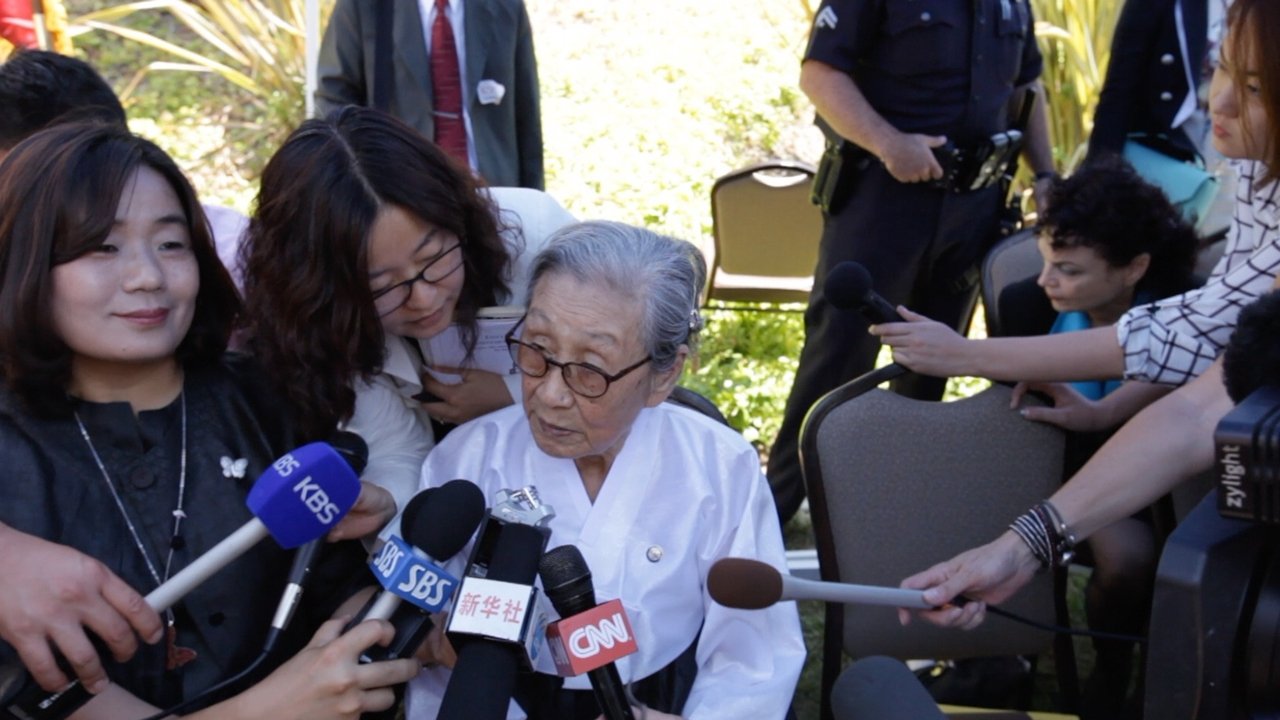
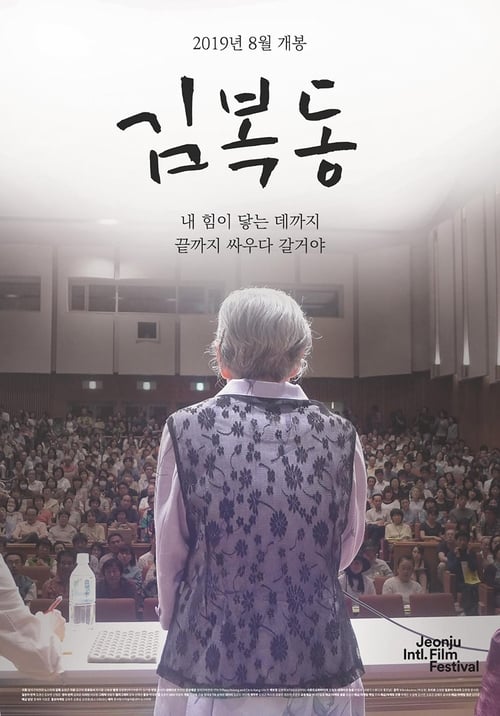
In 1992, KIM Bok-dong, reported herself as a victim of the sexual slavery, "comfort women" during World War Ⅱ. She wanted to receive the proper apology from the Japan government but they denied its responsibility. In 2011, commemorating the 1000th Wednesday demonstration, Statue of Peace was installed in front of the Embassy of Japan. The fight over Japan confronts a new stage.

Genres

Documentary

Production Companies

Newstapa
Atnine Film

Cast

Han Ji-min

Self - Narrator

Han Ji-min

Kim Bok-dong

Self

Kim Bok-dong

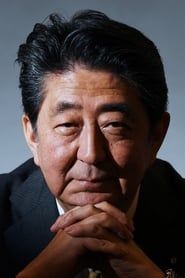
Shinzo Abe

Self (archive footage)

Shinzo Abe

You may also like

Nuremberg: The Nazis Facing their Crimes
8.4

Nuremberg: The Nazis Facing their Crimes

Oct 25, 2006

The documentary of the Nuremberg War Trials of 21 Nazi dignitaries held after World War II.

Occupation 101: Voices of the Silenced Majority
7.5

Occupation 101: Voices of the Silenced Majority

Mar 25, 2006

A thought-provoking documentary on the current and historical causes of the Israeli-Palestinian conflict and U.S. political involvement.

TARGET
0.0

TARGET

Oct 10, 2021

In 1991, the issue of “comfort women” was raised for the first time through the testimony of the late Kim Hak-sun. One of the first reporters in Japan to write an article about her testimony was Uemura Takashi of The Asahi Shimbun. Since the publication of his article, Uemura has been subjected to blatant attacks from the far-right, including threats on his family’s life, and the issue is still ongoing in 2021. Based on Uemura's defamation lawsuit that began in 2015, TARGET details why he had to be someone's “target.”

Put Your Soul on Your Hand and Walk
6.8

Put Your Soul on Your Hand and Walk

Aug 22, 2025

An Iranian filmmaker participates in a series of video calls with a young Palestinian photojournalist who describes her life confined in Gaza during the current regional conflict.

The Devil Came on Horseback
7.2

The Devil Came on Horseback

Jan 19, 2007

While serving with the African Union, former Marine Capt. Brian Steidle documents the brutal ethnic cleansing occuring in Darfur. Determined that the Western public should know about the atrocities he is witnessing, Steidle contacts New York Times reporter Nicholas Kristof, who publishes some of Steidle's photographic evidence.

Nuclear Savage: The Islands of Secret Project 4.1
6.4

Nuclear Savage: The Islands of Secret Project 4.1

Nov 16, 2011

A shocking political exposé, and an intimate ethnographic portrait of Pacific Islanders struggling for survival, dignity, and justice after decades of top-secret human radiation experiments conducted on them by the U.S. government.

Shards of Light
0.0

Shards of Light

Oct 30, 2025

The residents of Bucha, Ukraine, are rebuilding their city from the rubble after surviving the horrors of Russian occupation. A newly married couple, a schoolgirl, a city official, and an elderly housewife have all endured the painful experiences of war, yet they manage to hold onto hope and solidarity. But how do you rebuild in the wake of growing trauma, especially with war still raging in your country? As time hopes for a peaceful life fade, they must grapple with mounting tensions within their communities. Shot over a three-year period, the film is a follow-up to When Spring Came To Bucha, as five protagonists navigate the complex terrain of inner conflicts, trauma, and a longing for justice, posing questions about the future of a society at war.

Why We Fight
7.5

Why We Fight

Jan 20, 2005

Is American foreign policy dominated by the idea of military supremacy? Has the military become too important in American life? Jarecki's shrewd and intelligent polemic would seem to give an affirmative answer to each of these questions.

Algeria, Special Weapons Sections
9.0

Algeria, Special Weapons Sections

Mar 12, 2025

This documentary by director Claire Billet and historian Christophe Lafaye details the massive and systematic use of chemical weapons during the Algerian War. Algerian fighters and civilians, sheltering in caves, were gassed by "special weapons sections" of the French army. The gas identified on military documents is CN2D, whose widespread use forced insurgents to flee "treated" sites, at the risk of dying there. The method is reminiscent of the "enfumades" used by the French expeditionary force during the conquest of Algeria in the 19th century. Between 8,000 and 10,000 such operations are believed to have taken place on Algerian soil between 1956 and 1962. This historical aspect is little known due to the difficulty of accessing archives, many of which are still classified, raising questions about memory, historical truth, and justice.

Poland 1939: When German Soldiers Became War Criminals
8.0

Poland 1939: When German Soldiers Became War Criminals

Aug 31, 2019

September 1st, 1939. Nazi Germany invades Poland. The campaign is fast, cruel and ruthless. In these circumstances, how is it that ordinary German soldiers suddenly became vicious killers, terrorizing the local population? Did everyone turn into something worse than wild animals? The true story of the first World War II offensive that marks in the history of infamy the beginning of a carnage and a historical tragedy.

Screams Before Silence
7.8

Screams Before Silence

Apr 25, 2024

Unpublished testimonies from freed hostages, survivors, and members of first responders regarding the attacks perpetrated on Israeli territory on October 7, 2023, by the terrorist gang Hamas reveal the repugnant extent of the crimes committed by the so-called Palestinian freedom fighters.

Twenty Two
7.7

Twenty Two

Aug 14, 2017

Follow the lives of the elderly survivors who were forced into sex slavery as “Comfort Women” by the Japanese during World War II. At the time of filming, only 22 of these women were still alive to tell their story. Through their own personal histories and perspectives, they tell a tale that should never be forgotten to generations unaware of the brutalization that occurred.

Liberators Take Liberties
4.0

Liberators Take Liberties

Feb 22, 1992

Helke Sander interviews multiple German women who were raped in Berlin by Soviet soldiers in May 1945. Most women never spoke of their experience to anyone, due largely to the shame attached to rape in German culture at that time.

Film Documents of the Atrocities of the German Fascist Invaders
0.0

Film Documents of the Atrocities of the German Fascist Invaders

Feb 19, 1946

This Soviet-made film was screened on February 19, 1946 on the 62nd day of the Nuremberg Trial and submitted as evidence relevant to the indictment for "crimes against humanity." The one-hour film with voiceover commentary shows visual evidence of the extermination camps of Auschwitz and Majdanek and appeals to spectators' emotions by emphasizing individual victims. The central argument of the film is that the Germans were the executioners of peaceful Soviet citizens. At the time, it made a very strong impression on both the accused and press. The film is a re-edited compilation of footage collected by the Soviet film team over four years (primarily used for propagandistic ends in wartime Soviet newsreels and documentaries). It was prepared in emergency by the Soviet prosecution team and minister of cinema following the projection of Nazi Concentration Camps presented by the Americans on November 29, 1945.

The War Against Women
6.4

The War Against Women

Nov 22, 2013

Sexual violence against women is a very effective weapon in modern warfare: instills fear and spreads the seed of the victorious side, an outrageous method that is useful to exterminate the defeated side by other means. This use of women, both their bodies and their minds, as a battleground, was crucial for international criminal tribunals to begin to judge rape as a crime against humanity.

Scars Of Nanking
6.0

Scars Of Nanking

Dec 12, 2017

During the brutal invasion of China in 1937 by Imperial Japanese forces, tens of thousands of civilians and prisoners of war are murdered and women raped in what is known simply as "The Rape of Nanking." This docudrama is a stirring account of a small band of courageous American missionaries who choose to stay in Nanking to try and protect a quarter million vulnerable Chinese civilians who are trapped in a city ruled by a savage, out of control army. Their stories are brought vividly to life through actual real-time letters and diaries as they bear witness to one of the worst wartime atrocities in history.

The Emperor's Naked Army Marches On
7.5

The Emperor's Naked Army Marches On

Aug 1, 1987

Kenzo Okuzaki, a 62-year-old veteran of the New Guinea campaign in World War II, sets out to conduct interviews with survivors and relatives to find the truth behind atrocities committed by Japanese military, in particular the unexplained killing of two Japanese privates in his unit.

My Enemy's Enemy
7.1

My Enemy's Enemy

Aug 31, 2007

Reveals an alternate history of the post-war world. This is a version of history where, in contrast to what we are all told, fascist ideology prevailed. The story of Klaus Barbie, Nazi torturer, American spy, tool of repressive right-wing regimes, is symbolic of the real relationship that the "Western" governments had with fascism and makes us see the world as it is today - and the politicians that inhabit it - in a different way.

Made in Auschwitz: The Untold Story of Block 10
6.4

Made in Auschwitz: The Untold Story of Block 10

May 1, 2019

Around 80 years ago, the gynecologist Carl Clauberg conducted medical experimentation on Jewish girls and women in Auschwitz. The results of those sadistic experiments were used in medicine across the globe. It is possible that German companies played a part in those experiments. Most of the survivors became infertile, and very few of them were later capable to give birth. The Untold Story of Block 10 introduces the audience to those who have survived.

Habitual Sadness
5.0

Habitual Sadness

Aug 23, 1997

The story of the women at the "House of Sharing" continues. Old women who share a common bond lead a peaceful life in the countryside, raising vegetables, chickens and painting pictures. They are no different from the elderly women we see every day. But they are all scarred by pain and sorrow from their collective history of being comfort women during World War 2. They became subject to prejudice in their own homeland after their return to Korea. It is painful for them to watch other peoples' children and grandchildren, and they feel rage when the Japanese government tries to cover up the unspeakable crimes they committed against them. The film asks us to remember what these women sacrificed and the shame and misery they faced even as these individuals pass away often forgotten by their own people.

My name is KIM Bok-dong Trailers

No Trailers found.