No overview available.
The Art of Nom explores an ancient and nearly extinct Vietnamese script called Chu Nom and the five scholarly artists known as Zenei, Gang of Five. The beauty, heritage and emotion of the Chu Nom characters inspire Zenei’s art. The film also examines Vietnam’s culture, history, customs, and the social impact of rapid modernization in a changing world. Art of Nom follows Zenei through their research and explorations that takes them far off the beaten path. They enter hidden library chambers of Buddhist pagodas to examine original Nom scriptures and woodblocks preserved by monks through the centuries. Led by renowned artist Le Quoc Viet, Zenei is a collective of avant-garde calligraphers forging a new path, merging contemporary visual expression with a nearly extinct script. Zenei elevates art and history to a new level of experience.
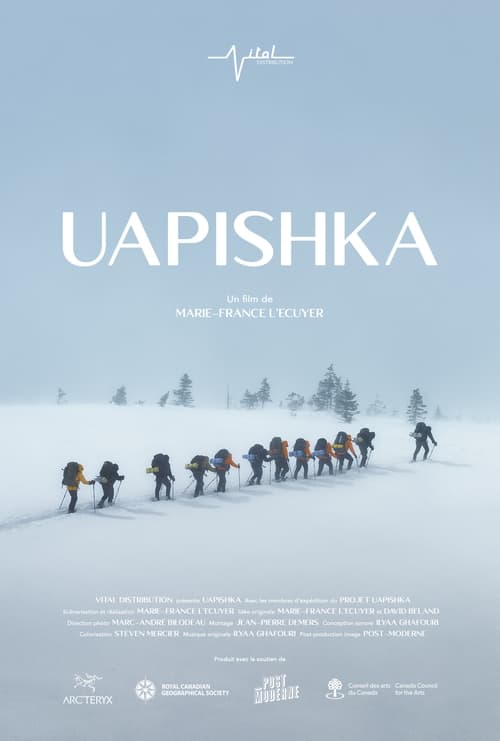
North of the 51st parallel, where the dense boreal forest opens onto an arctic islet, the snow-capped peaks of the Uapishka Mountains watch over the Nitassinan of Pessamit. In the heart of winter, a group of Innu and non-Innu adventurers attempt to cross this vast mountain range on snowshoes, completely independently. Faced with the vastness of the territory, the rigors of the northern climate and the impetuous breath of the tundra, they discover each other in a different way, form friendships and unite to better chart their course. Over the kilometres, the adventure reveals a space for meeting, sharing and reconciliation.
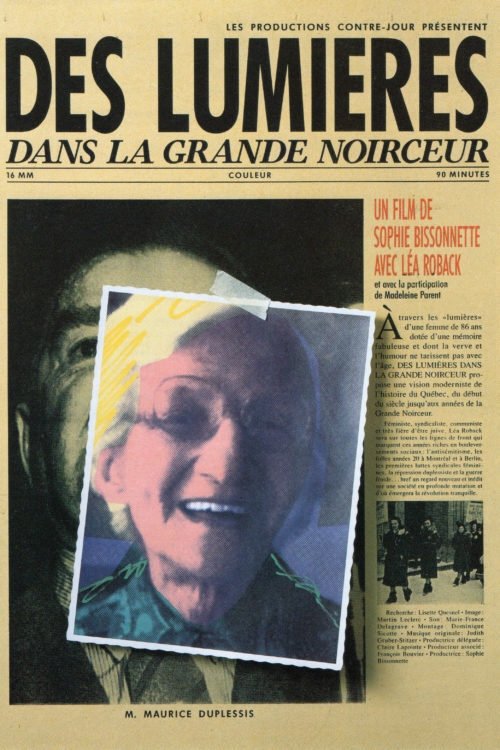
Through the eyes of a Quebec Jewish activist, Lea Roback, feminist, unionist, pacifist and communist, A VISION IN THE DARKNESS proposes a modernist vision of Quebec history, from the beginning of the twentieth century to the period knows as « La Grande Noirceur », the Great Darkness.
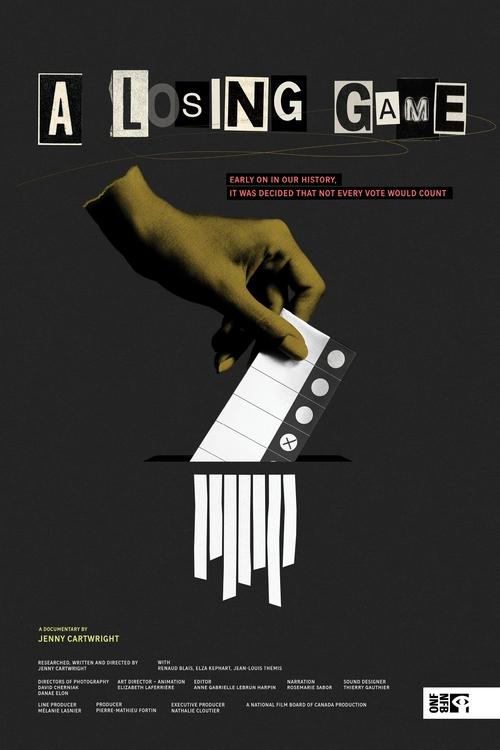
A Losing Game follows three people who ran for office in the 2022 Quebec provincial election, casting a critical eye on its electoral system and the many ways in which it is dysfunctional.
A documentary that explores what it means to be a young person in Quebec after the dissolution of the Quebec sovereignty movement.
A young student heads back to his village during the COVID-19 lockdown to collect ethnographic material for his thesis, but as quarantine stretches on, the rituals and everyday scenes he records start bringing back childhood memories-leading him to piece the footage together into something more personal.
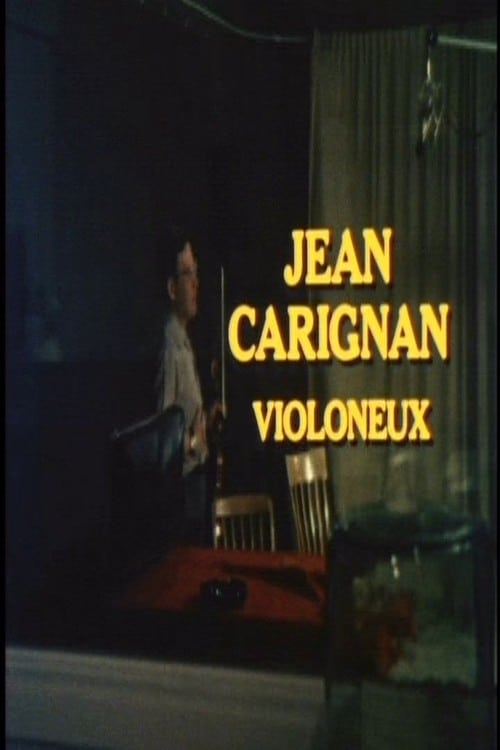
Man of the people, taxi driver, Jean Carignan is above all else one of the world's greatest violinists. In his hands reels become complex, intelligent creations, played with a virtuosity worthy of Paganni, and which continue the traditions of a genre passed on orally. A genre which has retained its popularity, and whose giants include Skinner, Coleman, Allard. Jean Carignan tackles their repertoire, as well as reaping the harvest of his exploration of Irish and Scottish musical traditions, which has made of him an internationally renowned specialist in Celtic music. This film is also a love story between an impoverished child and his violin, and provide a unique window into a remarkable era.
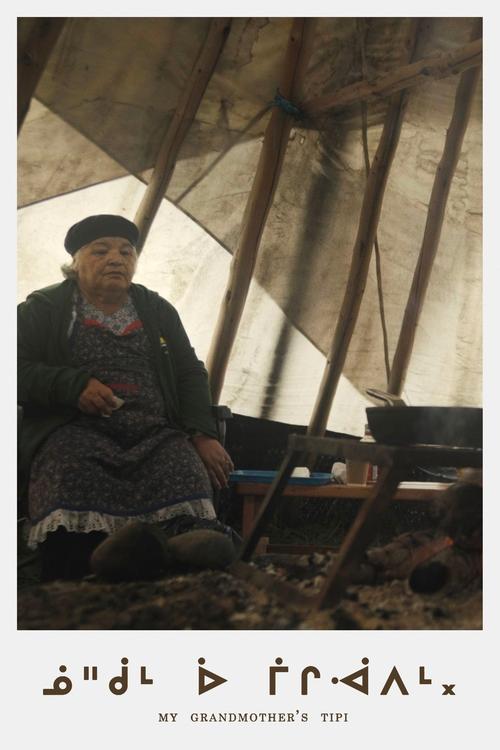
“Nuuhkuum uumichiwaapim” (« My Grandmother’s Tipi ») is an exploration of the sensorial and textural experience of a grandmother’s tipi. It is based on memories of being in a tipi, observing in the bliss of cooking and the time in-between.
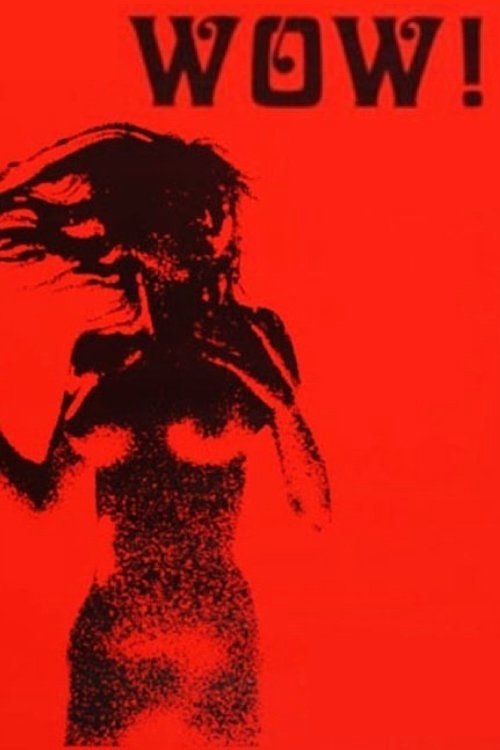
In this French Canadian film, the lives of teenagers are examined in fantasy sequences and through the use of documentary interviews. Prompted by the filmmaker, nine teenagers individually act out their secret dreams and, between times, talk about their world as they see it. The fantasy sequences make creative use of animation, unusual film-development techniques, and stills. Babette conceives of herself as an abbess defending her fortress, a convent; Michelle is transported in a dream of love where all time ceases; Philippe is the revolutionary, defeating all the institutions that plague him, and so on, through all their fantasies. All the actual preoccupations of youth are raised: authority, drugs, social conflict, sex. Jutra's style in "Wow" exhibits his innovative approach to storytelling and filmmaking, showcasing his talents as a director during that period. With English subtitles.
Queer activist and artist Ajamu prepares to leave Brixton for an exhibition of his work in his hometown, Huddersfield.
Resilience is dedicated to those whose lives have been fragmented by intergenerational trauma, but who wish to break the cycle.
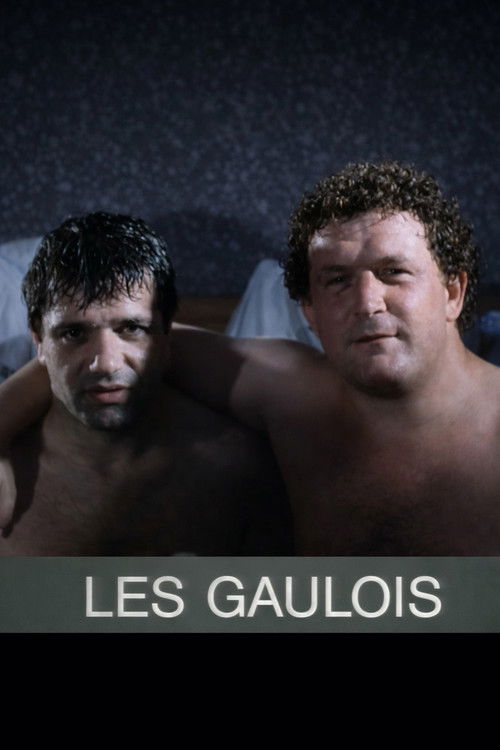
Two segments make up this short film. The first portion called “The French” has two men taste testing some delicious wine, and the other, titled “The Gauls”, is of men playing rugby. This short by Werner Herzog is part of the “The French as Seen By…” series. It was initiated and sponsored by the newspaper Le Figaro, as part of the 1988 celebration of the tenth anniversary of its magazine section.
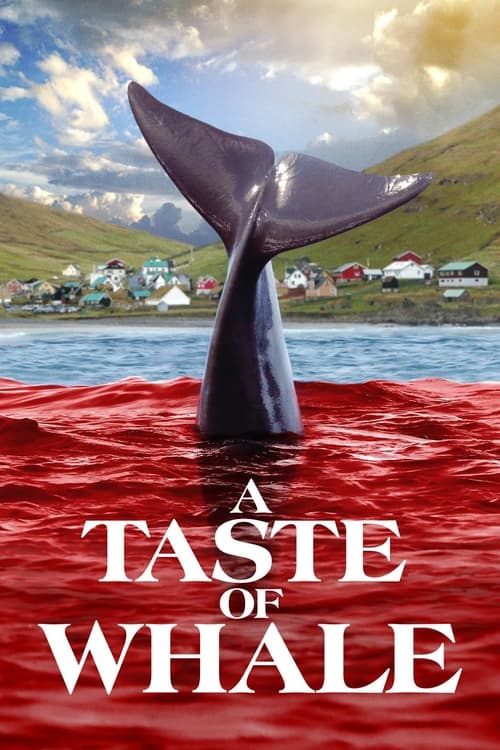
In the Faroe Islands, hundreds of pilot whales are slaughtered each year in a hunt known as the “Grind.” This gruesome tradition has drawn outrage from activists, most notably the international conservation group Sea Shepherd, who routinely sail to the islands to try to block whaling boats. Yet the Faroese are equally determined to maintain their tradition, defending the practice as more sustainable and less cruel than getting meat from slaughterhouses. Director Vincent Kelner spends time with both Faroese hunters and Sea Shepherd crusaders, building to a nuanced look at a disturbing event with much larger implications for the way humans relate to other creatures.
No Trailers found.