Portentously portrays the evacuation of Portland, Oregon, when threatened by a nuclear attack on its state-of-the-art civil defense system.
No Trailers found.
Narrator
Himself (Mayor of Portland)
No overview available.
Short documentary on the solidarity of the Cuban people with Vietnam during the war against the United States.
Based on testimony by Ethel’s brother, David Greenglass, the Rosenbergs are arrested by the FBI. The couple is accused of passing secret information about the atomic bomb to the USSR. Though the Rosenbergs maintain their innocence from the start, the media and public opinion seem to have condemned them from day one. The trial does nothing to change this and ends in a death sentence. On Friday June 19, 1953, Julius and Ethel Rosenberg are executed in the electric chair. Julius first, then Ethel. 30 years later, the truth finally comes out. Declassified FBI archives reveal that Ethel was not guilty of being a spy; she was merely married to one. Julius did indeed commit espionage for the Soviet Union, though primarily as a recruiter, nothing at all like the fictional James Bond. This documentary, made entirely of archival footage and animated illustrations, offers a tale of espionage as well as a complex family tragedy.
Martin Cooper’s documentary feature explores the lives and work of six internationally renowned, independent animators and animation directors. These multi-award-winning artists are Jim Blashfield, Rose Bond, Joan C. Gratz, Zak Margolis, Joanna Priestley and Chel White. Their animated films span a period of over 40 years and reflect a wide range of techniques, from direct animation and classic stop-motion, through 3D models, clay painting, computer-generated imagery up to AI. History, Mystery & Odyssey is entirely filmed in Portland Oregon, where all these animators live and work.
As the 2024 elections approach, Russian interference in American politics – through spies or agents of influence – is a troubling reality. Vladimir Putin is counting on Donald Trump’s victory to weaken support for Ukraine. Why does Trump almost always support Russia? Is he compromised? During his presidency, did he betray the United States in favor of the Kremlin? And why has the Republican Party shifted its stance toward Russia? Answering these questions means shedding light on a labyrinthine espionage and manipulation operation. Still ongoing, it began forty years ago, during the final years of the Cold War. Back then, Trump was merely a real estate developer, and Putin was a young KGB agent. This operation contains many dark areas, but some hold pieces of the puzzle. A former KGB leader, infiltrated “illegals,” a former Trump advisor, and former senior officials from the CIA and FBI, as well as a former prosecutor, provide testimony. . . . [taken from Nilaya Productions]
In 2008, a real-life mystery began to unfold when a real estate company (name withheld by request) discovered video footage shot in one of its vacant properties. The tapes were acquired by local documentary filmmakers Jarrod Rogan and Haman Movafagh, who began piecing together a series of bizarre instances recorded by a man living in the house. Apparently waiting for his wife and daughter to join him from out of state, the man began documenting strange activity that kept him from sleeping for days on end. The eerie recordings have become the subject of much controversy among paranormal investigators, and are finally being released to the general public. This first documentary from Son of Jason Films challenges audiences to explain what happened in the house on Briar Lane.
In 1995, former KGB Major General Oleg Kalugin and ex-CIA Director William Colby collaborated in an unexpected way. They made a video game. The Great Game traces how both men rose to the tops of their fields following World War II, before falling out of favor with their respectives agencies — on opposite sides of the Iron Curtain. For Kalugin, a growing discontent with the KGB’s treatment of Russians radicalized him against the institution. Meanwhile William Colby, an OSS operative and the CIA’s man on the ground in Vietnam, was fired by President Ford after testifying before Congress about controversial CIA programs like MKULTRA and CoIntelPro. After the fall of the Berlin Wall, both living on American soil, Colby and Kalugin played themselves in Spycraft, a multi-million dollar game that was among the most advanced of its time — and is now almost entirely forgotten.
A terrorist drives a car to Hamburg's Rathausmarkt and unloads an unknown device that he claims can cause radioactive contamination. A special unit tries to subdue the man, but this reveals that the only way to prevent the explosion is to constantly readjust a transmitter, so they have to let him go.
The Tet Offensive during the Vietnam War, the Civil Rights Movement, the May events in France, the assassinations of Martin Luther King and Robert F. Kennedy, the Prague Spring, the Chicago riots, the Mexico Summer Olympics, the presidential election of Richard Nixon, the Apollo 8 space mission, the hippies and the Yippies, Bullitt and the living dead. Once upon a time the year 1968.
A documentary on Al Gore's campaign to make the issue of global warming a recognized problem worldwide.
A documentary-style capturing of the life of Ab, a young struggling artist trying to find her way, all while dealing with unwanted company.
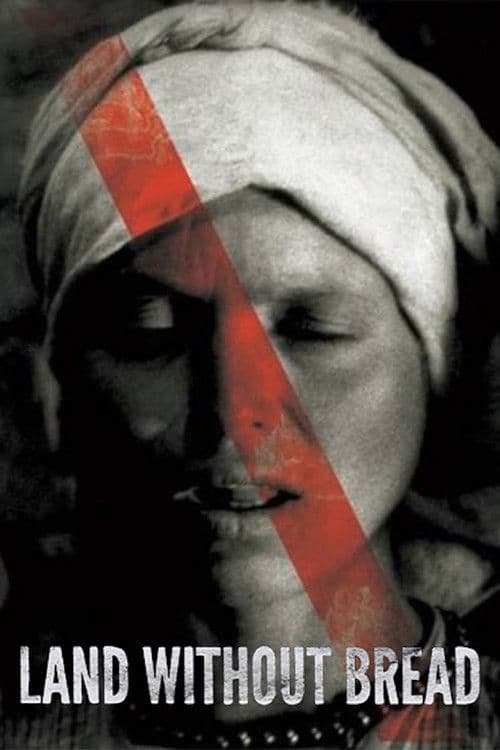
An exploration —manipulated and staged— of life in Las Hurdes, in the province of Cáceres, in Extremadura, Spain, as it was in 1932. Insalubrity, misery and lack of opportunities provoke the emigration of young people and the solitude of those who remain in the desolation of one of the poorest and least developed Spanish regions at that time.
Yesterdays was co-produced by the Multnomah County Sheriff’s Office (MCSO) and the Oregon Historical Society (OHS) in 1982, by Jerry Baumgarner (MCSO) and Michelle Kribs (OHS). It is a little over 25 minutes long and is in both color and in black and white. It presents information from the 1930’s through the 1980’s about the history of some parts of MCSO operations. Segments include Poor Farm operations, the construction of Rocky Butte Jail in 1939-1944, Larch Mountain Road construction, the creation of the anti-protest Emergency Squad in 1963, the River Patrol, a 1966 plane crash search and rescue, and the motorcycle division and trick team.
In the mid-1980s, the U.S. is poised on the brink of nuclear war. This shadow looms over the residents of a small town in Kansas as they continue their daily lives. Dr. Russell Oakes maintains his busy schedule at the hospital, Denise Dahlberg prepares for her upcoming wedding, and Stephen Klein is deep in his graduate studies. When the unthinkable happens and the bombs come down, the town's residents are thrust into the horrors of nuclear winter.
What question has plagued mankind more than the mystery—and terror—of death? This forbidden pursuit has driven Dr. Frances B. Gröss to the brink of madness, but in his obsession, he has amassed a uniquely comprehensive collection of films that depict life in its final, grueling moments. From the savagery of cold-blooded murder to the perverse realities of war, tragic accidents, and the everyday lives of those who collect, dissect, and bury the dead, this descent into morbidity lays bare a truth that all of us will one day face.
Chronicling the lives and covert activities of the so-called "atom spies" in the 1940s, including the big one that got away, Theodore Alvin Hall.
A core group of architects embraced the West Coast from Vancouver to LA with its particular geography and values and left behind a legacy of inspired dwellings. Today, architects celebrate the influence established by their predecessors.
A face-to-face confrontation with Guerrilla death squads in El Salvador, napalm bombings in Vietnam, the drugging of a monkey, a dolphin slaughter, a train disaster in India, Cambodian lepers, a death museum, a driver high on PCP and a boxer going down for his “final” count.
Gory real-life footage of blood and guts on the German Autobahn, drug smugglers getting blown away, a parachutist landing in a crocodile pit, torture and murder in El Salvador, a PCP addict getting stoned, a videotaped rape/murder, a car thief getting ripped apart by two junkyard dogs, and much more.