No Cast found.
No Trailers found.
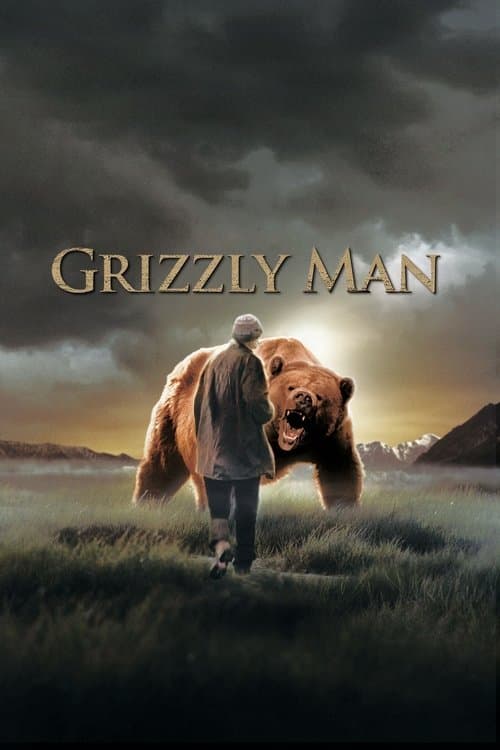
Follows the story of "Grizzly Man" Timothy Treadwell and what the thirteen summers in a National Park in Alaska were like in his attempt to protect the grizzly bears. The film is full of unique images and a look into the spirit of a man who sacrificed himself for nature.
Blind climber Erik Weihenmayer and his team's highly successful ascent of Mount Everest along with four other remarkable milestones on the mountain. Time magazine called this the most successful Everest expedition of all time.
No overview available.
This underwater ballet is an ecological story depicting our paradoxical relationship with plastic. Bakelite launched the #SickOfPlastic campaign from On Est Prêt, along with the Surfrider Foundation, Break Free from Plastic and the Resilient Foundation. Photography was directed by Jacques Ballard, a specialist in underwater cinematography.
Scientist Mark Plotkin races against time to save the ancient healing knowledge of Indian tribes from extinction.
In 1953, Sir Edmund Hillary & Tenzing Norgay made history as the first people to reach the top of Everest. Now, 50 years later, three sons of Everest's most celebrated climbers return to the mountain to challenge it again. Join their journey as they brave the elements and face death to climb 29,000 feet of wind-blasted rock and ice. And, relive the dramatic history of Everest from great triumphs to deadly tragedies, enduring rivalries and the unsung role of the Sherpa people—as National Geographic exposes the untold stories that lurk in the mountain's epic shadow and takes you on the ultimate Everest experience.
Documentary about human impact on the world.
A girl, 23, solo travels a great deal looking for an emotional transformation within herself. She lands in Pokhara during the hustle and bustle of the new year festivities. Pokhara, as beautiful as it is, also looks extremely alive due to all the energy that's in the air. She's looking for the same energy within herself. She believes that the lakes, the mountains, the ever-buzzing streets are going to somehow help her face the fears that she'll be carrying all her life.
Ecology - the eco system, a nature reserve in the south of the country - RS (between the Mirim lagoons) shows the harmony between nature and animals.
Brilliant Moon chronicles the life of the writer, poet, and meditation master Khyentse Rinpoche, one of Tibet's most revered 20th-century Buddhist teachers. Spiritual guide to His Holiness the Dalai Lama and the Royal Family of Bhutan, his life and teachings were an inspiration to all who encountered him. Richard Gere and Lou Reed provide the narration for his dangerous journey out of China, the subsequent spread of his influence and the search for his reincarnation after his death.
Lignes chronicles the sublime interplay between alpine literature and an expedition seeking the true meaning of mountaineering. Four high-mountain guides—Matthieu Maynadier, Pierre Labbre, Matthieu Détrie, and Julien Dusserre—embark on a project: to summit Nangpai-Gosum, an unclimbed 7,000-meter peak in Nepal, using the "alpine style" adapted to the Himalayas—the toughest and purest approach of all. Through this expedition, Lignes attempts to answer the question: "Why do we climb mountains?" Why, despite the harsh conditions and exhaustion, do these four Alpine guides pursue a perilous dream in a realm that belongs to no one? Lignes finds some answers in the past, drawing on 150 years of alpine literature. Serving as both narrator and seasoned guide, Raymond Renaud takes us on a tour of his books and speaks of the "conquerors of the useless"—from the turn of the century to the present day.
Industrialization brings progress, but also harmful influences on the environment. Warning of the dangers of waste materials dumped into the air and the waters.
The documentary focuses on the annual Mani Rimdu festival of Tibet and Nepal, an event which encapsulates the Himalayan Buddhist experience.
Five scientists and a hairdresser, tackling climate change, one stick at a time.
Exploring the concept of the Ecology of Emotions, this musical film portrays an inner journey through the secret garden of creativity put into frame by the nature of Iceland. Hidden Eden is a metaphor for our inner secret garden of creativity. This project bloomed during an art residency in Iceland, sparked by conversations around our shared philosophies on voice and emotional connection. The nature of Iceland inspired us to make the connection on how the landscape reflects the emotional states of creativity and how it helps manage the homeostasis of our inner emotional landscapes. This exchange between emotion and the landscape opens a space for healing. Creativity provides us with the tools to access a garden of our authentic being, nourishing and balancing us. Allowing ourselves to explore the spectrum of our emotions through the lens of our relationship with the Earth invites others to do the same. The creative process can affect our well being and is a key to human evolution.