logologo
MovieVerse© 2024
Privacy PolicyTerms of ServiceContact Us
Made with ❤️ by Thathsara
movie poster
Look at this City
Sign in to create your own watchlist

Look at this City

Aug 12, 1962
1h 25m
★ 5.0

Overview

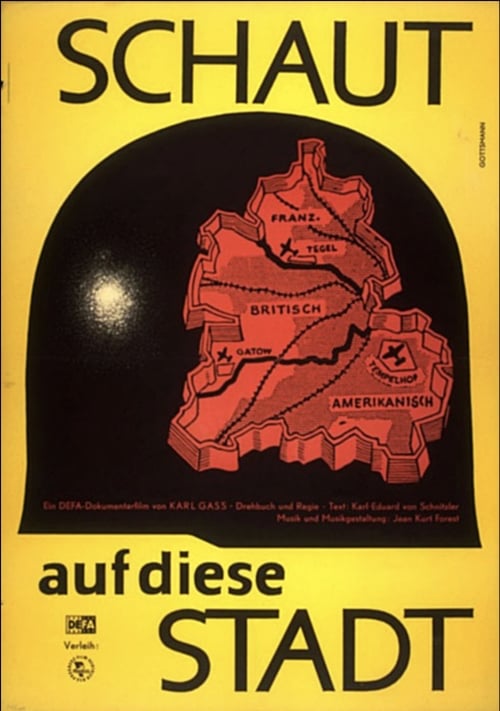
Started in the summer of 1961, even before the Wall was built, the film becomes an explanation after this historical event as to why things can no longer go on as they were before. Unmistakably, as in almost all of Karl Gass' films, the passion with which he treats his subject is unmistakable. If you want to get to know the zeitgeist of the historically significant year 1961, which on both sides knew more the Cold War vocabulary than factual arguments, you can see the Eastern variant in this propaganda film.

Genres

Documentary

Production Companies

DEFA-Studio für Dokumentarfilme

Look at this City Trailers

No Trailers found.

Cast

No Cast found.

You may also like

The Helsinki Effect
7.9

The Helsinki Effect

Feb 21, 2025

The Conference on Security and Cooperation in Europe (CSCE) was the starting point for the slow but sure collapse of communist authoritarian rule in Eastern Europe. The Helsinki Effect offers new perspectives on the events of the Cold War. The film tells the story of the CSCE process, which had a major impact on the end of the Cold War, and sheds light on secret top-level discussions behind closed doors, through voice simulations using artificial intelligence.

No Image Available
0.0

Planning For Emergence From Public Shelters

Mar 1, 1963

A training film for public shelter managers explaining when people should be allowed to leave the shelter after a disaster.

No Image Available
0.0

Public Shelter Organization and Staff

Feb 1, 1963

Created in 1963 at the height of the Cold War, this Civil Defense training film uses a dramatic premise to show how emergency staff should manage and organize a large public fallout shelter during a crisis. A Shelter Manager is shown immediately taking control of the situation in the shelter, speaking calmly to those who have made it into the facility, closing the door promptly once the shelter is full, and sticking to the "shelter plan" as the situation unfolds. Some of the areas discussed in this nuclear war drama are the safety plan, regular inspections, supervised public entry into shelters, ventilation, first aid, sanitation, fire prevention, decontamination of personnel, and more. "Shelter living is different," the Manager states, "But we have a trained staff that will make your stay in this shelter livable for us all."

No Image Available
0.0

Operations in Public Shelters

Jul 1, 1963

A heavily dramatized Civil Defense film that demonstrates how a public fallout shelter is supposed to function after a nuclear attack. This scenario takes place in a fictional any town called "Middlebury". The film describes the situation in a public shelter in Middlebury following an attack on the United States.

No Image Available
0.0

Planning for Public Shelter Entry

Jan 1, 1963

The film features a meeting led by Dave Taylor, the shelter manager, discussing the protocols and responsibilities for staff members involved in managing a public shelter. Key participants, including operations deputy Harvey Johnson and health leader Mrs. Carter, outline their roles in ensuring a smooth entry for occupants during an emergency. The meeting emphasizes the importance of organization, communication, and the distribution of supplies. Staff members are encouraged to familiarize themselves with each other's duties and prepare for potential scenarios, including managing newcomers and ensuring safety and sanitation within the shelter.

No Image Available
0.0

Public Shelter Supplies: What Does The Government Supply

Apr 1, 1963

Training film for shelter managers. Food, water, sanitation, medical, and radiation detection systems are explained.

No Image Available
0.0

Information Program Within Public Shelters

May 1, 1963

This Cold War film "Information Within Public Shelters" (1953) takes place in a fallout shelter, showing how a well-trained staff that provides information to shelter occupants, can keep them busy and calm during nuclear armageddon. This film was produced as the U.S. Government began to shift from promoting privately-owned "family" fallout shelters to the concept of large, public shelters.

Nuclear Armageddon: How Close Are We?
0.0

Nuclear Armageddon: How Close Are We?

Jan 18, 2024

With the Doomsday Clock the closest it's ever been to midnight, Jane Corbin investigates the proliferation of nuclear weapons across the globe. She visits Los Alamos, home to the United States’ nuclear weapons development facility and the historic home of Oppenheimer’s Manhattan Project. In Scotland, she reveals the strategy behind Britain’s nuclear deterrent, and speaks to campaigners in Suffolk fighting against US weapons they fear will be based on UK soil. Jane also discovers how many of the global agreements and safeguards that have constrained the spread of nuclear weapons since the 1970s are breaking down. This is a story told by the scientists, investigators and diplomats who set the clock and have fought to ensure that the ultimate deterrent has not been used in over 70 years.

When the Water Stops Flowing
0.0

When the Water Stops Flowing

Jan 3, 2026

Jonathan Stavleu explores, in a stream-of-consciousness video essay, the relationship people have with water and what happens when access to it is taken away. For this work, he examines anecdotal histories he has heard from Estonians, as well as stories from his own family history in the Netherlands, weaving them together into a journal-like narrative.

The Wall
7.0

The Wall

Nov 8, 1962

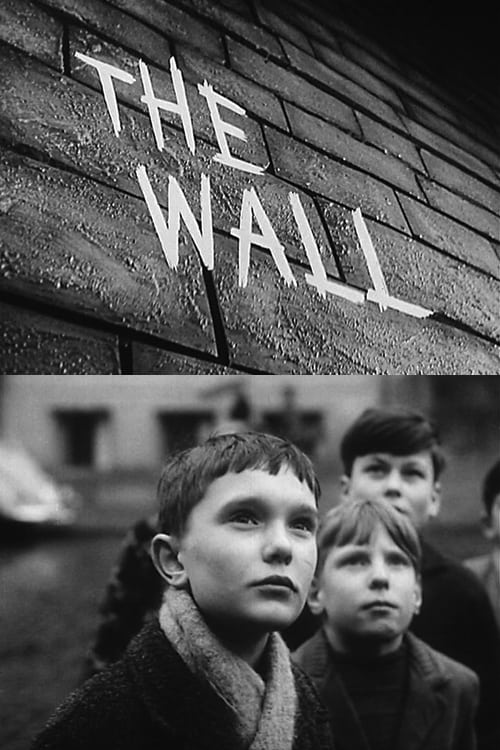
Like the best USIA films, The Wall distills political events into an emotionally clear and compelling ideological "story". In 1962 Walter de Hoog gathered footage from U.S. and German newsreel sources and crafted this taut short film about the first year of the Berlin Wall. Straightforward, keenly balanced narration portrays Berliners as "accepting the wall but never resigned to it". The extraordinary footage of the first escapes was propaganda enough-- His challenge was to make the politics human.

No Image Available
7.0

Something to Do with the Wall

Apr 3, 1991

In 1986, Ross McElwee (Sherman's March) and Marilyn Levine were making a film about the 25th anniversary of the Berlin Wall, when the imposing structure was still very much intact as the world’s most visible symbol of hardline Communism and Cold War lore. They thought they were making a documentary on the community of tourists, soldiers, and West Berliners who lived in the seemingly eternal presence of the graffiti emblazoned eyesore. But in 1989, as the original film neared completion, the Wall came down, and McElwee and Levine returned to Berlin, this time to capture the radically different atmosphere of the reunified city.

The Phenomenon
6.3

The Phenomenon

Oct 6, 2020

This documentary examines unidentified aerial phenomenon. With testimony from high-ranking government officials and NASA Astronauts, Senator Harry Reid says it "makes the incredible credible."

Space Hackers
0.0

Space Hackers

May 7, 2007

The '60s. Achille and Giovanni Judica-Cordiglia, two amateur radio enthusiasts, listened to sound from space with home-built equipment in their hometown of Turin. But one night, they recorded something quite different from the usual static that would change their lives forever...

Combat in the Air - US Strategic Bombers
0.0

Combat in the Air - US Strategic Bombers

Apr 1, 1996

No overview available.

Combat in the Air - Anti-Ship Strike
0.0

Combat in the Air - Anti-Ship Strike

Apr 1, 1997

No overview available.

The Man Who Saved the World
6.8

The Man Who Saved the World

Aug 13, 2014

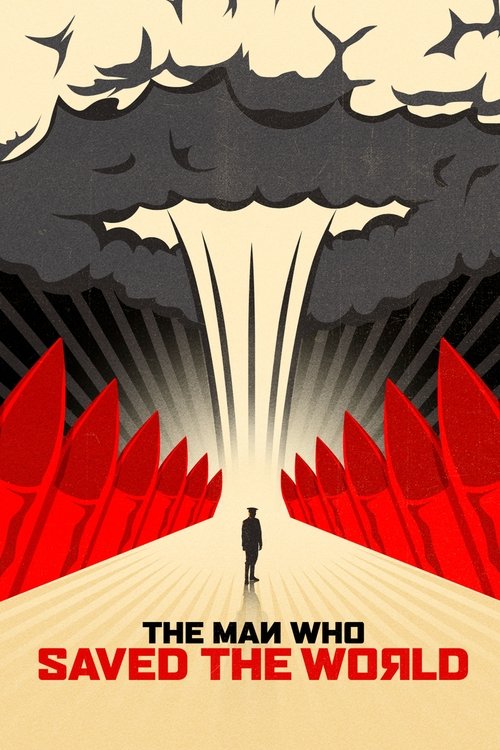
The Man Who Saved the World is a feature documentary film about Stanislav Petrov, a former lieutenant colonel of the Soviet Air Defence Forces.

The Liberal War
0.0

The Liberal War

Nov 26, 1974

The Vietnam War during the JFK years and beyond. Made in 1972 in the filmmaker's apartment, without documentary footage of the war, metaphors are created through the animation of images and objects, and through guerrilla skits. By rejecting the authority of traditional documentary footage, the anarchist spirit of individual responsibility is established. This is history from one person's point of view, rather than a definitive proclamation.

The Missiles of October: What the World Didn't Know
0.0

The Missiles of October: What the World Didn't Know

Oct 17, 1992

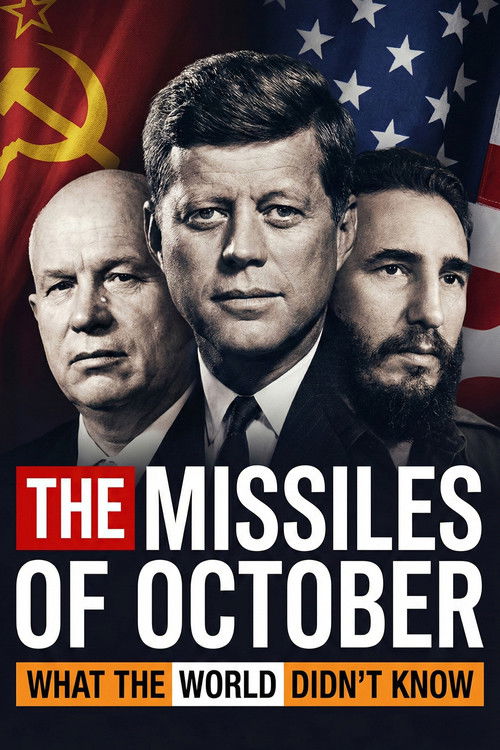
This documentary by ABC News commemorates the 30th anniversary of the 1962 Cuban Missile Crisis. It provides a behind-the-scenes look at how close the U.S. and Soviet Union actually came to catastrophe.

Closing Gambit: 1978 Korchnoi versus Karpov and the Kremlin
8.5

Closing Gambit: 1978 Korchnoi versus Karpov and the Kremlin

Oct 26, 2018

The story of the 1978 World Chess Championship between the Soviet Communist Party's protege, Anatoly Karpov and the traitor and Soviet defector, Viktor Korchnoi. One of those instances in life where truth is stranger than fiction.

Stalin, the Red Tyrant
6.4

Stalin, the Red Tyrant

Mar 13, 2007

On March 9, 1953, Joseph Stalin was buried in Moscow in front of a million people. His funeral is that of a demi-God. Ultimate paradox for one of the greatest criminals in History who brought misfortune to his people while arousing collective admiration.