logologo
MovieVerse© 2024
Privacy PolicyTerms of ServiceContact Us
Made with ❤️ by Thathsara
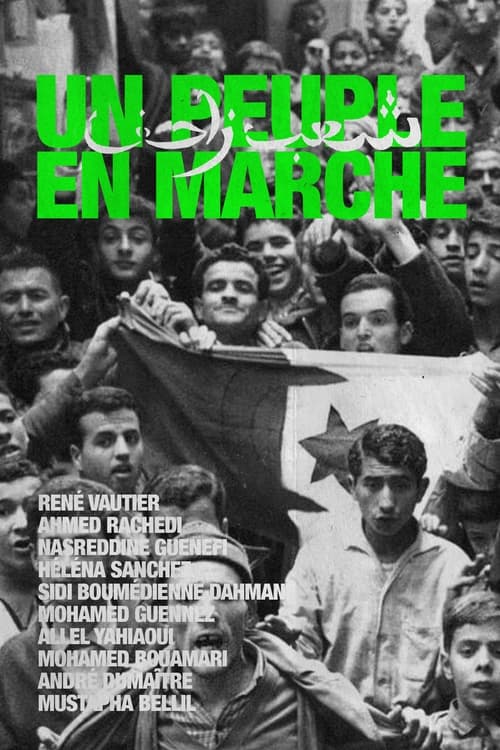
movie poster
A People on the March
Sign in to create your own watchlist

A People on the March

Jan 2, 1963
0h 55m
★ 6.5

Overview

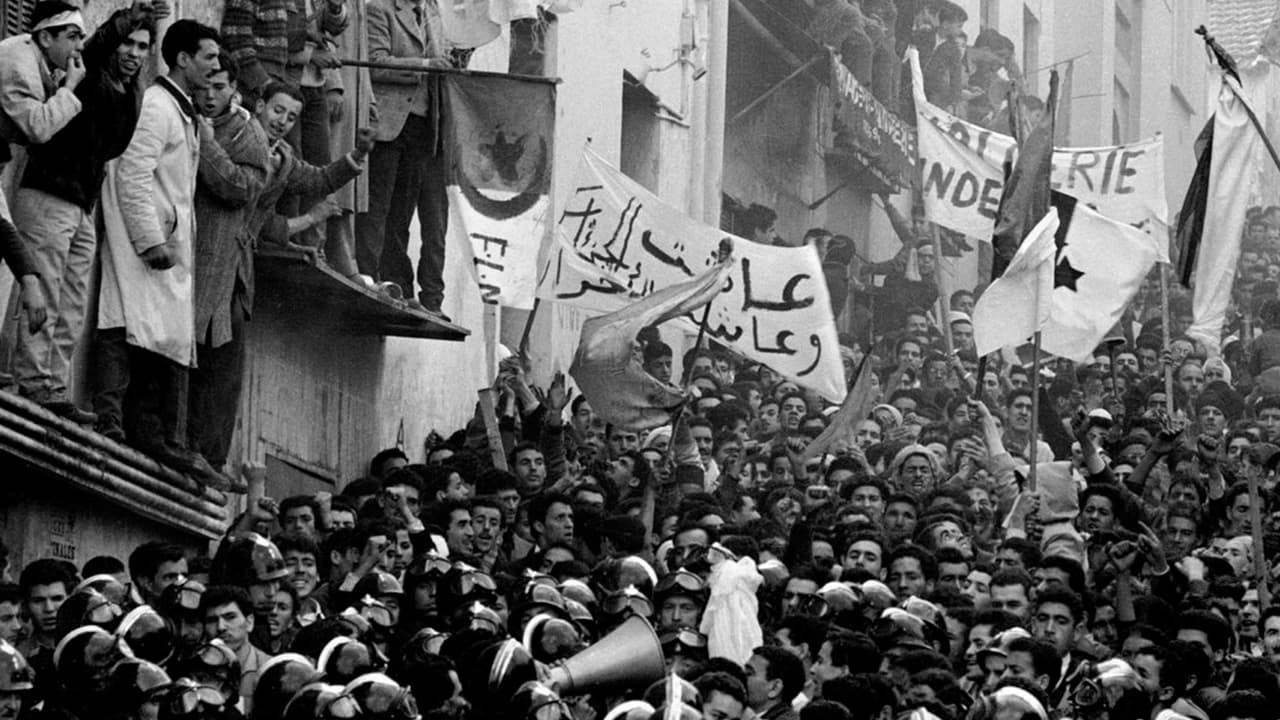
In 1962, René Vautier, together with some Algerian friends, organised the audio-visual formation centre Ben Aknoun to encourage a "dialogue in images" between the two factions. Together with his students he made a film that shows the history of the Algerian War and of the ALN (National Liberation Army), and life during the reconstruction.

Genres

Documentary
War
History

A People on the March Trailers

No Trailers found.

You may also like

L'Histoire Du Film "La Bataille D'Alger"
10.0

L'Histoire Du Film "La Bataille D'Alger"

Jan 1, 2018

More than fifty years after the release of the film “The Battle of Algiers” in theaters in June 1966, director Salim Aggar found, after a search which lasted more than a year and a half, the actors, extras and technicians who worked on the film directed by Gillo Pentecorvo and produced by Yacef Saadi. In this documentary full of anecdotes and stories about the filming of the film, the director found the actress who played the role of Hassiba Ben Bouali, the young 17-year-old actress who played Bouhamidi's bride but especially certain figures important parts of the film who were barely 10 years old at the time of filming and who no one will recognize today. Beyond the important historical aspect of the film, the documentary focused mainly on the social, cinematographic and cultural aspect of the film and its impact on a generation which had just regained independence.

Out of Africa
7.2

Out of Africa

Dec 20, 1985

Tells the life story of Danish author Karen Blixen, who at the beginning of the 20th century moved to Africa to build a new life for herself. The film is based on her 1937 autobiographical novel.

The Color Purple
7.7

The Color Purple

Dec 18, 1985

An epic tale spanning forty years in the life of Celie, an African-American woman living in the South who survives incredible abuse and bigotry. After Celie's abusive father marries her off to the equally debasing 'Mister' Albert Johnson, things go from bad to worse, leaving Celie to find companionship anywhere she can. She perseveres, holding on to her dream of one day being reunited with her sister in Africa.

A Propos D'Un Crime
10.0

A Propos D'Un Crime

Jan 1, 1967

In 1967, Visconti came to Algiers for the filming of The Stranger with Mastroianni and Anna Karina. Camus, during his lifetime, had always refused to allow one of his novels to be brought to the screen. His family made another decision. The filming of the film was experienced in Algiers, like a posthumous return of the writer to Algiers. During filming, a young filmmaker specializing in documentaries Gérard Patris attempts a report on the impact of the filming of The Stranger on the Algerians. Interspersed with sequences from the shooting of Visconti's film, he films Poncet, Maisonseul, Bénisti and Sénac, friends of Camus, in full discussions to situate Camus and his work in a sociological and historical context. “The idea is for us to show people, others, ourselves as if they could all be Meursault, or at least the witnesses concerned to his drama.”

The Making of Yaaba
7.5

The Making of Yaaba

Jan 2, 1989

Djibril Diop Mambéty followed and filmed the shooting of Yaaba, Idrissa Ouédraogo's second feature film. A documentary full of humorous anecdotes regarding the dangers of shooting in Burkina Faso.

Liyana
9.0

Liyana

Jul 15, 2017

A talented group of orphaned children in Swaziland create a fictional heroine and send her on a dangerous quest.

A Captain's Honor
6.0

A Captain's Honor

Dec 29, 1982

During a televised debate on the Algerian war in the early 1980s, Professor Paulet denounced the methods of Captain Caron, killed in action in 1957. The widow of the captain, Patricia, decided to file a defamation suit.

Sounds of Sand
6.1

Sounds of Sand

May 2, 2007

On the one hand, there’s the desert eating away at the land. The endless dry season, the lack of water. On the other there’s the threat of war. The village well has run dry. The livestock is dying. Trusting their instinct, most of the villagers leave and head south. Rahne, the only literate one, decides to head east with his three children and Mouna, his wife. A few sheep, some goats, and Chamelle, a dromedary, are their only riches. A tale of exodus, quest, hope and fatality.

Mr. Kingstreet's War
6.0

Mr. Kingstreet's War

May 1, 1973

A couple sets up an African game preserve, only to have British and Italian armies fight over the waterholes.

Algeria in Flames
8.5

Algeria in Flames

Jan 2, 1958

These are the first images shot in the ALN maquis, camera in hand, at the end of 1956 and in 1957. These war images taken in the Aurès-Nementchas are intended to be the basis of a dialogue between French and Algerians for peace in Algeria, by demonstrating the existence of an armed organization close to the people. Three versions of Algeria in Flames are produced: French, German and Arabic. From the end of the editing, the film circulates without any cuts throughout the world, except in France where the first screening takes place in the occupied Sorbonne in 1968. Certain images of the film have circulated and are found in films, in particular Algerian films. Because of the excitement caused by this film, he was forced to go into hiding for 25 months. After the declaration of independence, he founded the first Algerian Audiovisual Center.

Under The Ashes
9.0

Under The Ashes

Jan 1, 1990

The Second World War. French authorities ban political parties and unions. In Algeria, the leaders of political and trade union organizations were arrested and interned in "surveillance" camps with more than 2,000 French and foreigners: communist activists, trade unionists, brigadists, Spanish republicans and other opponents of the Vichy regime. The Djenien Bourezg camp is one of these camps, located in southern Algeria and is one of the most formidable. An old activist for the Algerian national cause returns to the scene. He blows away the ashes that cover this part of history. And through it, we discover the hard fight of the camp inmates for respect and human dignity, under a fascist command.

When We Were Kings
7.5

When We Were Kings

Oct 25, 1996

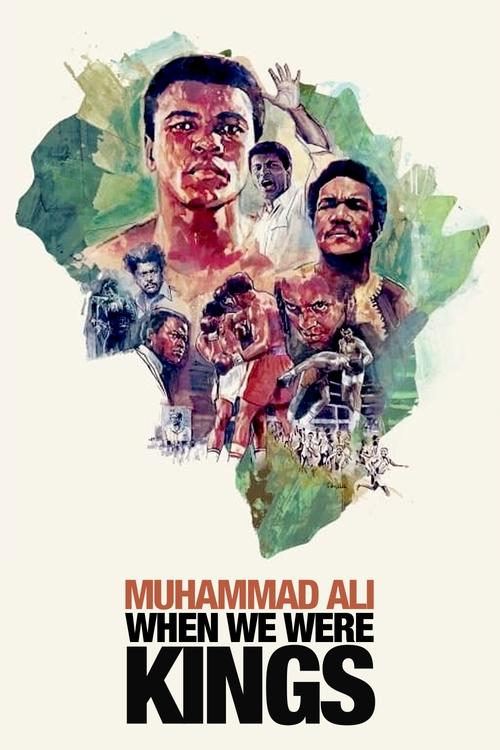
It's 1974. Muhammad Ali is 32 and thought by many to be past his prime. George Foreman is ten years younger and the heavyweight champion of the world. Promoter Don King wants to make a name for himself and offers both fighters five million dollars apiece to fight one another, and when they accept, King has only to come up with the money. He finds a willing backer in Mobutu Sese Suko, the dictator of Zaire, and the "Rumble in the Jungle" is set, including a musical festival featuring some of America's top black performers, like James Brown and B.B. King.

The Ghost and the Darkness
6.8

The Ghost and the Darkness

Oct 11, 1996

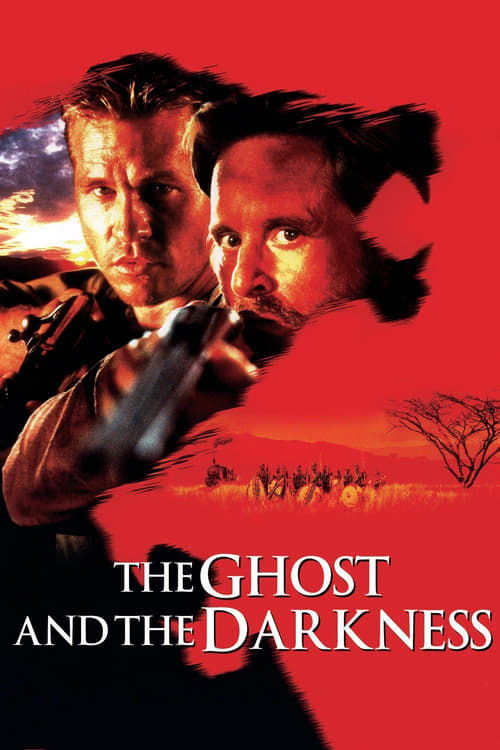
Sir Robert Beaumont is behind schedule on a railroad in Africa. Enlisting noted engineer John Henry Patterson to right the ship, Beaumont expects results. Everything seems great until the crew discovers the mutilated corpse of the project's foreman, seemingly killed by a lion. After several more attacks, Patterson calls in famed hunter Charles Remington, who has finally met his match in the bloodthirsty lions.

Johnny Mad Dog
6.1

Johnny Mad Dog

May 20, 2008

A cast of unknown performers are used in this drama about child soldiers fighting a war in an unnamed African country.

Marfil
0.0

Marfil

Jan 1, 2011

The first filmmaker arrived in Equatorial Guinea in 1904. The last movie theatre closed in Malabo in the 1990s. In 2011, during the II African Film Festival of Equatorial Guinea, the Marfil Movie Theatre reopened its doors. Florencio, Ángel and Estrada tells us how cinema has been, and is still, present in their lives.

Algeria, Special Weapons Sections
9.0

Algeria, Special Weapons Sections

Mar 12, 2025

This documentary by director Claire Billet and historian Christophe Lafaye details the massive and systematic use of chemical weapons during the Algerian War. Algerian fighters and civilians, sheltering in caves, were gassed by "special weapons sections" of the French army. The gas identified on military documents is CN2D, whose widespread use forced insurgents to flee "treated" sites, at the risk of dying there. The method is reminiscent of the "enfumades" used by the French expeditionary force during the conquest of Algeria in the 19th century. Between 8,000 and 10,000 such operations are believed to have taken place on Algerian soil between 1956 and 1962. This historical aspect is little known due to the difficulty of accessing archives, many of which are still classified, raising questions about memory, historical truth, and justice.

The Hunters
6.1

The Hunters

Jan 1, 1957

An ethnographic documentary following four Ju/’hoansi (!Kung) men during a multi-day giraffe hunt in the Kalahari Desert, filmed during the Smithsonian–Harvard Peabody expedition of 1952–53.

Is Paris Burning?
7.2

Is Paris Burning?

Oct 26, 1966

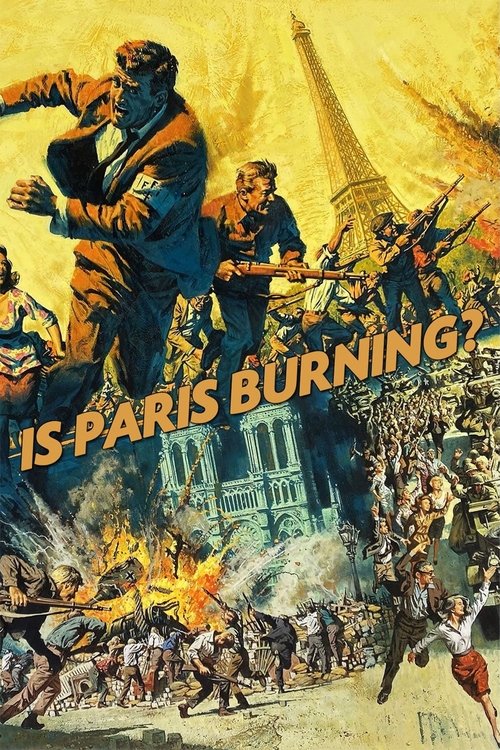
Near the end of World War II, Gen. Dietrich von Choltitz receives orders to burn down Paris if it becomes clear the Allies are going to invade, or if he cannot maintain control of the city. After much contemplation Choltitz decides to ignore his orders, enraging the Germans and giving hope to various resistance factions that the city will be liberated. Choltitz, along with Swedish diplomat Raoul Nordling, helps a resistance leader organize his forces.

Fort Saganne
6.0

Fort Saganne

May 11, 1984

In 1911, a willful and determined man from peasant stock named Charles Saganne enlists in the military and is assigned to the Sahara Desert under the aristocratic Colonel Dubreuilh.

Be Water
6.7

Be Water

Jan 25, 2020

In 1971, after being rejected by Hollywood, Bruce Lee returned to his parents’ homeland of Hong Kong to complete four iconic films. Charting his struggles between two worlds, this portrait explores questions of identity and representation through the use of rare archival footage, interviews with loved ones and Bruce’s own writings.

Cast

No Cast found.