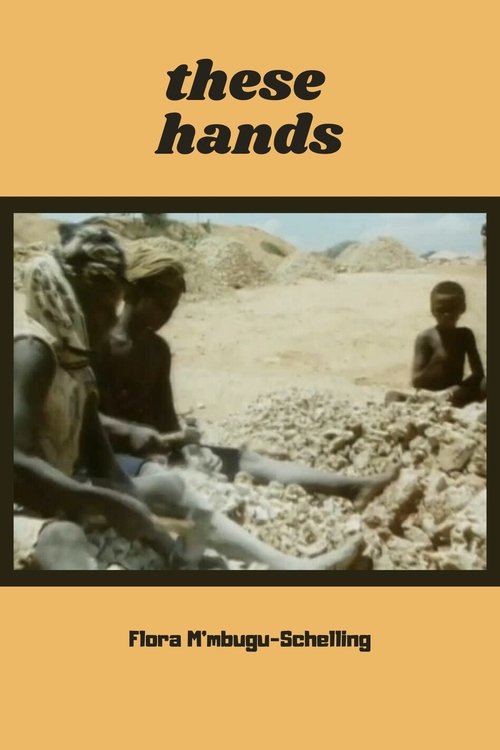
A day in the life of Mozambican women refugees working in a quarry outside Dar es Salaam.
No Cast found.
No Trailers found.
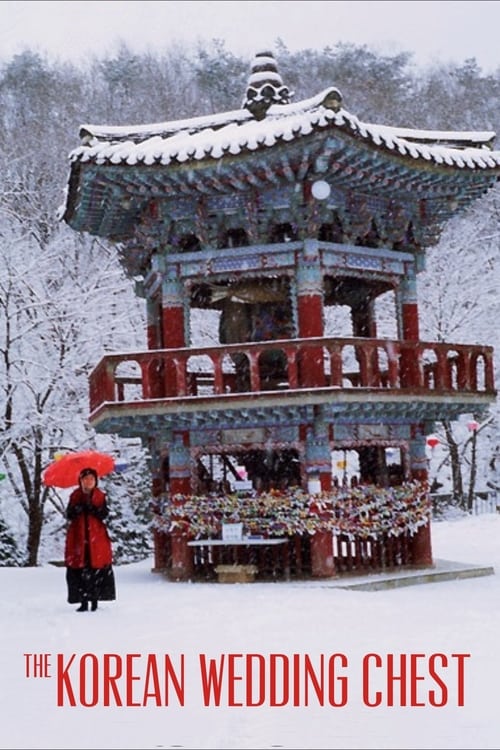
Ulrike Ottinger’s provocative mélange of ethnography, stunning tableaux and baroque vignettes was inspired by what she calls the “well-stocked miracle” of Korean wedding chests, assembled according to time-honored customs. This exploration of love and marriage in South Korea looks closely at ancient and present-day rituals, revealing what is old in the new and new in the old. Her inquiry leads us from shamans, temples and priests, to the enchanted maze of 21st-century Seoul, where vendors of medicinal herbs co-exist with high-tech beauty salons for wedding couples and secular marriage palaces. Using film much like a canvas, Ottinger creates a modern fairytale flush with mythological heroes, traditional rites, ancestral symbolism, dreams of eternal love, and a whole lot of Western kitsch. One of her most acclaimed documentaries, it captures the amazing phenomenon of new mega-cities and their contradictory societies caught in a balancing act.
The Purity Ball symbolizes a father's protection over his daughter's virginity, but how does this reflect in the choices she makes, understanding her sexuality, and knowing her worth as a woman? This documentary examines the effects of Abstinence-Only Programs versus Comprehensive Sex Education in schools and what society can do to help lower teen pregnancies, abortions, and STDS, as well as poverty and sexual abuse.
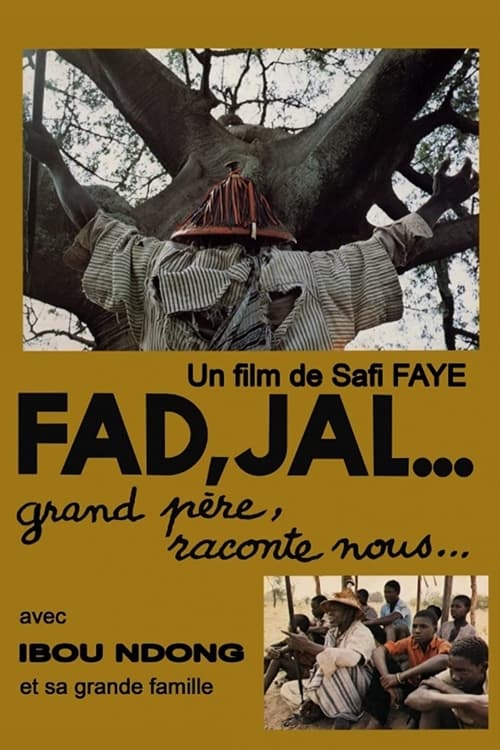
The story of a Serer village in the groundnut basin of Senegal. Using the words of their ancestors passed on by oral folklore, the villagers trace the history of their village and their difficulties in working their land and living off their produce. Fad'jal is an extraordinary boundary defying film that interweaves ethnographic footage, intimate observation of everyday village life and fictionalised historical scenes. With it, Faye carefully encourages the viewers to reflect both on African history and storytelling, and on the intersection of fiction and documentary.
No overview available.
Two formidable Native American women, both chief judges in their tribe's courts, strive to reduce incarceration rates and heal their people by restoring rather than punishing offenders, modeling restorative justice in action.
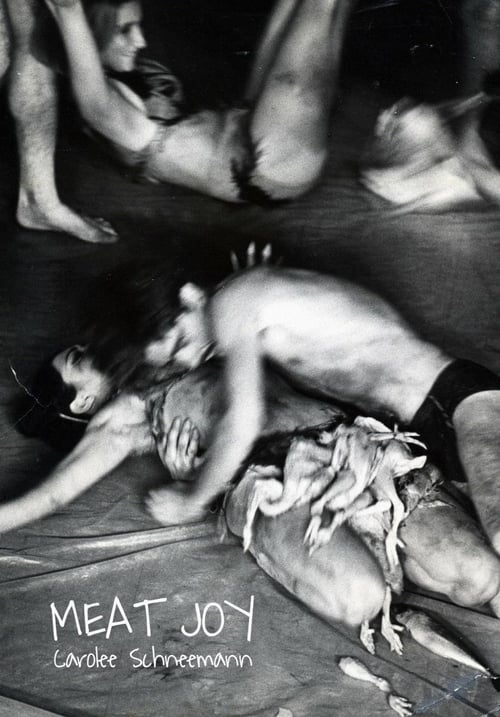
"Meat Joy is an erotic rite — excessive, indulgent, a celebration of flesh as material: raw fish, chicken, sausages, wet paint, transparent plastic, ropes, brushes, paper scrap. Its propulsion is towards the ecstatic — shifting and turning among tenderness, wildness, precision, abandon; qualities that could at any moment be sensual, comic, joyous, repellent. Physical equivalences are enacted as a psychic imagistic stream, in which the layered elements mesh and gain intensity by the energy complement of the audience. The original performances became notorious and introduced a vision of the 'sacred erotic.' This video was converted from original film footage of three 1964 performances of Meat Joy at its first staged performance at the Festival de la Libre Expression, Paris, Dennison Hall, London, and Judson Church, New York City."
A documentary about urban violence in Brazil, especially in Rio de Janeiro. Policemen, drug dealers, and shantytown dwellers get trapped in a daily war that knows no winners.
This is the planet we still know so little. We call it Earth but less than 1/3 is land, over 2/3 is water and we use that water as a dumping site for our waste and as if it's an inexhaustible "horn of plenty" for humans. Our most important ecosystem is on the verge of collapse unless we act now. At this very moment the main problem with the oceans is that they're getting emptier and emptier. If we don't do anything then we face one of the biggest disasters in history of mankind.
Edie Bouvier Beale and her mother, Edith, two aging, eccentric relatives of Jackie Kennedy Onassis, are the sole inhabitants of a Long Island estate. The women reveal themselves to be misfits with outsized, engaging personalities. Much of the conversation is centered on their pasts, as mother and daughter now rarely leave home.
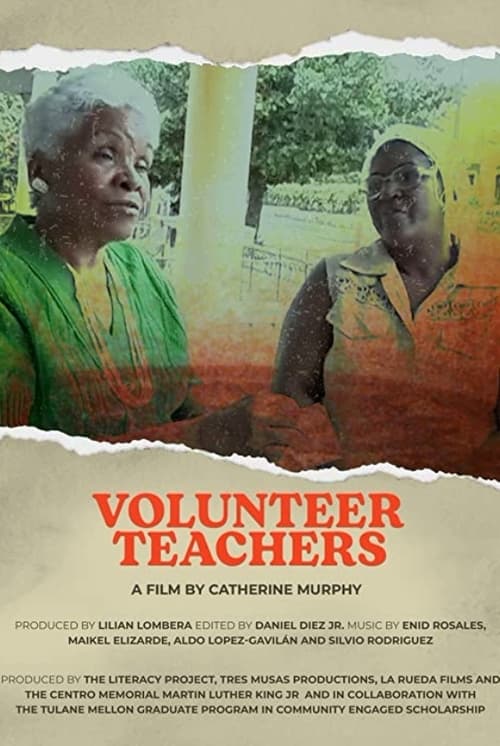
Ana Deborah Mola and Belkis Lescaille were among the first young teachers who started pilot programs around the island of Cuba in 1960, laying foundation for the massive National Literacy Campaign that would take place the following year.
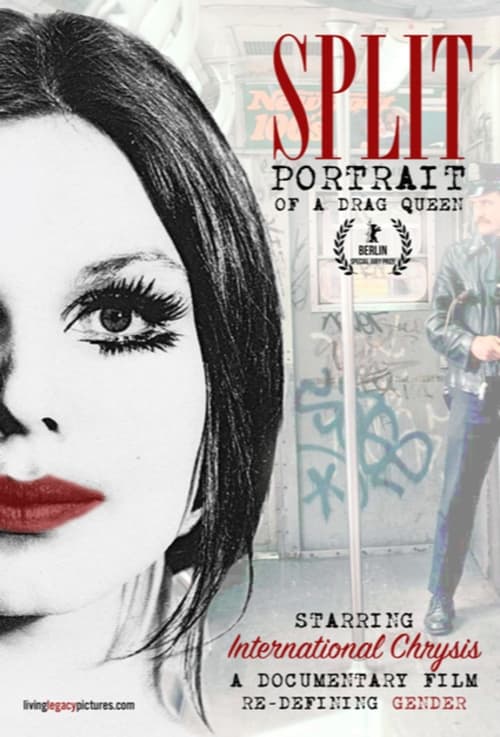
A documentary portrait of International Chrysis, a New York “show girl” and drag queen. Surreal herself, Chrysis was one of Salvador Dali’s inner circle, a woman from the waist up, a man from the waist down.
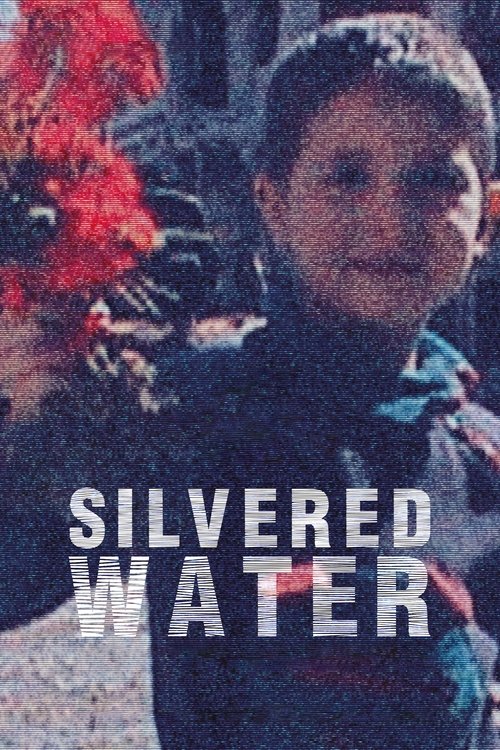
Shot by a reported “1,001 Syrians” according to the filmmakers, SILVERED WATER, SYRIA SELF-PORTRAIT impressionistically documents the destruction and atrocities of the civil war through a combination of eye-witness accounts shot on mobile phones and posted to the internet, and footage shot by Bedirxan during the siege of Homs. Bedirxan, an elementary school teacher in Homs, had contacted Mohammed online to ask him what he would film, if he was there. Mohammed, working in forced exile in Paris, is tormented by feelings of cowardice as he witnesses the horrors from afar, and the self-reflexive film also chronicles how he is haunted in his dreams by a Syrian boy once shot to death for snatching his camera on the street.
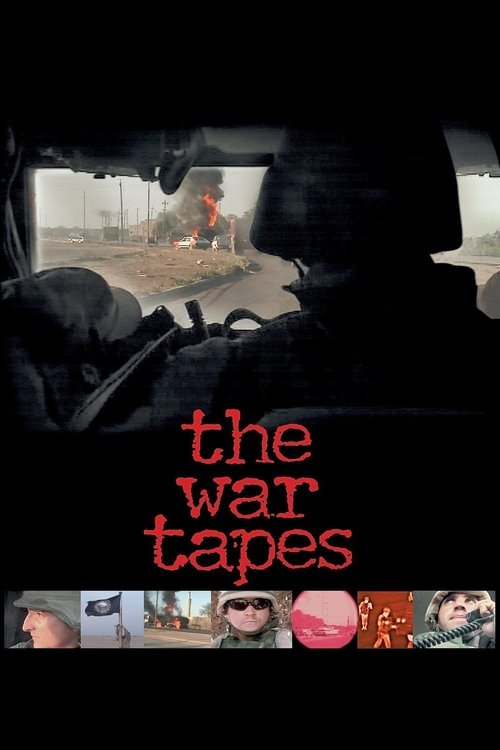
Straight from the front lines in Iraq, THE WAR TAPES is the first war movie filmed by soldiers themselves. These soldiers bypassed Pentagon supervised media to share their experience like never before. Funnier, spicier, and more gut wrenching than news reports, this is Operation Iraqi Freedom as filmed by Sergeant Steve Pink, Sergeant Zack Bazzi and Specialist Mike Moriarty. Steve is a wisecracking carpenter who aspires to be a writer. Zack is a Lebanese-American university student who loves to travel and is fluent in Arabic. Mike is a father who seeks honor and redemption. Each leaves a woman behind - a girlfriend, a mother and a wife. Through their candid footage, these men open their hearts and take us on an unforgettable journey, capturing camaraderie and humor along with the brutal and terrifying experiences they face. These soldiers got the story that 2,700 embedded reporters never could.
Using her husband's struggle with cancer as a case in point, filmmaker Linda Garmon explores the status of the fight against the devastating disease and looks at the lives of the medical professionals dedicated curing it. Interweaving personal testimony with science, this compelling documentary also includes a panel discussion with cancer experts led by broadcast journalist and cancer survivor Linda Ellerbee.
The life and career of the hailed Hollywood movie star and underappreciated genius inventor, Hedy Lamarr.
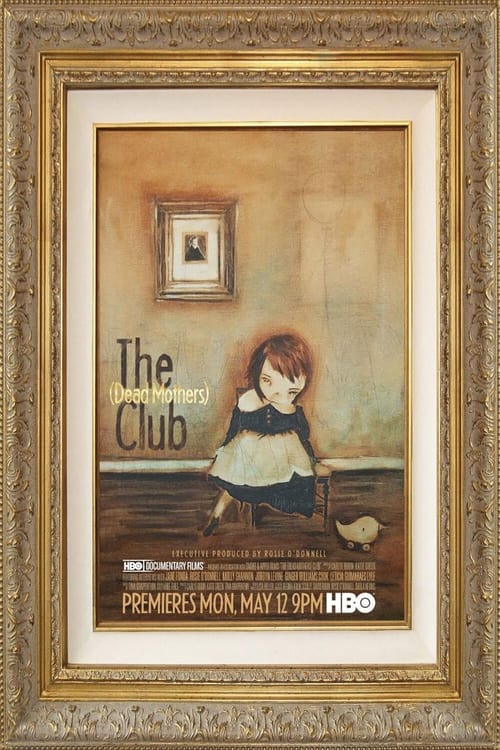
Three women whose paths never cross, yet are bound by the shared experience of losing their mothers during adolescence, exploring each one’s sometimes-complex relationship with her mother.
McLibel is a documentary film directed by Franny Armstrong for Spanner Films about the McLibel case. The film was first completed, as a 52 minute television version, in 1997, after the conclusion of the original McLibel trial. It was then re-edited to 85 minute feature length in 2005, after the McLibel defendants took their case to the European Court of Human Rights.
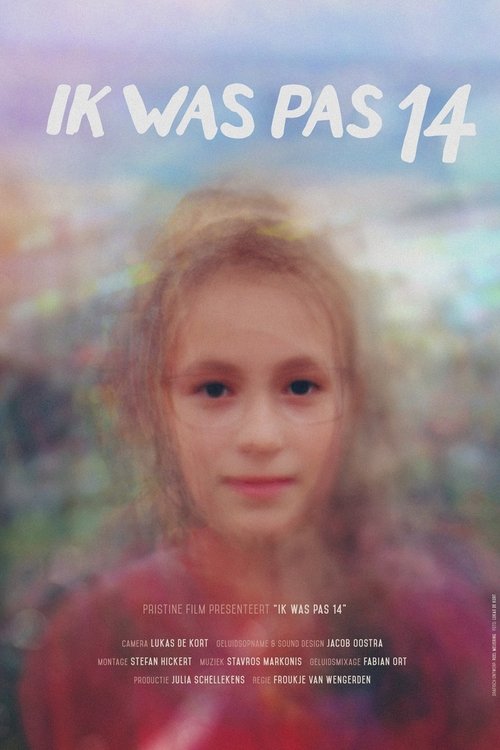
Filmmaker Froukje van Wengerden’s 86-year-old grandmother shares a powerful memory from 1944, when she was just 14. As her story unfolds, we see a group of contemporary 14-year-old girls. Their procession of portraits permits the spectator to see simultaneously forward and back, into the future and towards the past. A miraculous testimonial that uses eye contact to focus the viewer inward and evoke unexpected emotions.
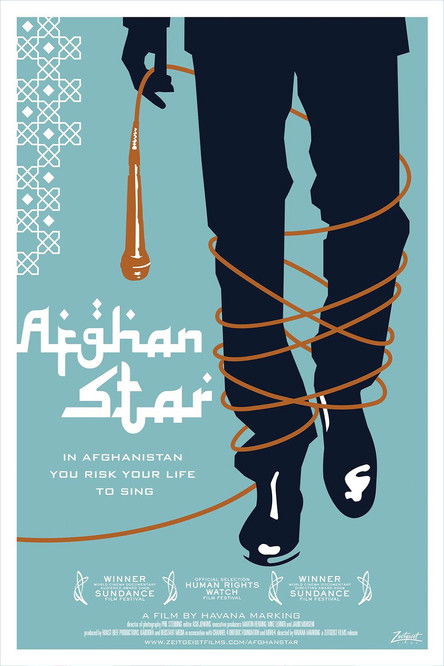
This documentary on the effect the talent competition "Afghan Star" has on the incredibly diverse inhabitants of Afghanistan affords a glimpse into a country rarely seen. Contestants risk their lives to appear on the television show that is a raging success with the public and also monitored closely by the government.
It is El Salvador, 1989, three years before the end of a brutal civil war that took 75,000 lives. Maria Serrano, wife, mother, and guerrilla leader is on the front lines of the battle for her people and her country. With unprecedented access to FMLN guerrilla camps, the filmmakers dramatically chronicle Maria's daily life in the war.