logologo
MovieVerse© 2024
Privacy PolicyTerms of ServiceContact Us
Made with ❤️ by Thathsara
movie poster
No Image Available
Sign in to create your own watchlist

Cairo Chorus

Apr 13, 2010
0h 10m
★ 0.0

CAIRO FIELDWORKS (FW#12)

Overview

"Filmed in Cairo, in Al-Azhar Park, sunset during Isha'a praying time. The city becomes a Chorus. Dedicated to the people of Cairo. With love and hope." Part of the Azan series & the Cairo fieldworks.

Genres

Documentary

Cairo Chorus Trailers

No Trailers found.

You may also like

Ludwig van
5.7

Ludwig van

Jun 1, 1970

An odyssey through Beethoven’s lasting presence and influence in our modern world – viewed through the eyes of the composer himself.

Naked Rose
4.2

Naked Rose

Apr 24, 2013

Among the millions of victims of the Nazi madness during the Second World War, Pierre Seel was charged with homosexuality and imprisoned in the Schirmeck concentration camp. He survived this terrifying experience of torture and humiliation, and after the war he married, had three children, and tried to live a normal life. In 1982, however, he came to terms with his past and his true nature and decided to publicly reveal what he and thousands of other homosexuals branded with the Pink Triangle had undergone during the Nazi regime. Il Rosa Nudo (Naked Rose), inspired by the true story of Pierre Seel, depicts in a theatrical and evocative way the Homocaust, focusing on the scientific theories of SS Physician Carl Peter Værnet for the treatment of homosexuality, which paved the way for the Nazi persecution of gay men.

Canadian Pacific I
4.5

Canadian Pacific I

Jul 6, 1974

Canadian Pacific I is made up of a series of slowly dissolved shots done from the same framing over several months. The camera frames a window with a railway yard in the foreground, a bay in the space behind it, and misty mountains in the extreme distance. Trains occasionally pass by in the foreground. Huge ships move across the bay. Blue mists hover over the mountain heads.

Canadian Pacific II
5.0

Canadian Pacific II

Jul 6, 1975

Canadian Pacific II is designed as a companion piece to Canadian Pacific I. Shot from a window two storeys higher and in the building adjacent to the artists’s studio of the previous year, one enters into a dream state… an involvement with a vocabulary of seeing and feeling by subtle transitions of the passage of time

No Image Available
4.0

The House That Eye Live In

Aug 12, 2014

Migrating by sea from Holland as an eight-year-old, Dirk de Bruyn went on to be a doyen of Australian experimental cinema. But as this intimate film reveals, his work is suffused with the trauma of migration, and the struggle to recognise himself as a ‘new Australian'. In conversation with documentarian Steven McIntyre, Dirk guides us through more than 40 years of his filmmaking: the early years exploring technique and technology, a subsequent phase of unflinching self-examination brought on by upheaval and overseas travel, and more recent projects where he attempts a fusion of personal, cultural, and historical identity. What emerges is an inspiring, rugged, and at times poignant portrait of an artist committed to self-expression and self-discovery through the medium of film.

Film Is. 7-12
6.0

Film Is. 7-12

Oct 10, 2002

The second half of Gustav Deutsch's experimental Film ist. series, constructing new narratives and moods out of existing footage, mostly from early silent era films.

Anamorphosis
6.5

Anamorphosis

Apr 9, 1993

The Quays' interest in esoteric illusions finds its perfect realization in this fascinating animated lecture on the art of anamorphosis. This artistic technique, often used in the 16th- and 17th centuries, utilizes a method of visual distortion with which paintings, when viewed from different angles, mischievously revealed hidden symbols.

Helicopter String Quartet
5.7

Helicopter String Quartet

Oct 17, 1996

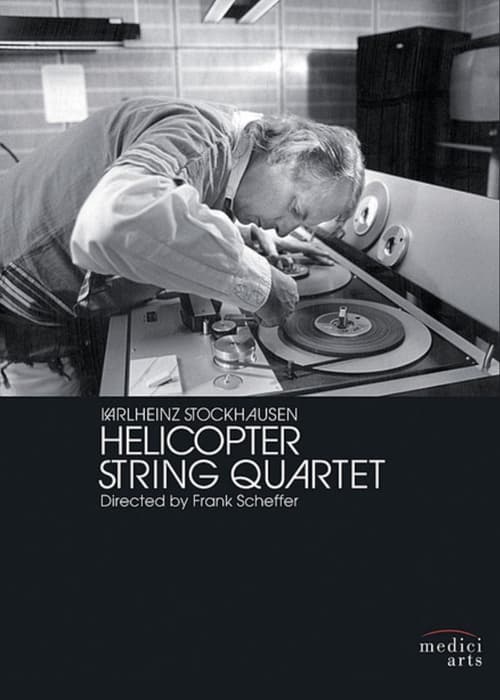
One morning, the late Karlheinz Stockhausen awoke from a dream that told him to take to the sky. Stockhausen envisioned four helicopters swirling in the clouds, with each of a quartet’s members tucked inside his own chopper, communicating through headsets, stringing away in sync to the rotor-blade motors. He immediately set forth to make that dream a reality. In 1995, Dutch film director Scheffer followed Stockhausen in the days leading up to the premiere performance of his Helicopter String Quartet in Amsterdam. The resulting film offers a rare glimpse of Stockhausen as he patiently dictates every agonizingly detailed measure to the Arditti Quartet.

No Image Available
6.7

The Darkness of Day

Nov 19, 2009

The Darkness of Day is a haunting meditation on suicide. It is comprised entirely of found 16mm footage that had been discarded. The sadness, the isolation, and the desire to escape are recorded on film in various contexts. Voice-over readings from the journal kept by a brother of the filmmaker’s friend who committed suicide in 1990 intermix with a range of compelling stories, from the poignant double suicide of an elderly American couple to a Japanese teenager who jumped into a volcano, spawning over a thousand imitations. While this is a serious exploration of a cultural taboo, its lyrical qualities invite the viewer to approach the subject with understanding and compassion.

The Memories of Angels
8.0

The Memories of Angels

Sep 5, 2008

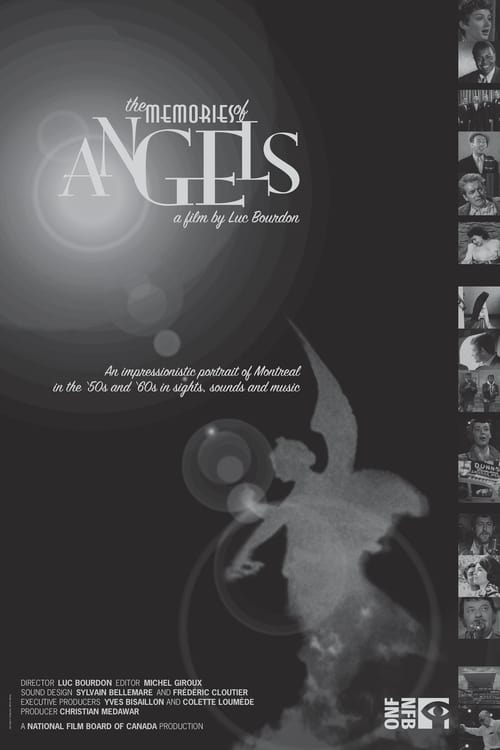
Documentary, poetry and essay rolled into one, this compilation of stockshots and clips sourced from NFB productions of the '50s and '60s offers a singular lesson in Montreal history - its famous figures, symbolic places, and ordinary citizens. Without commentary, the film moves from the red light district to Jean Drapeau, the Jacques-Cartier market, department stores downtown, textile factories, and the construction of Place Ville-Marie. We meet Geneviève Bujold, Oscar Peterson, Monique Mercure, and Igor Stravinsky. We hear Raymond Lévesque, Jean Drapeau, and René Lecavalier.

What The Future Sounded Like
5.3

What The Future Sounded Like

Mar 3, 2007

From Dr Who to The Dark Side of the Moon to modern day dance music, the pioneering members of the Electronic Music Studios radically changed the sound-scape of the 20th Century. What the Future Sounded Like tells this fascinating story of British electronic music. What The Future Sounded Like mixes experimental visual and sonic techniques with animation and never-seen-since archival footage. A sonic and visual collage, this documentary colors in a lost chapter in music history, uncovering a group of composers and music engineers who harnessed technology and new ideas to re-imagine the boundaries of music and sound.

We Don't Care About Music Anyway
6.3

We Don't Care About Music Anyway

Sep 9, 2009

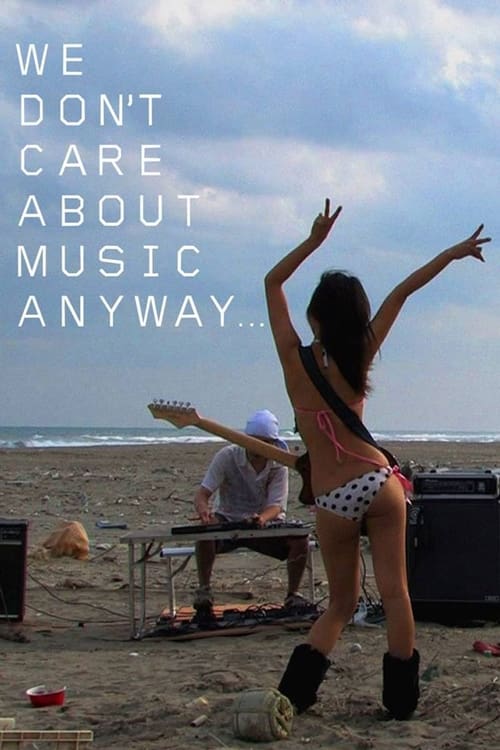
From radical turntablism (Otomo Yoshihide) to laptop music innovation (Numb), via classical instrument hijacking (Sakamoto Hiromichi), Tokyo's avant-garde music scene is internationally known for its boldness. While introducing some of the greatest musicians of this scene, "We Don't Care About Music Anyway..." offers a kaleidoscopic view of Tokyo, confronting music and noise, sound and image, reality and representation, documentary and fiction.

No Image Available
0.0

Amy

Aug 31, 2004

'Amy, is narrated by a model (Liisa Repo-Martell) who’s painfully uncomfortable with her own body and “old woman’s” face. Astonishing closing image is a tightly composed telephoto shot on the start of a marathon race among young schoolgirls, dashing toward and then across the screen in ultra-slo-mo, and accompanied by a girls’ chorus hauntingly singing Brian Wilson’s God Only Knows. Widely eclectic lensing and looks in various media and in color and black-and-white flow nicely from one section to the next, aided by gifted editor Mark Karbusicky.' ~ Robert Koehler, Variety - Part 7 of 7-part bio-feature Public Lighting (2004).

A Child’s Garden and the Serious Sea
6.3

A Child’s Garden and the Serious Sea

Jan 1, 1991

"In his description for A CHILD'S GARDEN, Brakhage quotes from poets Ronald Johnson and Charles Olson (and cites Johnson's poem "Beam 29" as inspiration). But the film also vaguely calls to mind William Blake—more perhaps for his art than his poetry: there is both a sense of darkness and of mystical transport in Brakhage's images. The first film in the loose "Vancouver Island" quartet, Brakhage films locations around the British Columbia locale where his second wife, Marilyn, grew up. He films land, sea, and sky and intercuts frequently between them. Shots are often out-of-focus, to accentuate color and light; they are hand-held, upside down, and fleeting. All of this is no surprise for those who know Brakhage's work: anything and everything is valid, as long as it works." - Cine-File.info

Orchard Street
6.8

Orchard Street

Dec 31, 1955

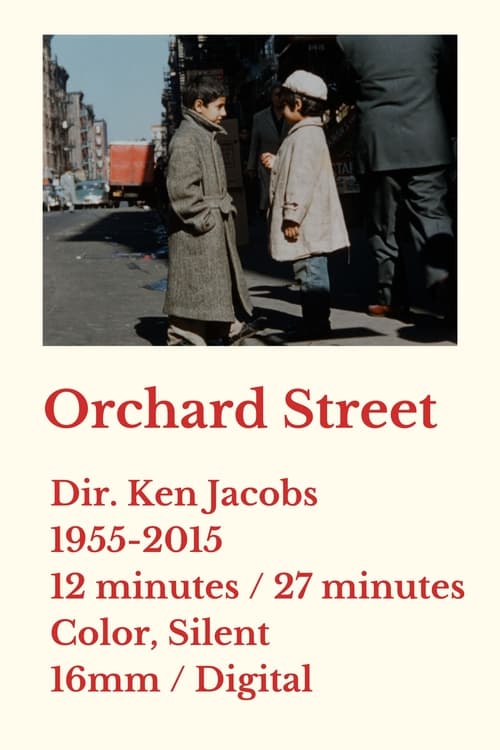
This short film documents the daily life of the goings-on on Orchard Street, a commercial street in the Lower East Side New York City.

Cassis
6.1

Cassis

Jan 1, 1966

Filmed during a visit to Jerome Hill in Provence, Jonas Mekas sets his Bolex to capture a single day overlooking the port of Cassis. Shot frame by frame from morning to sunset, the film distills shifting light and color into a quiet meditation on time, place, and perception.

Strokkur
4.8

Strokkur

Jul 7, 2011

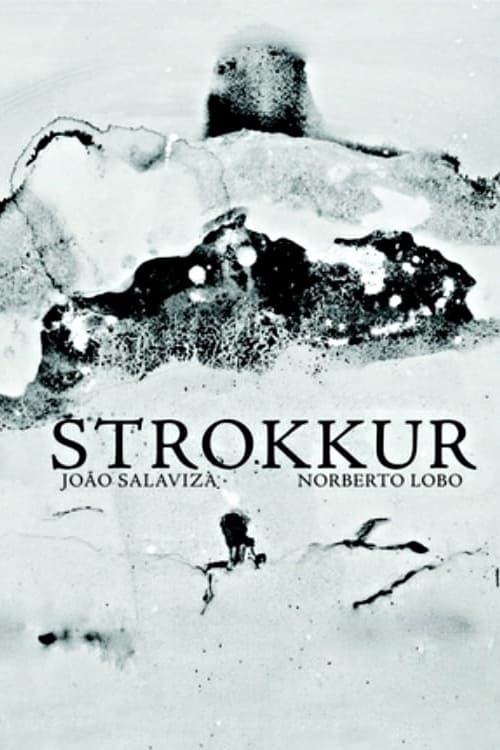
In the beginning the idea was to make something from nothing, in a neutral and unknown place. Collect images and sounds instead of producing them. The camera, the microphone and the mini-amplifier: tools that take away and then give back. We defined a rule: the sound shouldn't illustrate the image and the image shouldn't absorb the sound. Less than a hundred kilometres from Reykjavik we found Strokkur. For three days we saw and heard the internal dynamics of the crevice: the boiling water that spat out every seven minutes and the thermal shock, given the eighteen degrees below zero of the atmosphere.

No Image Available
0.0

Sylvia Kristel – Paris

Feb 19, 2003

Sylvia Kristel – Paris is a portrait of Sylvia Kristel , best known for her role in the 1970’s erotic cult classic Emmanuelle, as well as a film about the impossibility of memory in relation to biography. Between November 2000 and June 2002 Manon de Boer recorded the stories and memories of Kristel. At each recording session she asked her to speak about a city where Kristel has lived: Paris, Los Angeles, Brussels or Amsterdam; over the two years she spoke on several occasions about the same city. At first glance the collection of stories appears to make up a sort of biography, but over time it shows the impossibility of biography: the impossibility of ‘plotting’ somebody’s life as a coherent narrative.

Selva. A Portrait of Parvaneh Navaï
10.0

Selva. A Portrait of Parvaneh Navaï

Jan 21, 1982

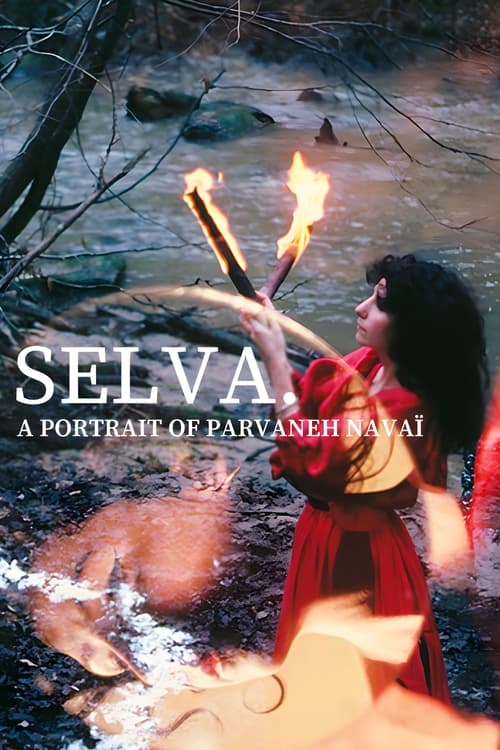
Trance dances and out of body projection. In front of the camera, Parvaneh Navaï becomes a mediator who enters in contact with and immerses into the energies of Nature, while her own energy radiates and echos in the forest ("selva"). The camera amplifies and expands her presence, transforming the forest into an imaginary space. The camera becomes a painter's brush.

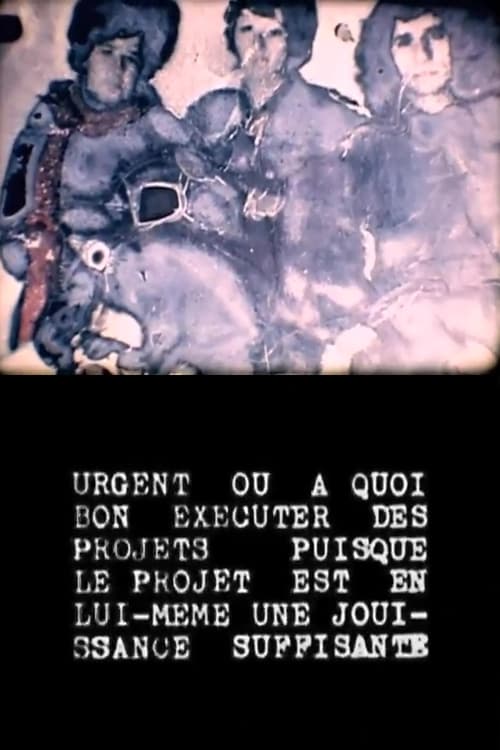
Urgent ou à quoi bon exécuter des projets puisque le projet est en lui-même une jouissance suffisante
5.5

Urgent ou à quoi bon exécuter des projets puisque le projet est en lui-même une jouissance suffisante

Aug 1, 1977

Gérard Courant applies the Lettrist editing techniques of Isidore Isou to footage of late 70's pop culture. Courant posits that his cinema offers an aggressive détournement to the French mainstream, reifying a Duchampian view of film: "I believe in impossible movies and works without meaning... I believe in the anti-movie. I believe in the non-movie. I believe in Urgent... My first full length movie that is so anti-everything that I sometimes wonder if it really does exist!"

Cast

No Cast found.