Documentary following Serbian football coach Zoran Đorđević as he helps form South Sudan's first national football team.
No Trailers found.
Himself
Follow comedian Ellen DeGeneres as she fulfills her dream of protecting Fossey’s legacy by building the The Ellen DeGeneres Campus of the Dian Fossey Gorilla Fund in Rwanda.
In Capetown, South Africa, in September 1966, Prime Minister Hendrik Verwoerd, the architect of apartheid, was stabbed to death in Parliament. The course of South African history was changed by the assassin, Dimitri Tsafendas, who was written off as mad and condemned to twenty-eight years of imprisonment. A Question of Madness tells the extraordinary human story of a man, born of a black mother, but classified white, who travelled the world in hopeless search of sanctuary - eventually returning to the land of apartheid to wreak vengeance on the one who symbolized the racism which had haunted his life.
An epic journey along Africa's Great Green Wall — an ambitious vision to grow a wall of trees stretching across the entire continent to fight against increasing drought, desertification and climate change.
Sven Nykvist, best known as Ingmar Bergman cinematographer, made this film as a tribute to his father who was a missionary in Kongo in the early 20th century. The story of his father Gustav Natanael Nykvist is told through his own photos, letters, and films. Director & cinematographer: Sven Nykvist. Narrators in the English dubbed version: Liv Ullmann & Sean Connery. Produced by Ingmar Bergman (Cinematograph AB). Digitally restored in 2022.
Si-Gueriki is the story of the confrontation of a young man with his history, his roots and culture.
The story of Severino, a man who tries to escape the misery and the drought prevailing in the rural backcountry of the Northeast of Brazil. He heads for Recife, passing through desert and forest regions, expecting to find a better life.
In Uganda, AIDS-infected mothers have begun writing what they call Memory Books for their children. Aware of the illness, it is a way for the family to come to terms with the inevitable death that it faces. Hopelessness and desperation are confronted through the collaborative effort of remembering and recording, a process that inspires unexpected strength and even solace in the face of death.
A sport like football is primarily a passionate celebration, but one that is so massive (economically, politically and socially) that it, of course, also brings many problems. Olallo Rubio's third documentary (and fourth film in total), Ilusión Nacional, is a take on how the world's most popular sport relates to Mexican society and politics.
Another European Semi-Final, 2 domestic Quarter Finals & 3rd place in the Premiership. With the acquisition of Casiraghi, Ferrer and the World-Cup winning Marcel Desailly, expectations were high with the Stamford Bridge faithful and the boys in blue never let them down. An incredible 21-match unbeaten run saw Chelsea top the league at Christmas. Despite being devastated by an injury to Casiraghi, the loss of Laudrup & 3 months without the irrepressible Gustavo Poyet, the team rallied round and challenged for the title all the way to the end. Chelsea finished the season with their highest position for over 29 years and a place amongst the European elite : THE CHAMPIONS LEAGUE, for the first time. All the action from EVERY game is here with EVERY goal from your favourite Chelsea stars including Gianfranco Zola, Tore Andre Flo, Gus Poyet & the player-manager, Gianluca Vialli.
David Asmmann's Football Under Cover documents the hard work involved in setting up an exhibition soccer match, known as a "friendly," between a German girls squad and Iranian women's team. In addition to showing how the two groups come from very different cultures, the documentary showcases what playing the game means to the members of both teams, and displays how passionate the fans of these two squads are.
The Fall of the I-Hotel brings to life the battle for housing in San Francisco. The brutal eviction of the International Hotel's tenants culminated a decade of spirited resistance to the razing of Manilatown. The Fall of the I-Hotel works on several levels. It not only documents the struggle to save the I-Hotel, but also gives an overview of Filipino American history.
No overview available.
In a glorious finish to the race for the Premiership crown, Chelsea thumped arch-rivals, and nearest challengers, Manchester United 3-0 to win back-to-back titles for the first time in their history. The party could finally begin! In their Centenary season Jose Mourinho's men were in a league of their own and left their rivals trailing in their wake. The mighty Blues scored more, and conceded fewer, goals than any other team in the country and Stamford Bridge became a fortress with only two points dropped at home all season. Led by the colossal John Terry, Chelsea proved they were not one-season wonders and are a force to be reckoned with in world football. From the opening victory against Wigan Athletic, to the trip to Newcastle United, every game and every goal from the season will be featured in this feast of action packed football. This programme will remind all fans why Chelsea are the champions!
Halfway between a sports documentary and an conceptual art installation, "Zidane" consists in a full-length soccer game (Real Madrid vs. Villareal, April 23, 2005) entirely filmed from the perspective of soccer superstar Zinedine Zidane.
Once more Chelsea finished the season in triumph as they turned Baku blue. The euphoric Europa League victory over Arsenal ensured a 10th major trophy in 10 years. No English side has enjoyed more success in the last decade. It crowned a campaign that witnessed the Blues return to Premier League prominence as they delivered some stunning displays. Maurizio Sarri's side when all the way to Wembley, beating Liverpool and Tottenham before penalties cruelly denied them in the Carabao Cup Final against Manchester City. Cesar Azpilicueta proved the inspirational on-pitch leader of a team that combined the quality and experience of World Cup winners N'Golo Kante and Olivier Giroud with the exciting young talents of Callum Hudson-Odoi and Ruben Loftus-Cheek. As ever, Eden Hazard was at his beguiling, brilliant best, reaching a century of goals for the Club.
Chelsea have developed that winning habit of ending the season in glory. The Blues' eighth FA Cup triumph arrived in a campaign which once again delivered excitement in abundance. There was class, craft and commitment throughout Antonio Conte's side. From the wizardry of Eden Hazard to the non-stop dynamic displays of N'Golo Kante and the all-action performances from Marcos Alonso, which earned him a place in the PFA Team of the Year, there was rarely opportunity to take breath. Established stars Thibaut Courtois, Willian and Cesc Fabregas lined up alongside new boys Antonio Rudiger, Alvaro Morata and Olivier Giroud, as Chelsea approached a new era. There was drama from start to finish, in a season full of unforgettable moments that began and ended in Wembley, with victory over Manchester United confirming a fourth major honour in four years.
A documentary on Argentinean soccer star Diego Maradona, regarded by many as the world's greatest modern player.
In the ‘poor crescent’ around Brussels one child in three lives on the poverty line. But they can find refuge with BX Brussels of Vincent Kompany – a sports and social project. Stranger follows recent immigrant Senegalese football coach Moussa as he struggles to give them hope in their sport … and in their life.
The greatest sport event in Sweden ever was without a doubt the fotball world cup of 1958. The film Conspiracy'58 is about the people who were there but most of all about the people who claim that it never took place at all.
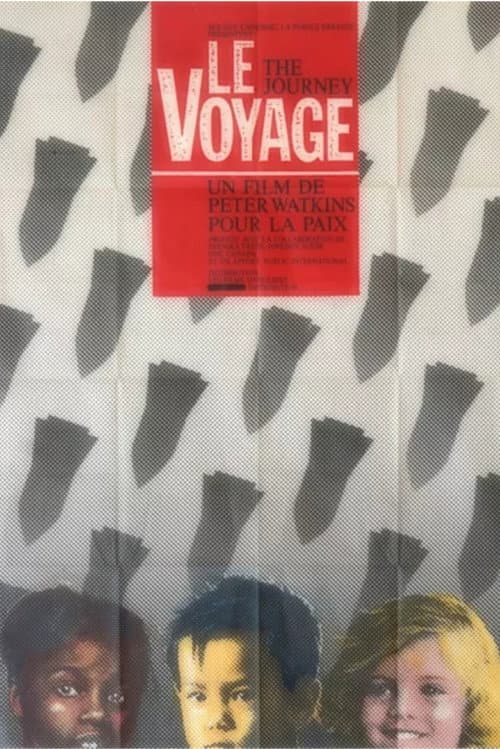
Peter Watkins' global look at the impact of military use of nuclear technology and people's perception of it, as well as a meditation on the inherent bias of the media, and documentaries themselves.