Documentary of an Imperial Japanese Army regiment's advance from Shanghai to Wuhan in 1938. This film was shelved before submission to Home Ministry censors amid rumors that Fumio was a Communist.
Jarhead is a film about a US Marine Anthony Swofford’s experience in the Gulf War. After putting up with an arduous boot camp, Swofford and his unit are sent to the Persian Gulf where they are eager to fight, but are forced to stay back from the action. Swofford struggles with the possibility of his girlfriend cheating on him, and as his mental state deteriorates, his desire to kill increases.
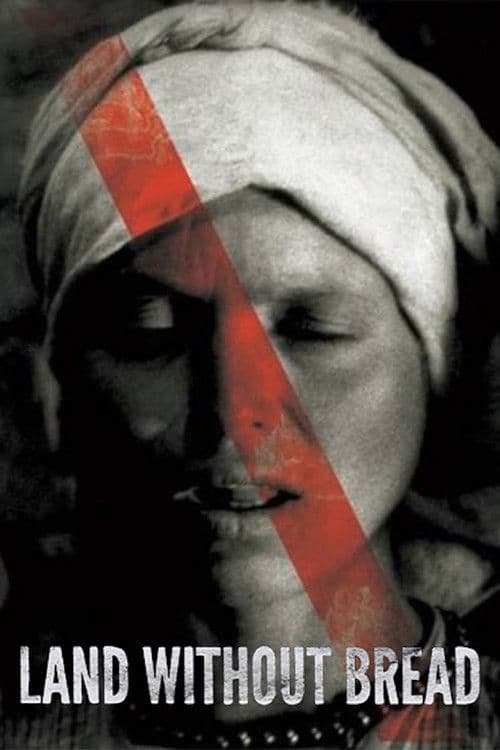
An exploration —manipulated and staged— of life in Las Hurdes, in the province of Cáceres, in Extremadura, Spain, as it was in 1932. Insalubrity, misery and lack of opportunities provoke the emigration of young people and the solitude of those who remain in the desolation of one of the poorest and least developed Spanish regions at that time.
22-year-old Kei refuses to conform to the Japanese achievement-oriented society. He is homeless by choice, living on the streets and under the bridges of Kyoto. His love for nature and music keeps him afloat in his dream world. However, when he runs out of money, he is forced to face reality.
From a vast record of 750 days, 5000 hours, Official Film of the Olympic Games Tokyo 2020 SIDE A and SIDE B are the official documentaries by Naomi Kawase capturing not only the athletes gathered from all over the world, but also their families, people involved in the Games, volunteers, medical personnel, and protesters shouting for the cancellation of the Olympics.
Warsaw's Central Railway Station. 'Someone has fallen asleep, someone's waiting for somebody else. Maybe they'll come, maybe they won't. The film is about people looking for something.
This military service comedy chronicles the misadventures of the U.S.S. Bustard in Japan. The crew has stolen a Buddha statue from a Japanese village, which if discovered missing, would threaten Japanese/American relations. Doc Willoughby is the ship's petty officer, whose antics are constantly getting him into trouble with his captain. On shore leave, Willoughby falls for a seemingly demure Japanese girl in a kimono shop, who actually turns out to be a Japanese/American nurse in the US Navy, Lt. Tomiko Momoyama. However, it turns out she was betrothed as a child to a traditional Japanese man named Toshi, who fully intends on enforcing tradition. Willoughby divides his time between trying to return the Buddha statue back to the Japanese village it rightfully belongs to, and trying to woo Tomiko from the traditional Japanese man she rightfully belongs to.
In the 1930s, Count Almásy is a Hungarian map maker employed by the Royal Geographical Society to chart the vast expanses of the Sahara Desert along with several other prominent explorers. As World War II unfolds, Almásy enters into a world of love, betrayal, and politics.
The true story of pianist Władysław Szpilman's experiences in Warsaw during the Nazi occupation. When the Jews of the city find themselves forced into a ghetto, Szpilman finds work playing in a café; and when his family is deported in 1942, he stays behind, works for a while as a laborer, and eventually goes into hiding in the ruins of the war-torn city.
When Col. William McNamara is stripped of his freedom in a German POW camp, he's determined to keep on fighting even from behind enemy lines. Enlisting the help of a young lieutenant in a brilliant plot against his captors, McNamara risks everything on a mission to free his men and change the outcome of the war.
During the World War II, the prisoners of a German camp in a Greek island are trying to escape. They not only want their freedom, but also seek an ineffable treasure hidden in a monastery at the summit of the island's mountain.
During World War II, convicts are recruited by the Allies for an extremely hazardous mission.
In 1915 a young, charismatic Japanese man with a mysterious past entered into the Appalachian culture of Asheville, North Carolina, is suspicioned a spy, targeted by the Klan, but perseveres with a passion for photography and the mountains he adopts, bringing to life Great Smoky Mountains National Park & the Appalachian Trail.
During the last winter of the Civil War, cavalry officer Amos Dundee leads a contentious troop of Army regulars, Confederate prisoners and scouts on an expedition into Mexico to destroy a band of Apaches who have been raiding U.S. bases in Texas.
Raised suckling poison arrows among the sparring Iga ninja factions, Mumon is a carefree 16th-century mercenary. When the ninja council makes a power play to defeat the young Nobukatsu Oda struggling to step into his father’s warlord shoes as they expand rule across the country, Mumon jumps into the fray to satisfy his new bride Okuni’s demand that he make good on his promises of wealth. Yet Mumon soon finds what is worth fighting for beyond money or nation.
By telling the human stories behind the entire value chain that gives life to the Spanish wine with the greatest international projection, ‘Rioja, Land of the Thousand Wines’ portrays a currently blooming wine region underpinned by the talent and the work of the new generations of winemakers that operate side by side with the region’s historic wineries. The film puts the focus on the match between territory and product, wisdom and tradition, and lays a bridge between the origins and the future of Rioja. An immersion into a fascinating world that, through captivating cinematography and careful editing, attempts to find the keys to understanding what Rioja wine is and what makes it so special.
As Russia launches its full-scale invasion of Ukraine, primary schools across Russia’s hinterlands are transformed into recruitment stages for the war. Facing the ethical dilemma of working in a system defined by propaganda and violence, a brave teacher goes undercover to film what’s really happening in his own school.
In the last fifty years the culture of Zen has spread far beyond Japan. Zen centers and zen retreats have sprung up throughout America and Europe. When Dogen, the founder of Soto Zen, brought Zen to Japan from China 800 years ago, it quickly took root and became an integral part of Japanese life. Yet what do we know about zen practice in Japan today? The Zen Mind is a fascinating journey across Japan to explore zen in its natural habitat.
Nathan Algren is an American hired to instruct the Japanese army in the ways of modern warfare, which finds him learning to respect the samurai and the honorable principles that rule them. Pressed to destroy the samurai's way of life in the name of modernization and open trade, Algren decides to become an ultimate warrior himself and to fight for their right to exist.
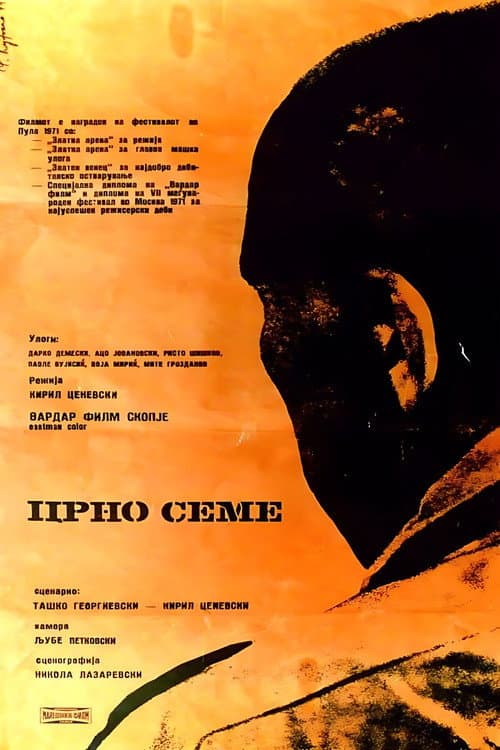
The story of Macedonian soldiers who were captured by the Greek army and taken to the prison camps on Greek islands during Greek Civil War in 1946. Suspected of being communists, they are maltreated by the Greek officers running the camp
Orphaned after a Nazi air raid, Paulette, a young Parisian girl, runs into Michel, an older peasant boy, and the two quickly become close. Together, they try to make sense of the chaotic and crumbling world around them, attempting to cope with death as they create a burial ground for Paulette's deceased pet dog. Eventually, however, Paulette's stay with Michel's family is threatened by the harsh realities of wartime.
No Trailers found.
No Cast found.