A burning wagon is dragged from the barn by the firemen, and four horses are rescued from the flames by the stablemen. Thick volumes of smoke pour from the doors and windows. (Edison catalog)
No Trailers found.
No Cast found.
A day in the city of Berlin, which experienced an industrial boom in the 1920s, and still provides an insight into the living and working conditions at that time. Germany had just recovered a little from the worst consequences of the First World War, the great economic crisis was still a few years away and Hitler was not yet an issue at the time.
Warsaw's Central Railway Station. 'Someone has fallen asleep, someone's waiting for somebody else. Maybe they'll come, maybe they won't. The film is about people looking for something.
True dominance in sport is rarely seen. That’s why words like “Dynasty” and “Legend” are seldom used. The sport of show jumping is no exception. To become a legend, a horse must possess many qualities and be matched with the perfect rider. Get this combination right and you have the makings of something special. Over the years Hickstead and Eric Lamaze would win countless competitions and their reputation as champions had them hailed as “best ever”. Then from out of nowhere, tragedy struck. The news of Hickstead’s sudden passing stunned the nation and rocked an entire sport. Taken far too early, the diminutive stallion with the heroic heart will long be remembered. His name conjures up images of packed stadiums, screaming fans and of a fiery little horse impossibly soaring over massive obstacles to yet another victory.
About a man's fierce battle with the authorities to keep his horses.
"Africa Light" - as white local citizens call Namibia. The name suggests romance, the beauty of nature and promises a life without any problems in a country where the difference between rich and poor could hardly be greater. Namibia does not give that impression of it. If you look at its surface it seems like Africa in its most innocent and civilized form. It is a country that is so inviting to dream by its spectacular landscape, stunning scenery and fascinating wildlife. It has a very strong tourism structure and the government gets a lot of money with its magical attraction. But despite its grandiose splendor it is an endless gray zone as well. It oscillates between tradition and modernity, between the cattle in the country and the slums in the city. It shuttles from colonial times, land property reform to minimum wage for everyone. It fluctuates between socialism and cold calculated market economy.
In 1966, John Harlin II died while attempting Europe's most difficult climb, the North Face of the Eiger in Switzerland. 40 years later, his son John Harlin III, an expert mountaineer and the editor of the American Alpine Journal, returns to attempt the same climb.
In the 1968 movement in Paris, Jean-Luc Godard made a 16mm, 3-minute long film, Film-tract No.1968, Le Rouge, in collaboration with French artist Gérard Fromanger. Starting with the shot identifying its title written in red paint on the Le Monde for 31 July 1968, the film shows the process of making Fromanger’s poster image, which is thick red paint flows over a tri-color French flag. —Hye Young Min
Tells the life story of a grain of wheat In Casselton, North Dakota.
The Dangers of the Fly is an educational film made by Ernesto Gunche and Eduardo Martínez de la Pera, also responsible for Gaucho Nobility (1915), the biggest blockbuster of Argentinean silent cinema. De la Pera was a talented photographer, always willing to try new gadgets and techniques. This film experiments with microphotography in the style of Jean Comandon's films for Pathé and it is part of a series which included a film about mosquitoes and paludism and another one about cancer, which are considered lost. Flies were a popular subject of silent films and there are more than a dozen titles featuring them in the teens and early twenties.
Filmed in IMAX, a young girl questions her grandfather about the alleged curse of King Tutankhamen. His response takes us up to the source of the nourishing river Nile, to the Great Pyramids of Giza, to the Valley of the Kings.
Ocean Oasis is a fascinating journey into the bountiful seas and pristine deserts of two remarkably different, but inextricably linked worlds — Mexico's Sea of Cortés and the Baja California desert.
This short film focuses on how racehorses are trained.
EXTREME is a visually stunning 45-minute journey into the soul of adventure featuring a cast of world champion athletes. Combining incredible extreme sport action with narration from the athletes and an eclectic, contemporary soundtrack, EXTREME explores the paradox of human nature: facing fear from the edge of life.
No overview available.
An IMAX documentary that follows the first flight of Space Shuttle Columbia, from launch preparations to its historic return to Earth.
An underwater exploration beneath kelp forests in the Pacific Ocean off the coast of Southern California. The film captures the birth of a shark, squids mating, a lobster molting, a fish protecting its nest from an octopus and a sea urchin, and the sea bed covered with brittle stars.
Mountain Gorilla takes us to a remote range of volcanic mountains in Africa, described by those who have been there as ""one of the most beautiful places in the world"", and home to the few hundred remaining mountain gorillas. In spending a day with a gorilla family in the mountain forest, audiences will be captivated by these intelligent and curious animals, as they eat, sleep, play and interact with each other. Although gorillas have been much-maligned in our popular culture, viewers will finally ""meet the legend"" face to face, and learn about their uncertain future.
For more than 10 years, world champion freedivers Pipin Ferreras and Umberto Pelizzari have been vying for world records. Their love of the sea without compromise is what unites these two rivals. However, it is their different personalities and opposing diving philosophies that separate them. Pipin is the "No Limits" man who wants to go deeper and deeper. Umberto, the purist, seeks harmony in the ocean's depth. Ocean Men takes you into the world of these two awe-inspiring freedivers through the use of breathtaking underwater photography, enchanting music, and insightful animation.
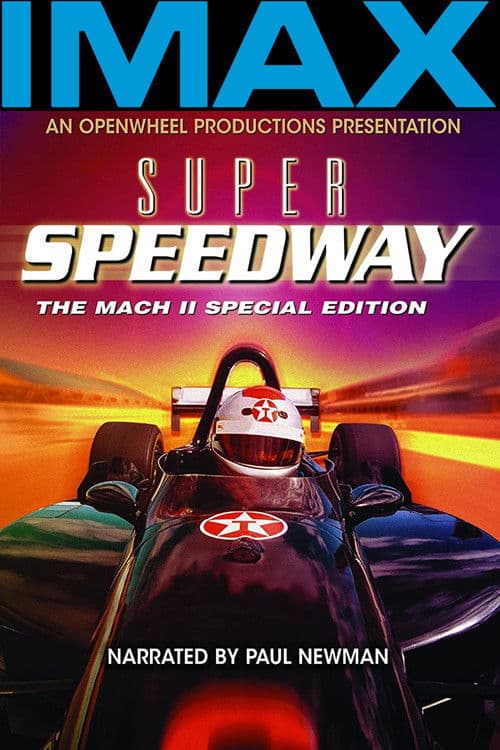
We follow the Newman-Haas (Andretti) racing team through the process of building, testing, and racing for a season. This includes extensive race speed on-track footage, including some pre-race footage with a full squad of cars. From time to time, we check in with a small shop building/restoring one of the first roadsters Mario Andretti raced; the finale includes him taking it for a spin.
Sangduen Chailert, or Lek, as she is generally known, has already rescued over 200 elephants. She has dedicated her life to saving the Asian elephant and founded a special camp, The Elephant Nature Park to protect them. We follow this winner of Time Magazine’s “Asian Hero of the Year” Award in her work. Lek is on a mission to save the Asian elephant in her native Thailand. This film looks at the plight of the Asian elephant, as it goes from being a widely used domestic animal, to becoming a burden on modernizing communities. With experts predicting its extinction within four decades, Lek’s work is needed now more than ever and she has gathered a large group of supporters and volunteers in her quest for a better future for the Asian elephant. This moving film demonstrates Lek’s natural understanding of and rapport with these huge animals and will stir the viewers emotions as it highlights the often desperate state some elephants are kept in.