logologo
MovieVerse© 2024
Privacy PolicyTerms of ServiceContact Us
Made with ❤️ by Thathsara
movie poster
El Gusto
Sign in to create your own watchlist

El Gusto

Jan 11, 2012
1h 28m
★ 7.5

Overview

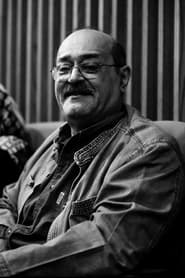
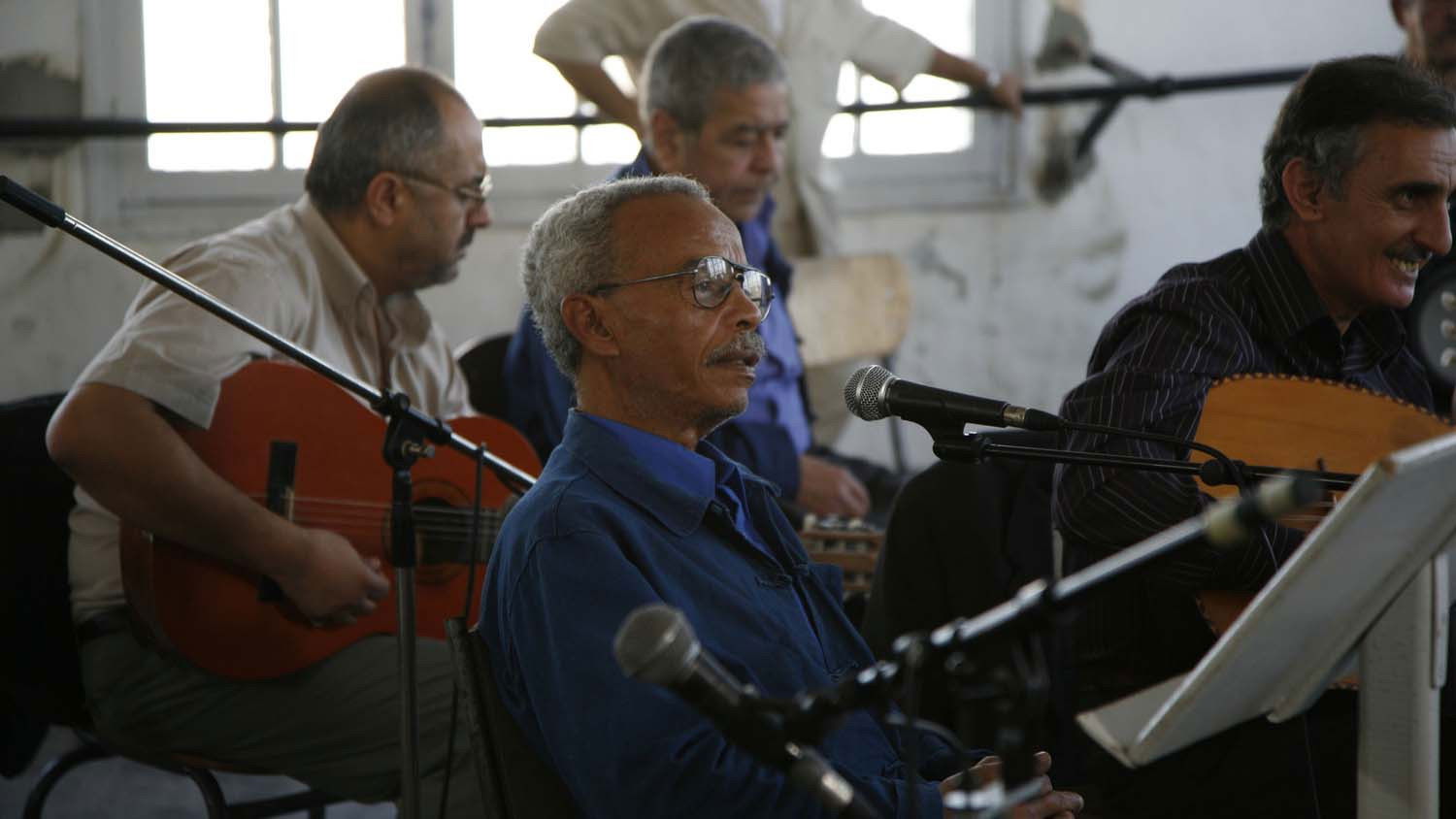
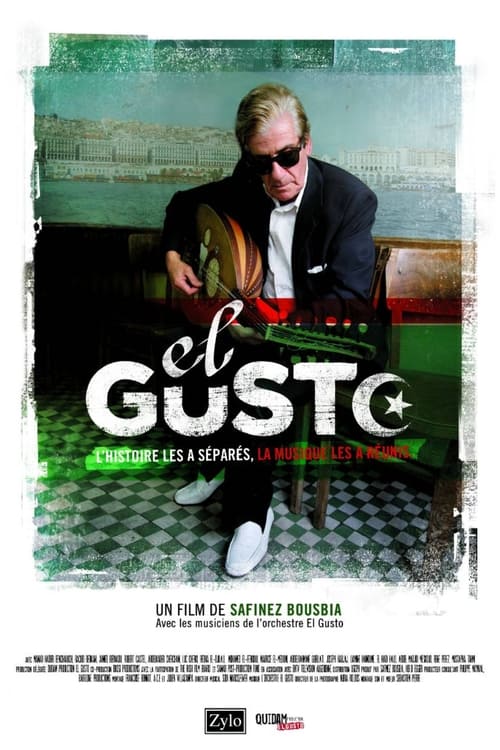
El Gusto is the story of an orchestra of Jewish and Muslim musicians torn apart by war 50 years ago, and recently reunited for an exceptional concert. These musicians share a passion they never lost: the soul of Algiers, Chaabi music.

Genres

Music
Documentary

Cast

Mamad Haider Benchaouch

Le Fils De Famille

Mamad Haider Benchaouch

Robert Castel

Le Comédien

Robert Castel

Abdelmadjid Meskoud

Le Rire

Abdelmadjid Meskoud

Rachid Berkani

Le Beau Gosse

Rachid Berkani

Ahmed Bernaoui

Le Battant

Ahmed Bernaoui

Abdelkader Chercham

L' Académique

Abdelkader Chercham

Luc Cherki

Le Nostalgique

Luc Cherki

Redha El-Djilali

Le Solitaire

Redha El-Djilali

Mohamed El-Ferkioui

Le Miroitier

Mohamed El-Ferkioui

Maurice El-Medioni

Le Méditerranéen

Maurice El-Medioni

Abdelrahmane Guellati

L' Artiste

Abdelrahmane Guellati

Joseph Hadjaj

L' Optimiste

Joseph Hadjaj

El Gusto Trailers

No Trailers found.

You may also like

The Zerda or the Songs of Forgetting
7.6

The Zerda or the Songs of Forgetting

Feb 27, 1983

“La Zerda and the songs of oblivion” (1982) is one of only two films made by the Algerian novelist Assia Djebar, with “La Nouba des femmes du mont Chenoua” (1977). Powerful poetic essay based on archives, in which Assia Djebar – in collaboration with the poet Malek Alloula and the composer Ahmed Essyad – deconstructs the French colonial propaganda of the Pathé-Gaumont newsreels from 1912 to 1942, to reveal the signs of revolt among the subjugated North African population. Through the reassembly of these propaganda images, Djebar recovers the history of the Zerda ceremonies, suggesting that the power and mysticism of this tradition were obliterated and erased by the predatory voyeurism of the colonial gaze. This very gaze is thus subverted and a hidden tradition of resistance and struggle is revealed, against any exoticizing and orientalist temptation.

CHoosing at Twenty
6.8

CHoosing at Twenty

Aug 24, 2017

Between 1954-1962, one hundred to three hundred young French people refused to participate in the Algerian war. These rebels, soldiers or conscripts were non-violent or anti-colonialists. Some took refuge in Switzerland where Swiss citizens came to their aid, while in France they were condemned as traitors to the country. In 1962, a few months after Independence, Villi Hermann went to a region devastated by war near the Algerian-Moroccan border, to help rebuild a school. In 2016 he returned to Algeria and reunited with his former students. He also met French refractories, now living in France or Switzerland.

Avant de franchir la ligne d'horizon
0.0

Avant de franchir la ligne d'horizon

Jan 1, 2010

Habiba Djahnine went to meet activists who continue to take action. To meet them, to capture them in the spaces where they live, work or fight. They inscribe a few words of our tormented history. Memory, memory gaps, background noise, demonstrations... The film bears witness to 20 years of political mobilization/repression in Algeria.

Expédition Hoggar 79
10.0

Expédition Hoggar 79

May 31, 1979

TSR documentary on the 1979 expedition to Algeria in the Atakor massif (Hoggar desert), organized by Geneva mountaineer Michel Vaucher and Jean-Blaise Fellay. The climbers make a dozen ascents including the famous summit of Adaouda (which means "finger" in Tamasheq, the Tuareg dialect), by several routes. Then a new route on the peaks of the southern Tezoulegs. They discover the volcanic geological characteristics of the Atakor massif and meet the nomadic inhabitants of the region, the Tuaregs, who are increasingly settling in the town of Tamanrasset.

Anatomy of a First
10.0

Anatomy of a First

Jan 1, 1966

In February 1966, Pierre Mazeaud and Lucien Berardini attempted a difficult first ascent to one of the summits of Garet El Djenoun, in the Hoggar massif, a mountain range located west of the Sahara, in the south of Algeria. The mountain has been preserved intact since Roger Frison-Roche's expedition in 1935. The documentary, superbly filmed by René Vernadet, won the Grand Prix at the Trento Film Festival in 1966.

Hustlers of Dubai
0.0

Hustlers of Dubai

Invalid Date

Dubai - the city of controversies. Six individuals go through personal insecurities, cultural pressures, money issues and the hustle of staying true to who they are. In the world that says otherwise. Is it all really worth it ? The film touches upon Arab identity, female role in the world, family values, Islam.

Le Grand Désert
10.0

Le Grand Désert

Dec 1, 1950

In 1950, the explorer Roger Frison-Roche made a crossing of more than a thousand kilometers on the back of a camel with the photographer Georges Tairraz II, in the heart of the Sahara, from Hoggar then Djanet in Algeria to Ghat in Libya. From their journey they brought back a large number of color films and documents. Among thousands of photos, they selected 47 images which reflect the various aspects of these immense spaces which occupy a third of Africa in the book "The Great Desert". “The Great Desert, 1000 kilometers on camelback” is the eponymous 85-minute documentary of this epic, released in 1950.

How Much I Love You
10.0

How Much I Love You

May 5, 1985

Beginning with a promotional reel encouraging farming investments in Algeria and ending with the secret 1950s nuclear tests that France conducted using Algerian prisoners, How Much I Love You appropriates archival footage produced by the French colonial powers in Algeria. Meddour’s approach is disarmingly simple and yet awe-inspiring—his caustic undoing of colonial discourse is underscored by a liberating release of humor.

So that Algeria May Live
9.0

So that Algeria May Live

Jan 2, 1972

Collectively made Algerian film.

Gerboise Bleue
10.0

Gerboise Bleue

Feb 11, 2009

"Gerboise bleue", the first French atomic test carried out on February 13, 1960 in the Algerian Sahara, is the starting point of France's nuclear power. These are powerful radioactive aerial shots carried out in areas belonging to the French army. Underground tests will follow, even after the independence of Algeria. From 1960 to 1978, 30,000 people were exposed in the Sahara. The French army was recognized recognized nine irradiations. No complaint against the army or the Atomic Energy Commission has resulted. Three requests for a commission of inquiry were rejected by the National Defense Commission. For the first time, the last survivors bear witness to their fight for the recognition of their illnesses, and revealed to themselves in what conditions the shootings took place. The director goes to the zero point of "Gerboise Bleue", forbidden access for 47 years by the Algerian authorities

Interviews with Abdelkrim Baba Aïssa
10.0

Interviews with Abdelkrim Baba Aïssa

Feb 1, 2024

In 2024, Abdelkrim Baba Aissa, aged 75, engages in a series of filmed interviews with Algerian journalist Thoria Smati. They address the chronology of the rich and committed career of this self-taught Algerian actor, director, producer and screenwriter, who made his debut on Algerian television as an assistant director then at ONCIC as a director in the years 70.

Crazy About Music
10.0

Crazy About Music

Mar 15, 1967

Fous de Musique by Jean-Charles Carlus (1957) is a musical comedy featuring Rouiched, Mahieddine Bentir and the famous Bendaoud orchestra. Shot during the Algerian War, the film was not released until after independence and was probably shown in Paris in cinemas intended for immigrant workers around 1967. Sources: Archives Numériques du Cinéma Algérien

Algérie, La vie quand même
10.0

Algérie, La vie quand même

Jan 1, 1998

A small Algerian town, off the beaten track of the war that is tearing the country apart. At the heart of the crisis that is destroying it, two young men, without work, without leisure activities, without hope, without anything... The film follows them in their daily wanderings between endless boredom and the expectation of the improbable. And shows their humour, their friendship, their will to live regardless.

نصر الدين ديني
10.0

نصر الدين ديني

Jan 1, 1977

Étienne Dinet (إتيان دينيه), born March 28, 1861 in Paris, where he died on December 24, 1929, was a French painter and lithographer. He was one of the leading representatives of Orientalist painting at the turn of the 19th and 20th centuries. Obtaining a scholarship in 1884, Dinet undertook his first trip to southern Algeria in the region of Bou-Saâda, the Naili culture having a profound impact on him, as he would return there many times until he settled in his first Algerian studio in Biskra in 1900. In 1905, he bought a house in Bou-Saâda to spend three-quarters of the year there. In 1907, on his advice, the Villa Abd-el-Tif was created in Algiers, modeled on the Villa Medici in Rome. Having lived much of his life in Algeria, he called himself Nasreddine Dinet (نصر الدين ديني) after converting to Islam. On January 12, 1930, he was buried in the Bou-Saâda cemetery, where a museum that houses many of his works bears his name.

Hadj Nasreddine Dinet
10.0

Hadj Nasreddine Dinet

Feb 1, 2016

Étienne Dinet, born March 28, 1861 in Paris, where he died on December 24, 1929, was a French painter and lithographer. Having lived much of his life in Algeria and recognized during his lifetime, he called himself Nasreddine Dinet after converting to Islam.

Les Juifs du monde arabe, le grand départ
0.0

Les Juifs du monde arabe, le grand départ

Sep 6, 2018

No overview available.

Jean Sénac, The Blacksmith of the Sun
10.0

Jean Sénac, The Blacksmith of the Sun

Jan 1, 2003

By ending the life of Jean Senac on August 30, 1973 in Algiers, his assassins believed they would silence him forever. They were wrong since his voice is a little louder every day. Witnesses to these craze: the publication of the complete works of this great poet, the countless conferences and radio broadcasts devoted to him and finally the production of films such as "Jean Sénac, the blacksmith of the sun". The moving and overwhelming testimonies of those who knew him, the unpublished film archives, the generous voice of the poet on the radio, the discovery of his travels in the territories of poetry and politics make this film a precious document on the life of Jean Senac.

An Unhealed Wound - The Harkis in the Algerian War
10.0

An Unhealed Wound - The Harkis in the Algerian War

Sep 20, 2010

It's the unforgivable story of the two hundred thousands harkis, the Arabs who fought alongside the French in the bitter Algerian war, from 1954 to 1962. Why did they make that choice? Why were they slaughtered after Algeria's independence? Why were they abandonned by the French government? Some fifty to sixty thousands were saved and transferred in France, often at pitiful conditions. This is for the first time, the story of this tragedy, told in the brilliant style of the authors of "Apocalypse".

The Lives of Albert Camus
8.0

The Lives of Albert Camus

Jan 22, 2020

Albert Camus died at 46 years old on January 4, 1960, two years after his Nobel Prize in literature. Author of “L'Etranger”, one of the most widely read novels in the world, philosopher of the absurd and of revolt, resistant, journalist, playwright, Albert Camus had an extraordinary destiny. Child of the poor districts of Algiers, tuberculosis patient, orphan of father, son of an illiterate and deaf mother, he tore himself away from his condition thanks to his teacher. French from Algeria, he never ceased to fight for equality with the Arabs and the Kabyle, while fearing the Independence of the FLN. Founded on restored and colorized archives, and first-hand accounts, this documentary attempts to paint the portrait of Camus as he was.

Two Lives for Algeria and All the Wretched of the Earth
8.0

Two Lives for Algeria and All the Wretched of the Earth

Jan 15, 2025

In 1994, at over seventy years old, Gilberte and William Sportisse, threatened by the FIS, arrived from Algeria. Of Jewish faith, he of Arabic mother tongue, they formed a fighting couple, started for the independence of Algeria, always with an unshakeable faith in humanity. They enjoy recounting the participation of Algerian Jews in the Second World War and the struggle for Algerian independence. They provide us with previously unpublished information on the public and clandestine struggles of the Algerian Communist Party before and after independence, and on the repression of activists who, like William and Gilberte Sportisse, were tortured and imprisoned after Colonel Boumédiène came to power. The film is an ode to understanding between people of different origins or cultures and a tribute to a couple whose youthful character and enthusiasm still astonish.