Live recording St. Jacob-Park, Basel, June 17th-19th, 2003
No Trailers found.
When this sumptuous production by Giancarlo del Monaco opened in 1995, legendary tenor Plácido Domingo gave a riveting performance as the fiery revolutionary Gabriele Adorno, a tenor part. In the 2010 revival, he made history by taking on the baritone title role, one of Verdi’s most fascinating characters, and thrilling audiences with his multifaceted and gripping portrayal. Boccanegra is beset on all sides, juggling political adversaries bent on murder with his love for his long-lost daughter Amelia (Adrianne Pieczonka). James Levine’s conducting brings out all the color and surging emotion of Verdi’s magnificent score.
No overview available.
Three colours, three moods, three registers. And yet Puccini conceived this triptych as a whole from the outset. He interweaves these three one-act operas, from Il tabarro, a drama of passion set on the quays of the Seine in the early 20th century, to Gianni Schicchi, a burlesque farce set in medieval Florence, and Suor Angelica, a mystical tragedy set in a 17th-century convent.
Concert and documentary celebrating the 1st Anniversary of Moscow’s Zaryadye Hall
A surreal movie by peter Weigl starring Michael Biehn and Lubomir Kafka.
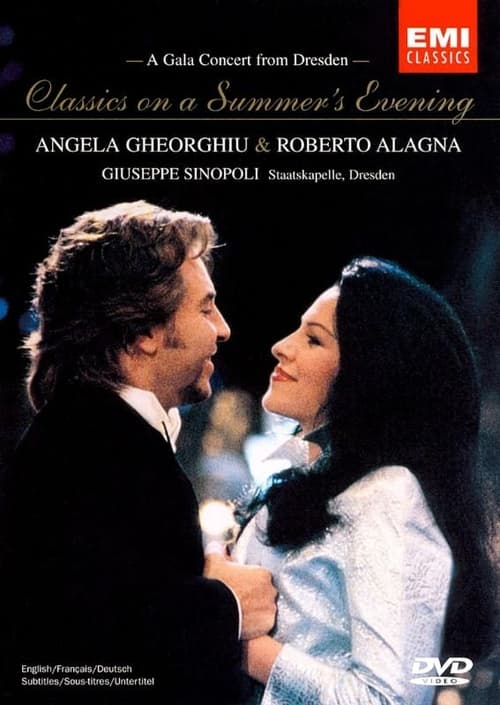
Classics on a Summer's Evening is an outdoor concert for an enormous audience which was staged in an architecturally striking public square in Dresden in July 1999. It features the most glamorous young husband and wife currently active on the international operatic scene, soprano Angela Gheorghiu and tenor Roberto Alagna. Along with these fine performances comes Giuseppe Sinopoli--before his untimely death at age 54--who was considered one of Europe's finest opera conductors, and, in the Dresden orchestra and chorus, performers who match his creative energy.
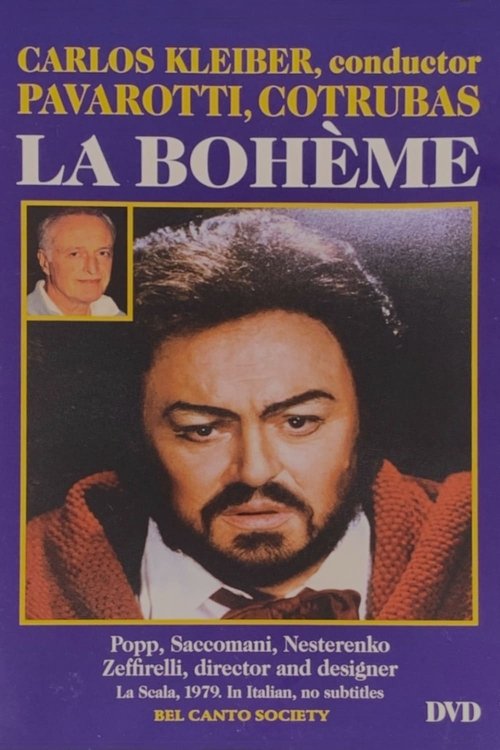
Performance of La Bohème in Teatro alla Scala, 1979.
Like Handel’s Orlando (1732) and Ariodante (1734), Alcina derives from the narrative material in Ariosto’s Orlando furioso. The story of the sorceress Alcina, an initially hedonistic, manipulative woman who later finds herself a victim of love, fits into the genre of the ‘magical opera’ with numerous magical elements, but Handel achieved considerable emotional authenticity in his characterisations. This makes Alcina one of the most deeply felt and multifaceted operas. ‘You may despise what you like ; but you cannot contradict Handel,’ said the Irish playwright George Bernard Shaw. As in Tamerlano, Pierre Audi based this production on the stage at the baroque theatre at Drottningholm, for which he originally developed the directing concept. His set is thus based on the principles of perspective, with wings in the form of painted panels. The result is marvellous modern musical theatre in a historizing frame.
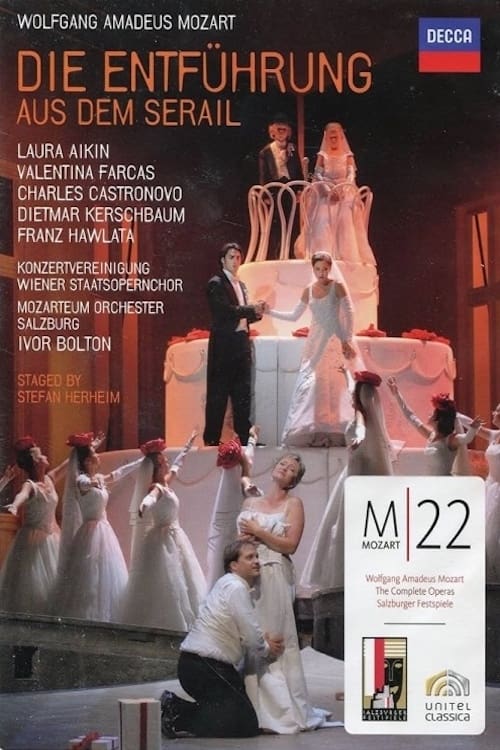
Without question, this is an incredibly bizarre production. The revised storyline makes little sense, and there is a surprising amount of violence and sexual innuendo. However, the singers are superb, both vocally and in regard to their stage presence and acting, the orchestra plays beautifully, the chorus is wonderful, and the set is as clever as it is strange. It's definitely not for purists, or for someone new to this particular opera. But for someone who's seen Die Entfuhrung before, and is familiar enough with the original story to not miss it, watching Belmonte, Constanze, Blonde, Pedrillo, and Osmin embark on an entirely new adventure -- and push the boundaries of good taste -- is rather enjoyable.
Ernani is a gripping drama about love and revenge by Giuseppe Verdi. Written in his unique style it brims with poignant arias, rousing choruses and enthralling ensemble scenes. The rebel leader Ernani recognises his father's murderer in the Spanish King Carlo and seeks revenge on him. Both men love Elvira – as does old Silva whom she is to be married to ... Director Lotte de Beer and her set and costume designer Christof Hetzer devote themselves to the fictional plot which bears references to the 16th century. They demonstrate their rich scenic imagination in this production, conducted by Enrique Mazzola who “provides musically magic moments at the stand of the Wiener Symphoniker” (Schwäbische Zeitung). “Great singers, fiery music and an action-packed staging” (Allgäuer Zeitung). “A mixture of Tarantino’s ‘Kill Bill’ and Monty Python’s ‘The Knights of the Coconut’” (Deutschlandfunk).
With the “Méditation”, Jules Massenet probably wrote one of the most famous melodies of our time. It originates from his comédie-lyrique Thaïs, which – unlike Massenet's operas Werther or Manon – never made it into the international opera repertoire. Presumably because the two main roles of Thaïs and Athanaël demand something almost superhuman from the singers. In the new production by Peter Konwitschny at the Theater an der Wien, the American soprano Nicole Chevalier is one of the most exciting singers currently on stage in the title role. At her side, the young Austrian bass-baritone Josef Wagner celebrates his house debut. This is a fascinating and musically excellent performance of a timeless classic of the opera repertoire.
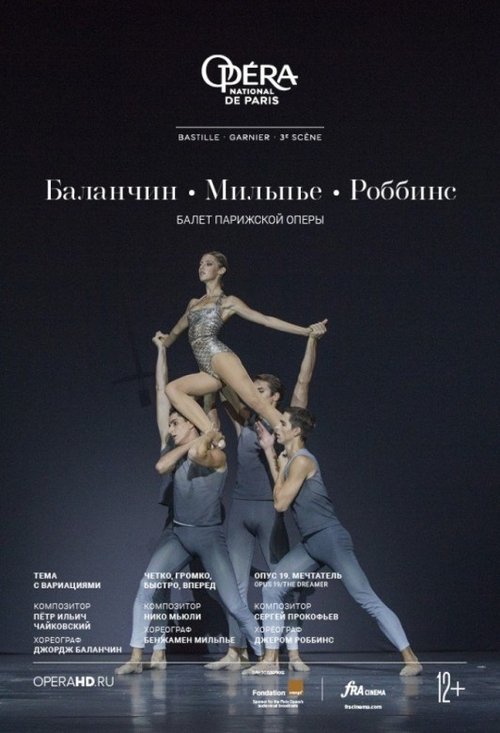
Director of Dance Benjamin Millepied pays tribute to his masters, George Balanchine and Jerome Robbins, two truly great choreographers, both of Russian origin, who led the American School, and dance in general, to rarely attained heights.
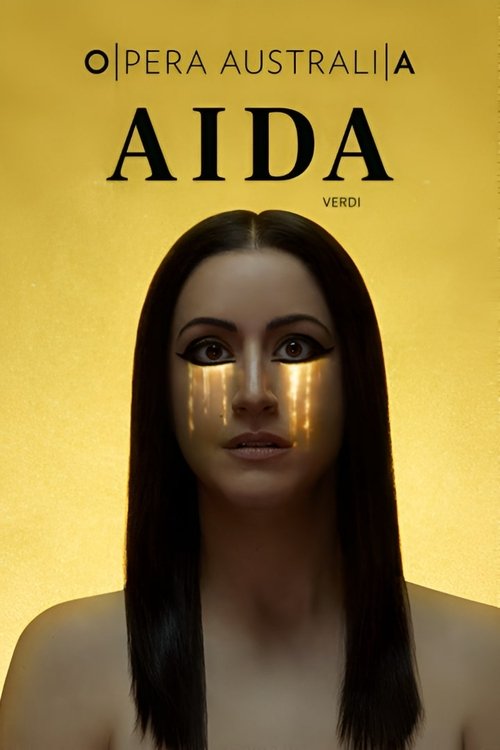
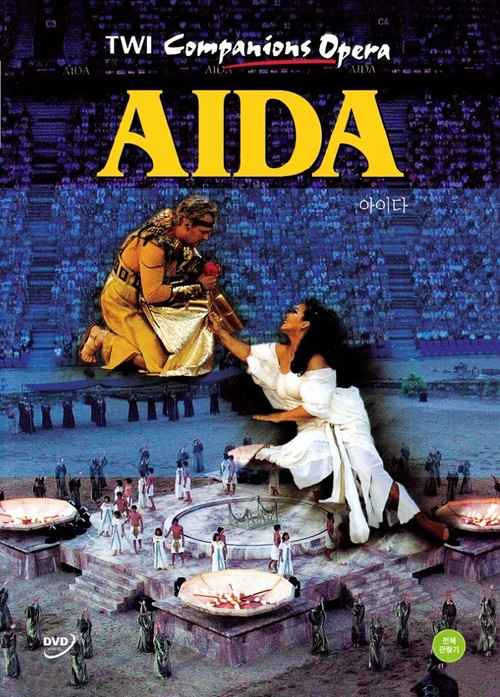
Verdi’s monumental music makes this historic epic an enduring favourite. Davide Livermore’s radiant production is a thrilling theatrical experience. Ten towering digital screens create ever-changing floor-to-ceiling set pieces. Immersive digital video design ranges from rich symbolism to vivid landscapes. Opulent costumes and props reflect the splendour of Egypt at the height of its power. Together with dramatic video, the massed grandeur of the famous Triumphal March is a visual and musical feast.
Don Quichotte (Don Quixote) is an opera in five acts by Jules Massenet to a French libretto by Henri Caïn. It was first performed on 19 February 1910 at the Opéra de Monte-Carlo.
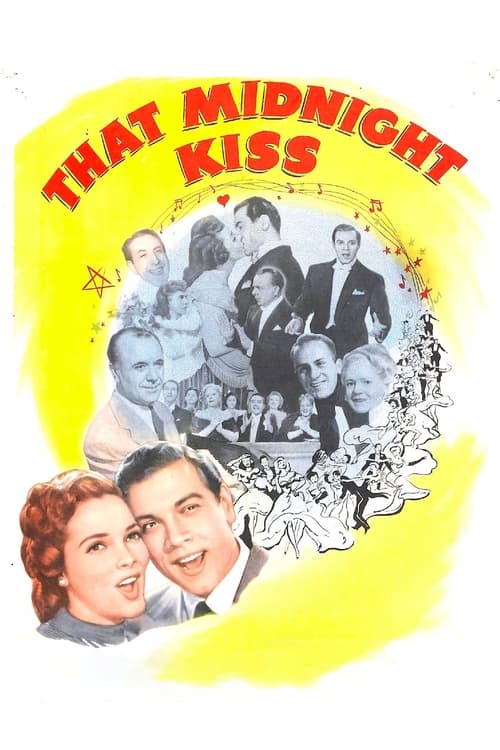
Opera singer Prudence Budell, overhears truck driver Johnny Donnetti singing opera, and persuades her opera company to give him a chance in her new opera. They fall in love, but on meeting his colleague Mary while visiting Johnny's work, Prudence becomes convinced Johnny is in love with her.
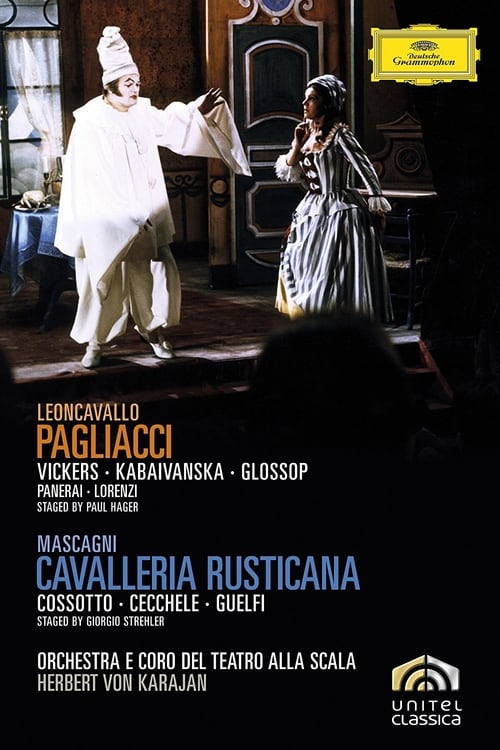
Opera's most popular double bill, fondly known as Cav and Pag, conducted by Herbert von Karajan. In 'Cavalleria rusticana', Turiddu returns from military service to find that his fiancée Lola had married the carter Alfio while he was away. In revenge, Turiddu seduces Santuzza, a young woman in the village. In 'Pagliacci', the drama unfolds as Canio (Pagliaccio) struggles with rage, despair, and desire on learning of his wife Nedda's intended infidelity with Silvio. Canio's tragic conflict increasingly mirrors the comedy of Pagliaccio.
Aida
Radames
Amneris
Amonasro
Ramfis
Re
Messaggero
Grande Sacerdotessa
self




![Simon Boccanegra [The Metropolitan Opera]](https://image.tmdb.org/t/p/w500/wG8lsDbBYqpj7j3rmge1aBIKDEk.jpg)