logologo
MovieVerse© 2024
Privacy PolicyTerms of ServiceContact Us
Made with ❤️ by Thathsara
movie poster
André Ravéreau and Algeria
Sign in to create your own watchlist

André Ravéreau and Algeria

Jan 1, 2019
1h 4m
★ 10.0

Overview

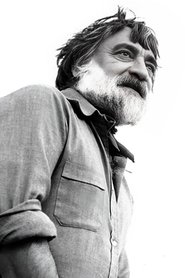
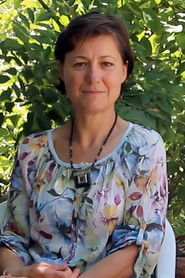
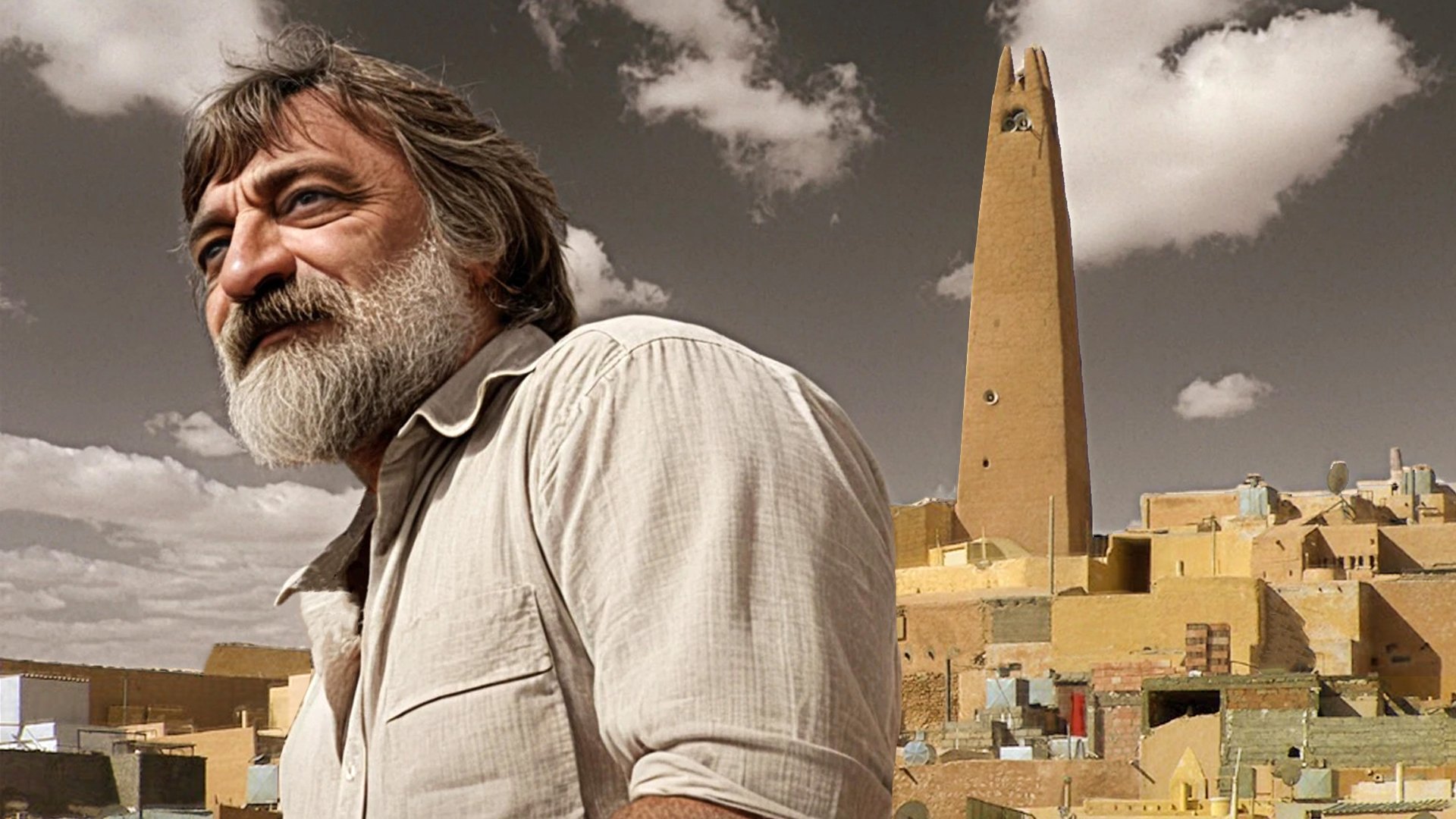
The architect André Ravéreau spent a large part of his life in Algeria, he is today an essential reference for Algerian builders of several generations. His daughter Maya, an architect herself, accompanies us to the places of his creations and his research, in the Mzab first where he lived, created, trained other architects in the "desert workshop" and had the oases of the Mzab classified as a UNESCO World Heritage Site. Inspired by tradition to better innovate as in the construction of the Ghardaïa post office, or in that of a very surprising villa... Then in Algiers where he worked to preserve the ancestral heritage of the Casbah, faithfully describing the principles of his construction in line with current concerns, such as the choice of environmentally friendly materials and avoiding energy waste, as testified by the architect Yasmine Terki, a great specialist in earth materials.

Genres

Documentary

Production Companies

HKE Production

André Ravéreau and Algeria Trailers

No Trailers found.

You may also like

CHoosing at Twenty
6.8

CHoosing at Twenty

Aug 24, 2017

Between 1954-1962, one hundred to three hundred young French people refused to participate in the Algerian war. These rebels, soldiers or conscripts were non-violent or anti-colonialists. Some took refuge in Switzerland where Swiss citizens came to their aid, while in France they were condemned as traitors to the country. In 1962, a few months after Independence, Villi Hermann went to a region devastated by war near the Algerian-Moroccan border, to help rebuild a school. In 2016 he returned to Algeria and reunited with his former students. He also met French refractories, now living in France or Switzerland.

Algeria, Special Weapons Sections
9.0

Algeria, Special Weapons Sections

Mar 12, 2025

This documentary by director Claire Billet and historian Christophe Lafaye details the massive and systematic use of chemical weapons during the Algerian War. Algerian fighters and civilians, sheltering in caves, were gassed by "special weapons sections" of the French army. The gas identified on military documents is CN2D, whose widespread use forced insurgents to flee "treated" sites, at the risk of dying there. The method is reminiscent of the "enfumades" used by the French expeditionary force during the conquest of Algeria in the 19th century. Between 8,000 and 10,000 such operations are believed to have taken place on Algerian soil between 1956 and 1962. This historical aspect is little known due to the difficulty of accessing archives, many of which are still classified, raising questions about memory, historical truth, and justice.

Mariner of the Mountains
6.4

Mariner of the Mountains

Sep 28, 2023

Filmmaker Karim Aïnouz decides to take a boat, cross the Mediterranean, and embark on his first journey to Algeria. Accompanied by the memory of his mother, Iracema, and his camera, Aïnouz gives a detailed account of the journey to his father’s homeland, interweaving present, past, and future.

Five Directors On The Battle of Algiers
10.0

Five Directors On The Battle of Algiers

Aug 1, 2004

This 17-minute documentary is featured on the 3-Disc Criterion Collection DVD of The Battle of Algiers (1966), released in 2004. An in-depth look at the Battle of Algiers through the eyes of five established and accomplished filmmakers; Spike Lee, Steven Soderbergh, Oliver Stone, Julian Schnabel and Mira Nair. They discuss how the shots, cinematography, set design, sound and editing directly influenced their own work and how the film's sequences look incredibly realistic, despite the claim that everything in the film was staged .

The Oyler House: Richard Neutra's Desert Retreat
0.0

The Oyler House: Richard Neutra's Desert Retreat

Feb 25, 2012

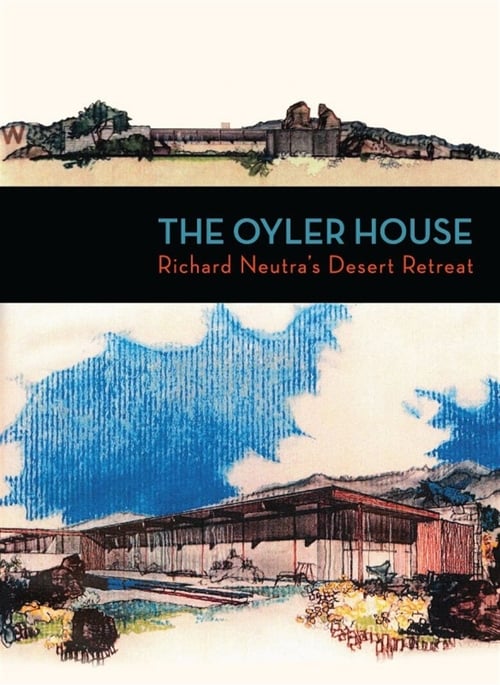
In 1959, a government employee named Richard Oyler, living in the tiny desert town of Lone Pine, California, asked world-famous modern architect Richard Neutra to design his modest family home. To Oyler's surprise, Neutra agreed. Thus began an unlikely friendship that led to the design and construction of an iconic mid-century modern masterpiece.

A Propos D'Un Crime
10.0

A Propos D'Un Crime

Jan 1, 1967

In 1967, Visconti came to Algiers for the filming of The Stranger with Mastroianni and Anna Karina. Camus, during his lifetime, had always refused to allow one of his novels to be brought to the screen. His family made another decision. The filming of the film was experienced in Algiers, like a posthumous return of the writer to Algiers. During filming, a young filmmaker specializing in documentaries Gérard Patris attempts a report on the impact of the filming of The Stranger on the Algerians. Interspersed with sequences from the shooting of Visconti's film, he films Poncet, Maisonseul, Bénisti and Sénac, friends of Camus, in full discussions to situate Camus and his work in a sociological and historical context. “The idea is for us to show people, others, ourselves as if they could all be Meursault, or at least the witnesses concerned to his drama.”

Coast Modern
8.0

Coast Modern

Oct 11, 2012

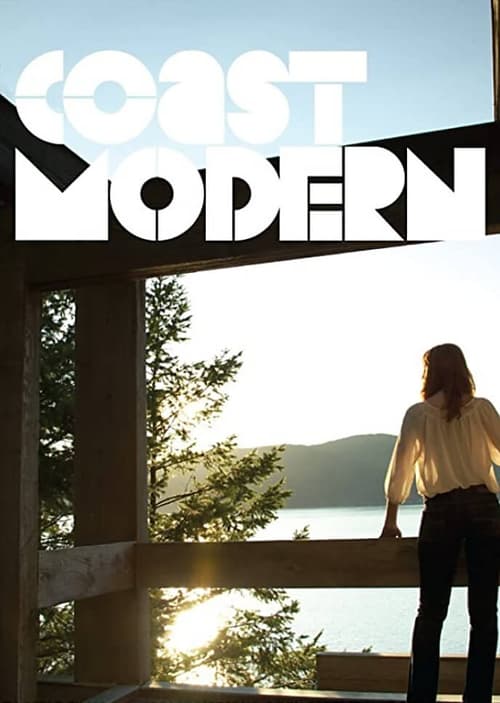
A core group of architects embraced the West Coast from Vancouver to LA with its particular geography and values and left behind a legacy of inspired dwellings. Today, architects celebrate the influence established by their predecessors.

No Image Available
0.0

Bardejov

Jan 4, 1952

No overview available.

Ralph Erskine
0.0

Ralph Erskine

Jul 9, 1986

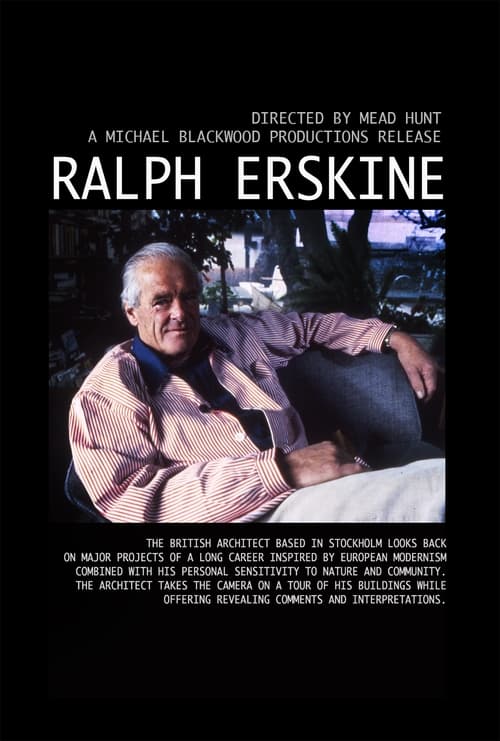
The British architect based in Stockholm looks back on major projects of a long career inspired by European Modernism combined with his personal sensitivity to nature and community. Erskine is especially valued for his vital understanding of social interaction, exemplified in commissions for universities and housing complexes built from Scandinavia to Italy. The architect takes the camera on a tour of his buildings while offering revealing comments and interpretations.

Algeria in Flames
8.5

Algeria in Flames

Jan 2, 1958

These are the first images shot in the ALN maquis, camera in hand, at the end of 1956 and in 1957. These war images taken in the Aurès-Nementchas are intended to be the basis of a dialogue between French and Algerians for peace in Algeria, by demonstrating the existence of an armed organization close to the people. Three versions of Algeria in Flames are produced: French, German and Arabic. From the end of the editing, the film circulates without any cuts throughout the world, except in France where the first screening takes place in the occupied Sorbonne in 1968. Certain images of the film have circulated and are found in films, in particular Algerian films. Because of the excitement caused by this film, he was forced to go into hiding for 25 months. After the declaration of independence, he founded the first Algerian Audiovisual Center.

Big Time
5.5

Big Time

Oct 21, 2017

Big Time gets up close with Danish architectural prodigy Bjarke Ingels over a period of six years while he is struggling to complete his largest projects yet, the Manhattan skyscraper W57 and Two World Trade Center.

No Image Available
0.0

Kamenná sláva

Aug 19, 1938

No overview available.

Tudo é Projeto
0.0

Tudo é Projeto

Jun 13, 2017

Documentary about the life and work of the architect Paulo Mendes da Rocha, told by him in prominence for Joana, his daughter. With more than 80 years of age, Paulo Mendes is today one of the most important and renowned architects in the world, but, above all, he is a thinker who has controversial ideas and opinions about urbanism, nature, humanity, art and technique deserve to be heard. In a constant dialogue between interviewee / father and interviewer / daughter, Joana is the guiding thread of the film. As in all personal relationships, especially between parents and children, the thread that leads is also that which is conducted.

Simetrias
0.0

Simetrias

Jan 2, 2023

No overview available.

The Barbary Corsairs
7.7

The Barbary Corsairs

Oct 31, 2015

In the 18th century, the Barbary threat became serious. In July 1785, two American boats were returned to Algiers; In the winter of 1793, eleven American ships, their crews in chains, were in the hands of the dey of Algiers. To ensure the freedom of movement of its commercial fleet, the United States was obliged to conclude treaties with the main Barbary states, paying considerable sums of money as a guarantee of non-aggression. With Morocco, treaty of 1786, 30,000 dollars; Tripoli, November 4, 1796, $56,000; Tunis, August 1797, 107,000 dollars. But the most expensive and the most humiliating was with the dey of Algiers, on September 5, 1795, “treaty of peace and friendship” which cost nearly a million dollars (including 525,000 in ransom for freed American slaves). , with an obligation to pay 20,000 dollars upon the arrival of each new consul and 17,000 dollars in annual gifts to senior Algerian officials...

They Joined the Front
10.0

They Joined the Front

Jan 1, 2012

In this film, four key witnesses, who live in Algeria today, as full-fledged Agerians, show us what this colonization was really like, so "beneficial" that they themselves perceived it as the oppression of one people by another. Three of them, who today would be called "pieds noirs," in other words, those Europeans to whom France, the occupying power, gave the best land, taken from the indigenous populations, work, and exclusive rights, not shared by the entire population, lived rather well compared to the majority of the "natives." The fourth was far from all that and lived in Argentina. Annie Steiner, Felix Colozzi, Pierre Chaulet, and Roberto Muniz explain to us what led them to show solidarity with the struggle of the weak, the humiliated, and to risk their freedom and their lives by committing to liberate Algeria.

Cathedrals
0.0

Cathedrals

Jul 4, 2014

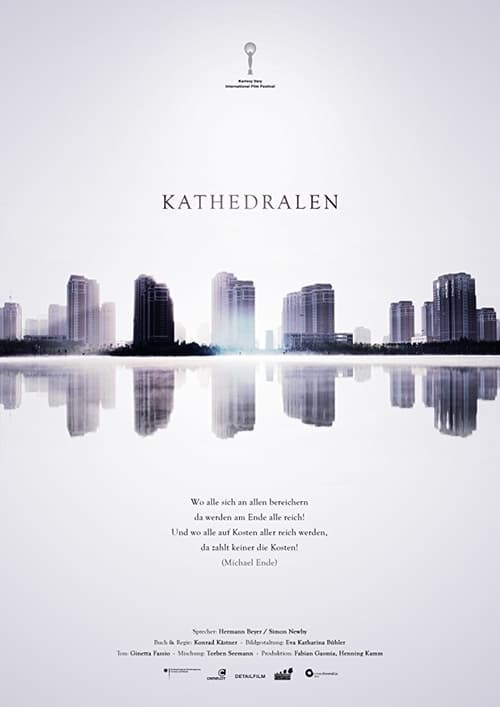
The city of Ordos, in the middle of China, was build for a million people yet remains completely empty. Ordos is not so much a place but a symbol of babylonic hype. But nothing will change - as long as people believe.

An Unhealed Wound - The Harkis in the Algerian War
10.0

An Unhealed Wound - The Harkis in the Algerian War

Sep 20, 2010

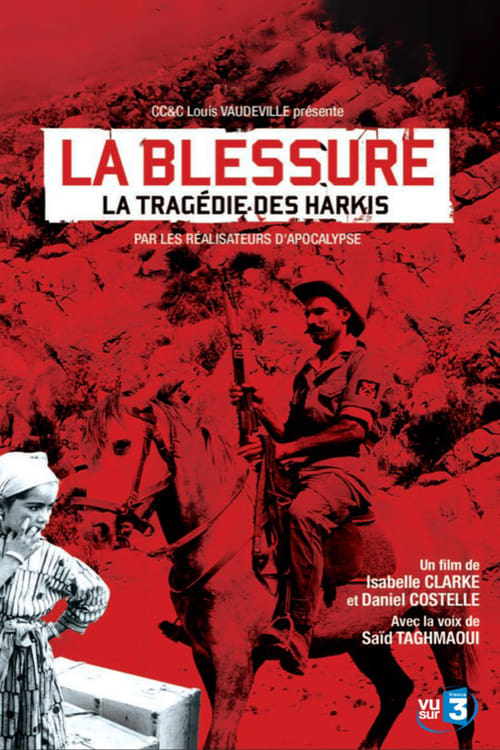
It's the unforgivable story of the two hundred thousands harkis, the Arabs who fought alongside the French in the bitter Algerian war, from 1954 to 1962. Why did they make that choice? Why were they slaughtered after Algeria's independence? Why were they abandonned by the French government? Some fifty to sixty thousands were saved and transferred in France, often at pitiful conditions. This is for the first time, the story of this tragedy, told in the brilliant style of the authors of "Apocalypse".

Sunnyside
0.0

Sunnyside

Invalid Date

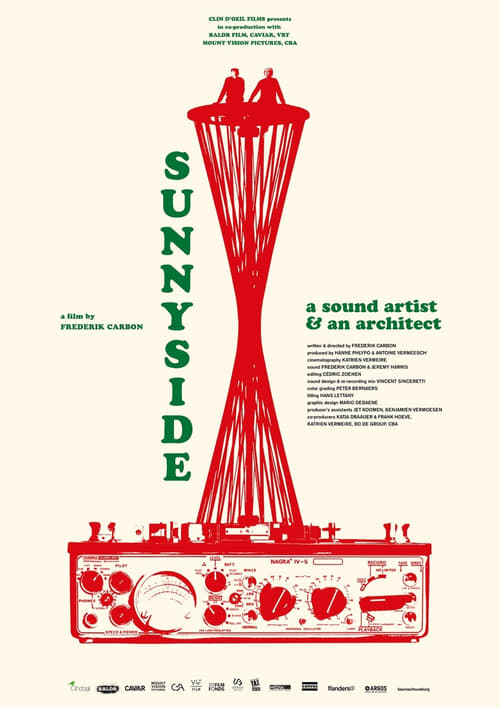
Ninety-year-old sound artist and comedian Henry “Sandy” Jacobs lives a quirky existence at the end of Sunnyside Drive, a steep and winding dirt road washed by fog from the Pacific Ocean. Sixty feet down the hill lives his eccentric 84-year-old friend and neighbor, architect and former Frank Lloyd Wright collaborator Daniel Liebermann. These extraordinary old men, influential artists in the 1950s and ’60s, continue, each in their own way, to search the world for perfection. Sunnyside takes us to an extraordinary place, a microcosm with its own distinctive rhythm and remarkable inhabitants. It is a film about creativity, the capacity to dream and, ultimately, the transience of life.

Tadao Ando
0.0

Tadao Ando

Jan 1, 1988

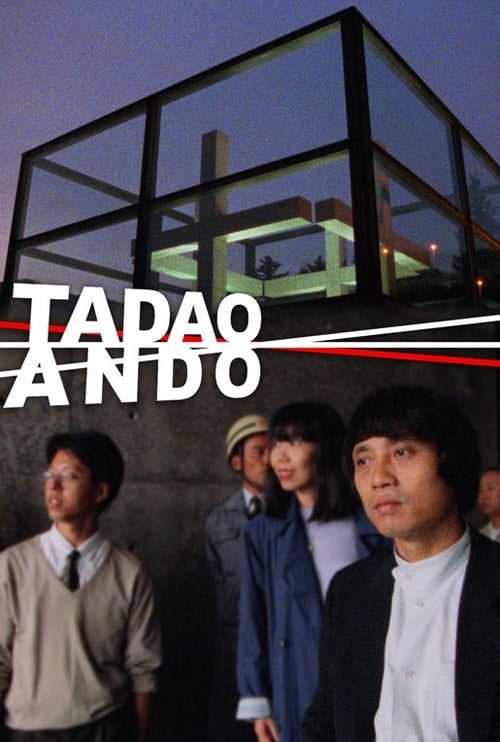
Tadao Ando, a self-taught architect, proposes an international architecture that he believes can only be conceived by someone Japanese. His architecture mixes Piranesian drama with contemplative spaces in urban complexes, residences and chapels. This film presents the formative years of his impressive career before he embarked on projects in Europe and the United States.

Cast

André Ravéreau

Self

André Ravéreau

Maya Ravéreau

Self

Maya Ravéreau

Yasmine Terki

Self

Yasmine Terki