logologo
MovieVerse© 2024
Privacy PolicyTerms of ServiceContact Us
Made with ❤️ by Thathsara
movie poster
No Image Available
Sign in to create your own watchlist

Māori

Jul 25, 1981
0h 21m
★ 0.0

The hongi is a greeting of affection: aroma. 'Aroha': love or compassion, is the vine that binds the tribe.

Overview

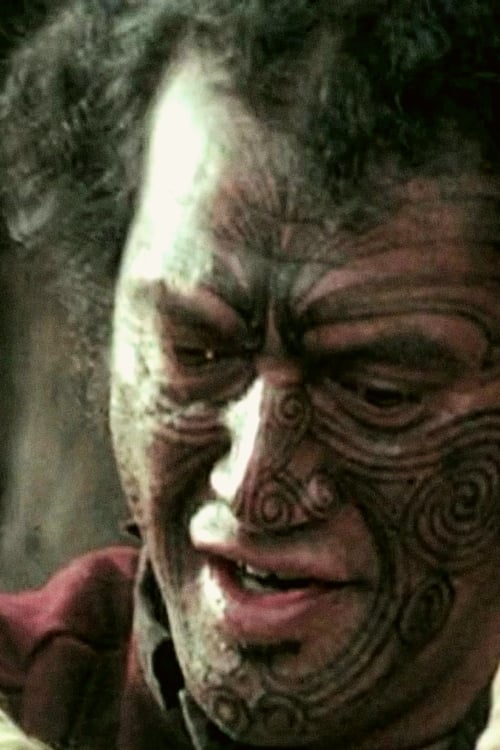
This 1981 NFU film is a tour of the contemporary world of Aotearoa’s tangata whenua. It won headlines over claims that its portrayal of Māori had been sanitised for overseas viewers. Debate and a recut ensued. Writer Witi Ihimaera felt that mentions of contentious issues (Bastion Point, the land march) in his original script were ignored or elided in the final film, and withdrew from the project. He later told journalists that the controversy showed that educated members of minority groups were no longer prepared to let the majority interpret the minority view.

Genres

Documentary
History

Production Companies

The National Film Unit
New Zealand National Film Unit

You may also like

No Image Available
0.0

Kea - Mountain Parrot

Invalid Date

This documentary tells the story of the inimitable kea. The 'Clown of the Alps' is heralded as the world’s smartest bird (its intelligence rivals a monkey’s). Kea are famous on South Island tracks and ski fields for their insatiable (and destructive) inquisitiveness. Curiosity almost killed the kea when it was labelled a sheep killer, and tens of thousands were killed for a bounty. After shots of baby kea being fed, there is extraordinary night footage in clip four of the 'avian wolf' in action. The award-winning film makes a compelling case for the charismatic kea as a national icon.

The Dark Horse
6.3

The Dark Horse

Jul 17, 2014

One-time Maori speed-chess champ, Genesis Potini, lives with a bi-polar disorder and must overcome prejudice and violence in the battle to save his struggling chess club, his family and ultimately, himself.

Hot Air
0.0

Hot Air

Jul 31, 2014

In the years since New Zealand politicians began to grapple with climate change our greenhouse gas emissions have burgeoned. Alister Barry’s doco draws on TV archives and interviews with key participants to find out why.

No Image Available
0.0

Indian Rights for Indian Women

Sep 25, 2018

Three intrepid women battle for Indigenous women's treaty rights.

The Crying Fields
0.0

The Crying Fields

Jul 15, 2019

A deep dive into the history of the Canadian Government and the Department of National Defence leasing First Nations reserves as practice bombing ranges during World War I and World War II. This documentary follows the Enoch Cree Nation's process of developing it's land claim against the Canadian Government following the discovery of active landmines in the heart of the nation's cultural lands and golf course in 2014, almost 70 years later.

Red Girl Rising
0.0

Red Girl Rising

Apr 30, 2025

Joyce Jonathan Crone—Mohawk matriarch, retired teacher, activist, humanitarian—reaches forward into her community of Huntsville, Ontario, opening hearts and bridging gaps for Indigenous education.

The World's Fastest Indian
7.7

The World's Fastest Indian

Oct 12, 2005

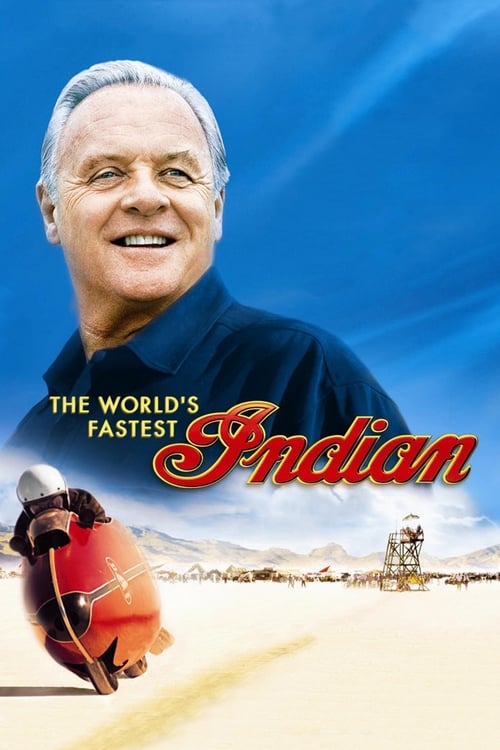
The life story of New Zealander Burt Munro, who spent years building a 1920 Indian motorcycle—a bike which helped him set the land-speed world record at Utah's Bonneville Salt Flats in 1967.

Max Gimblett: Original Mind
0.0

Max Gimblett: Original Mind

May 19, 2017

Max Gimblett: Original Mind documents the life and process of eccentric, creative genius Max Gimblett. One of New Zealand’s most successful and internationally prominent living painters, Gimblett has been working in America since 1962. The filmmakers spent a week in Gimblett’s Soho loft where he and his devoted studio assistants generously revealed the techniques and philosophy behind his beautiful art.

My Pride
0.0

My Pride

Jan 24, 2020

Spontaneous portrait of an endearing and cheerful teenager living in balance between traditionalism and modernity. She presents her regalia to us and we share her pride in being Innu.

Ghosts
0.0

Ghosts

Sep 10, 2022

Three Kiowa boys attempt to escape a government boarding school in 1891, Oklahoma.

Kainai
0.0

Kainai

Jan 1, 1973

On the Kainai (Blood) First Nations Reserve, near Cardston, Alberta, a hopeful new development in Indigenous enterprise. Once rulers of the western plains, the Bloods live on a 1 300-square-kilometer reserve. Many have lacked gainful employment and now pin their hopes on a pre-fab factory they have built. Will the production line and work and wages fit into their cultural pattern of life? The film shows how it is working and what the owners themselves say about their venture.

Nose and Tina
0.0

Nose and Tina

Jan 1, 1980

Nose and Tina are a couple in love. The film captures the domestic details of their life together and documents their hassles with work, money and the law. The unusual bit: He is employed as a brakeman, and she as a sex worker.

Trick or Treaty?
0.0

Trick or Treaty?

Sep 4, 2014

Legendary Canadian documentarian Alanis Obomsawin digs into the tangled history of Treaty 9 — the infamous 1905 agreement wherein First Nations communities relinquished sovereignty over their traditional territories — to reveal the deceptions and distortions which the document has been subjected to by successive governments seeking to deprive Canada’s First Peoples of their lands.

Nin E Tepueian: My Cry
7.0

Nin E Tepueian: My Cry

Jan 24, 2020

NIN E TEPUEIAN - MY CRY is a documentary tracks the journey of Innu poet, actress and activist, Natasha Kanapé Fontaine, at a pivotal time in her career as a committed artist. Santiago Bertolino's camera follows a young Innu poet over the course of a year. A voice rises, inspiration builds; another star finds its place amongst the constellation of contemporary Indigenous literature. A voice of prominent magnitude illuminates the road towards healing and renewal: Natasha Kanapé Fontaine.

Wayfinders: A Pacific Odyssey
0.0

Wayfinders: A Pacific Odyssey

May 6, 1999

This award-winning PBS documentary sweeps viewers into a seafaring adventure with a community of Polynesians, as they build traditional sailing canoes, learn how to follow the stars across the open ocean, and embark upon a 2,000-mile voyage in the wake of their ancestors.

Take
0.0

Take

Jun 7, 2019

TAKE (te reo Maori: issue, promise, challenge) weaves mana wahine (female knowledge), dance and archival materials to retell the story of the removal of the ancestral Maori meetinghouse, Hinemihi o te Ao Tawhito, from Aotearoa, New Zealand to England in 1892. It is a call to return Hinemihi, embodied by Australian born Maori dancer and performance artist, Victoria Hunt. Set in the liminal spaces between history and emotion TAKE unfolds a story of origins, of traumatic events and colonial violence.

Those Who Come, Will Hear
9.0

Those Who Come, Will Hear

Jun 8, 2018

The documentary proposes a unique meeting with the speakers of several indigenous and inuit languages of Quebec – all threatened with extinction. The film starts with the discovery of these unsung tongues through listening to the daily life of those who still speak them today. Buttressed by an exploration and creation of archives, the film allows us to better understand the musicality of these languages and reveals the cultural and human importance of these venerable oral traditions by nourishing a collective reflection on the consequences of their disappearance.

Georgie Girl
1.0

Georgie Girl

Feb 16, 2001

In 1999, the largely conservative Wairarapa district in New Zealand elected a former cabaret performer/actress named Georgina Beyer to the country's House of Parliament -- a seemingly unremarkable event in that country's history except for the fact that Beyer is a transsexual and may very well be the first transsexual in the world to be elected to a national office. In their 2002 biographical documentary Georgie Girl, co-directors Peter Wells and Annie Goldson highlight the popular Member of Parliament's rapid rise through local government to prominence in the New Zealand national government.

Invasion
8.3

Invasion

May 1, 2020

In this era of “reconciliation”, Indigenous land is still being taken at gunpoint. Unist’ot’en Camp, Gidimt’en checkpoint and the larger Wet’suwet’en Nation are standing up to the Canadian government and corporations who continue colonial violence against Indigenous people. The Unist’ot’en Camp has been a beacon of resistance for nearly 10 years. It is a healing space for Indigenous people and settlers alike, and an active example of decolonization. The violence, environmental destruction, and disregard for human rights following TC Energy (formerly TransCanada) / Coastal GasLink’s interim injunction has been devastating to bear, but this fight is far from over.

No Image Available
0.0

Proof

Nov 15, 2021

Two years ago Guyon Espiner stopped drinking. Now, the award-winning journalist and podcast-maker has made a documentary about New Zealand's drinking culture and the alcohol industry.

Cast

No Cast found.

Māori Trailers

No Trailers found.