Spontaneous portrait of an endearing and cheerful teenager living in balance between traditionalism and modernity. She presents her regalia to us and we share her pride in being Innu.
No Trailers found.
Herself
A document of the originators of the DIY Rez Metal scene, and the bands that are now carrying the torch, including I Dont Konform, Mutilated Tyrant and Born of Winter. From a generator-powered show in the Arizona desert to a band practicing in a traditional Navajo dwelling called a Hogan, this story — told by Navajo ("Diné") bands and individuals involved in the scene — explores the creation of Rez Metal in the Eighties, the juxtaposition of old and new Navajo traditions and the link between heavy metal and native pride.
A documentary film that follows the lives of first-generation retired immigrants living in Finland.
Filmmaker Herbert Alfonso and musician Glenn de Randamie travel to Ghana to do some research on polyrhythm and the West-African spirituality. However, their trip to The Motherland makes them realize that home is more than the place where they grew up. Years later, they recollect their faded memories and try to find the right words to describe their intense experience. What exactly made them feel at home and lost at the same time? What does being home actually mean for a black individual from Europe while visiting Africa? Only abstractions seem to persevere as this colourful and musically-charged collage serves to show how a life-changing experience can leave us with nothing but fragments of a truth that has yet to be discovered.
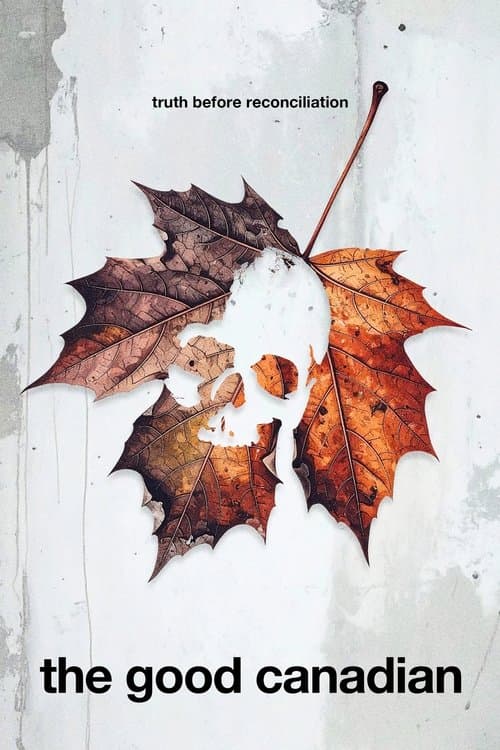
The world knows the image of the good Canadian. But what if there was a dark secret behind a national identity? THE GOOD CANADIAN exposes the truth behind the idea of a True North strong and free. In this unflinching and eye-opening documentary, directors Leena Minifie and David Paperny move us through the corridors of systemic inequity, from the Indian Act to residential schools, to modern-day family separation. Fusing shocking footage with detailed interviews with experts, advocates, whistleblowers and politicians, THE GOOD CANADIAN challenges national myth-making, while offering Canadians the chance to forge a new identity from the truth.
On Canada's Pacific coast this film finds a young Haida artist, Robert Davidson, shaping miniature totems from argillite, a jet-like stone. The film follows the artist to the island where he finds the stone, and then shows how he carves it in the manner of his grandfather, who taught him the craft.
No overview available.
Elliot Page brings attention to the injustices and injuries caused by environmental racism in his home province, in this urgent documentary on Indigenous and African Nova Scotian women fighting to protect their communities, their land, and their futures.
The story of a young boy forced to spend all five years of his short life in hospital while the federal and provincial governments argued over which was responsible for his care, as well as the long struggle of Indigenous activists to force the Canadian government to enforce “Jordan’s Principle” — the promise that no First Nations children would experience inequitable access to government-funded services again.
When internationally renowned Haida carver Robert Davidson was only 22 years old, he carved the first new totem pole on British Columbia’s Haida Gwaii in almost a century. On the 50th anniversary of the pole’s raising, Haida filmmaker Christopher Auchter steps easily through history to revisit that day in August 1969, when the entire village of Old Massett gathered to celebrate the event that would signal the rebirth of the Haida spirit.
Since more than 10 years the director Darío Aguirre lives between two totally different worlds, Germany and Ecuador. He decides to make an extraordinary journey, visiting five unknown men called Darío Aguirre as well: One in Mexico and four in Argentina. Meeting each other develops into a reconcilement with their own past lives and permits a brief glance into the protagonists’ present time. For two months Darío shares five different lives, adapting himself to situations and activities he has never done before.
For almost a century, the Coast Salish knitters of southern Vancouver Island have produced Cowichan sweaters from handspun wool. These distinctive sweaters are known and loved around the world, but the Indigenous women who make them remain largely invisible.
Edward Said's book Orientalism has been profoundly influential in a diverse range of disciplines since its publication in 1978. In this engaging and lavishly illustrated interview he talks about the context within which the book was conceived, its main themes, and how its original thesis relates to the contemporary understanding of "the Orient" as represented in the mass media. "That's the power of the discourse of Orientalism. If you're thinking about people and Islam, and about that part of the world, those are the words you constantly have to use. To think past it, to go beyond it, not to use it, is virtually impossible, because there is no knowledge that isn't codified in this way about that part of the world." -Edward Said
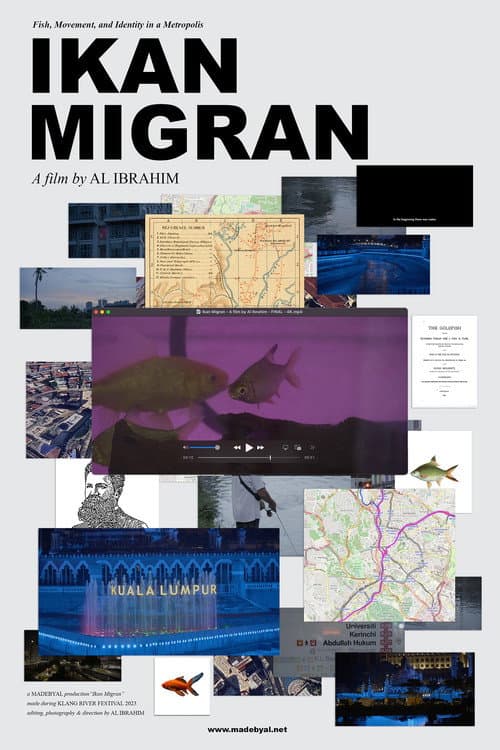
A documentary short that uses fish to explore identity and belonging in a metropolis.
In the 50 years since he carved his first totem pole, Robert Davidson has come to be regarded as one of the world’s foremost modern artists. Charles Wilkinson (Haida Gwaii: On the Edge of the World) brings his trademark inquisitiveness and craftsmanship to this revealing portrait of an unassuming living legend. Weaving together engaging interviews with the artist, his offspring, and a host of admirers, Haida Modern extols the sweeping impact of both Davidson’s artwork and the legions it’s inspired.
Follow filmmaker Elle-Máijá Tailfeathers as she creates an intimate portrait of her community and the impacts of the substance use and overdose epidemic. Witness the change brought by community members with substance-use disorder, first responders and medical professionals as they strive for harm reduction in the Kainai First Nation.
Throughout the course of the Haida basketball season, leaders of iconic rez ball team the Skidegate Saints compete for two titles - defending their All Native Basketball Championship, while also battling for title to their land and waters with the government that stole it from them with the Indian Act.
Etthén Heldeli: Caribou Eaters travels with Déné First Nations people in Canada’s north, as they search for the species so vital to every aspect of their lives – the barren-ground caribou. The documentary is a celebration of their rich ancient culture, and a visual document lamenting their traditions that could vanish, if the caribou disappear.
What kind of power is accessible through the discovery of a voice? Morgan Quaintance interlinks two anti-racist and anti-authoritarian liberation movements in South London and Chicago’s South Side with his own biography to explore what happens when speech is ignored, and the voice fades.
Three intrepid women battle for Indigenous women's treaty rights.