Abel Ferrara explores human conflict and the search for peace and balance through the music and words of Patti Smith and the experiences of people at war in Ukraine.
No Trailers found.
Self (archive footage)
In this documentary, experts dissect the Battle of Britain, which took place on Sept. 15, 1940 — a day that determined the fate of the nation.
Archival footage, animation and music are used to look back at the eight anti-war protesters who were put on trial following the 1968 Democratic National Convention.
No overview available.
Three juxtaposing stories taking place in Portugal, Austria and Cuba create an intimate and poetic portrait of the daily lives and struggles of the elderly in an unstable world, seen through the eyes of their grandchildren.
As Russia launches its full-scale invasion of Ukraine, primary schools across Russia’s hinterlands are transformed into recruitment stages for the war. Facing the ethical dilemma of working in a system defined by propaganda and violence, a brave teacher goes undercover to film what’s really happening in his own school.
CHARBON depicts how Europe was built on fossil fuels over the past 100 years. And how it was torn apart by wars that were the result of these same fossil fuels. During 3 trips to Ukraine, Italy and Iraq, filmmaker Manu Riche explains how he and his French-German family are inseparably connected to the fate of the Iraqi filmmaker and refugee Hayder Helo.
Skip Liberty enlisted in the Army in 1968. During his tour in Vietnam he shot 3,100 feet of Super 8 film, over 3 hours worth. Upon returning to the states the film was placed in storage, Skip had never seen the footage he shot. Until now.
Made refugees by the war in Ukraine, Olga and her granddaughter Milana travel to a summer camp in the Austrian Alps to test the limits of their own bravery, and to strengthen their growing bond.
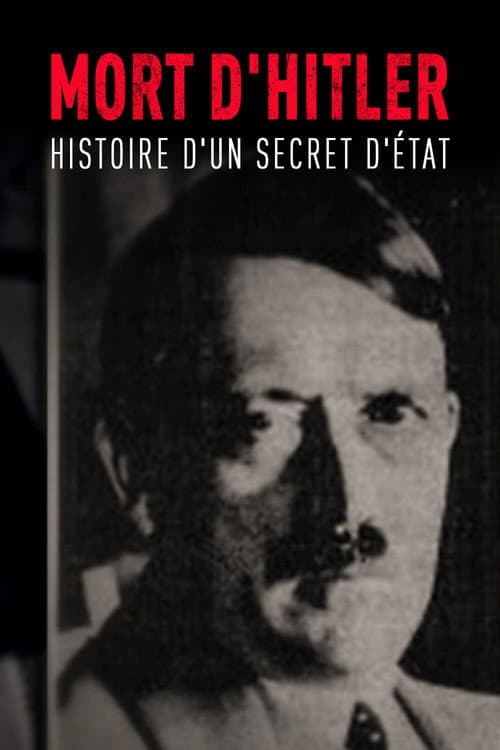
On April 30, 1945, while the Russian Army surrounded Berlin, Hitler committed suicide in his bunker. His body was discovered a few days later by the Soviets. He would be positively identified after a top secret inquest in which Hitler's personal dentist would play a central role. And yet, at the same time, Stalin publicly declared that his army was unable to find the Führer's body, choosing to let the wildest rumors develop and going so far as to accuse some of his Allies of having aided the monster's probable escape. What secrets were hidden behind this dissimulation? What happened then to the two ladies involved in the identification of Hitler’s body?
Using exclusively archival footage, Erwin Leiser traces the rise and collapse of the Third Reich, from Adolf Hitler’s early years to the devastation of Europe and his suicide in 1945. The film draws heavily on material produced and preserved by the Nazi propaganda apparatus to confront the mechanisms, imagery, and consequences of totalitarian power.
In 1944, two prisoners miraculously escaped from Auschwitz. They told the world of the horror of the Holocaust and raised one of the greatest moral questions of the 20th century.
This documentary follows two long-lost Ukrainian friends, Arsalan and Nastya, as they reconnect in Germany after russia's full-scale invasion against Ukraine. Arsalan, an actor now in Frankfurt after time in a refugee camp, and Nastya, journalist and producer who stayed in Kyiv, reflect on the divergent paths their lives have taken due to the war. Through their conversations and therapy sessions, the film explores themes of displacement, identity, and the emotional impact of war on youth.
During the Syrian civil war, the district of Yarmouk, home to thousands of Palestinians, became the scene of dramatic and ferocious fighting. The film follows the destiny of civilians during the brutal sieges, imposed by the Syrian regime, that took place in the wake of the battles. With his camera, Abdallah Al-Khatib composes a love song to a place that proudly resists the atrocities of war.
Reality in Ukraine was divided into two periods - before the war and after. Every citizen tries to be useful in this national resistance. Ukrainians change their professions and adapt to the needs of wartime. In art workshops, sculptors make anti-tank obstacles. Silent figures of Ukrainian figures, angels, Cossacks and multiple copies of Jesus Christ, like a terracotta army, froze in anticipation of new creations. Masters weld metal defenses for the Armed Forces of Ukraine.
The story of the first months of the Russian invasion of Ukraine through the eyes of a volunteer from Kamianets-Podilskyi and a female volunteer who ended up in occupied Mariupol.
A look inside the Russian assault on Ukraine's second-largest city, Kharkiv, told by displaced families, civilians caught in the fight and first responders.
Archive footage of Australia and New Zealand forces during WW1, WW2 and the Vietnam conflict. Plus home life between the wars, especially focusing on the homage we pay to those who so bravely sacrificed themselves on our behalf. This is all held together by a wonderful script narrated by John Stanton.
Buď laska means please in Ukrainian and Ukraine is asking us for help. Over a thousand kilometers and 4 armored ambulances that the Czechs relied on during the first months of the war. What is it like to be in a country where war is the order of the day? What personal stories are hidden under the "anonymous mass of green uniform" of the army? And why does it make sense to help?
Personal stories from civilians, children, soldiers, doctors, the country’s elderly, journalists, religious leaders, and international volunteers - a handful of the millions of people whose lives have been turned upside-down by nine years (and counting) of Russian aggression against Ukraine.