No Trailers found.
Jacob
Ayman
Omar
Naim
Toni
Mario
Oussama
Hermana Jacob
Policía
Tyson
Several days in the lives, and profiles of, the owners and players of the open air street chess tables in downtown San Francisco. An informative and insightful portrait of a freely public, yet effectively anonymous, subculture: a unique and colorful patch of eccentric americana in the urban quilt of an international city. —Anonymous
No overview available.
Three NYC stories at a climax. Stories about breaking up, losing, leaving, giving away... the things or people you love, you live with, you depend on, which formed your past... The stories are about how difficult this is, how terrifying and how frightening. Yet, you HAVE to do what you have to do. The three girls are met at the turning point of their lives. The film is wonderful written, with few words and a great, exciting pace (though it takes its time and lot of it). Stop: there may be a lot of words, sometimes, but what's important is between-the-lines. The performances are marvellous. Style and location (all shot "on location") remind of this specific independent NYC style of Jarmusch, Poe, Seidelman, Silver, etc.
In Casablanca, Morocco in December 1941, a cynical American expatriate meets a former lover, with unforeseen complications.
In southern Morocco in 1954, an old man and a young man cooperate to restore water to a wasteland.
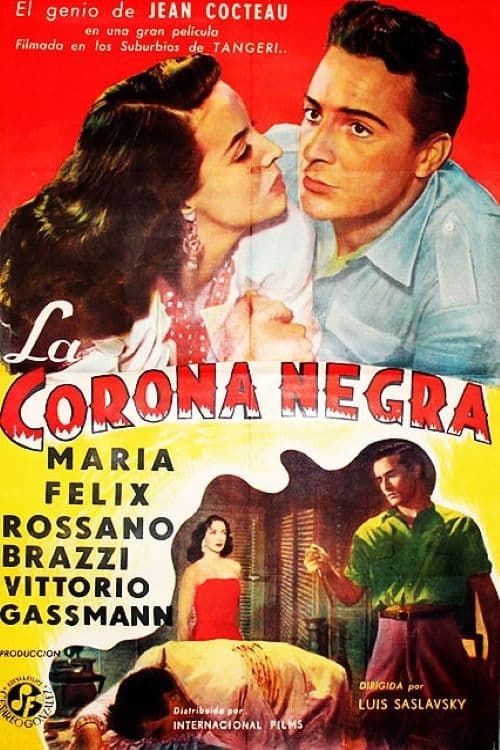
A woman suffers from amnesia after killing her husband, who was just about to demand a divorce for having found her engaging in an affair with a lover, who is only interested in her to find where some precious jewels are hidden.
This FitzPatrick Traveltalk short visits the cities of Casablanca, Rabat, and Marrakesh in Morocco, as well as the city of Algiers in Algeria.
On July 30, 2024, Mohamed VI celebrates the 25th anniversary of his reign in style. Who is this so-called secret monarch? How did he gradually impose his vision and projects?
Shot in long, contemplative takes, Madrona Marsh lingers on the last remaining vernal freshwater wetland in Los Angeles’s South Bay. Amid Torrance’s dense urban sprawl, the film observes the marsh as an unlikely oasis—home to birds, fish, insects, reptiles, and moments of quiet human presence. Influenced by the rhythms of slow cinema’s great masters, Devereaux shapes stillness and habitat into a meditative portrait of fragile ecology and the persistence of life within an urban environment.
Summer is the time to travel, enjoy life, and do or leave what you want. A motor home with two occupants makes its way south. But the two travelers do not travel voluntarily, and certainly not together.
Two brothers start working as benshi narrators of silent films in a cinema in the early 20th century. This premise is the jumping-off point for an epic family saga that follows the protagonists and their descendants through wars and technological developments.
The Candyman, a murderous soul with a hook for a hand, is accidentally summoned to reality by a skeptic grad student researching the monster's myth.
Set in the mid-1950s when Tangier was still an international zone, El Chergui presents the city on the eve of its independence, as Aïcha resorts to magical practices to try to prevent her husband from taking a second wife. Around her, a society of women creates its own form of active resistance even as the larger independence movement grows around it. Through his unique use of montage, Smihi creates arresting images that present a society torn by the contradictions of colonialism, religion, patriarchy, and resistance. (Block Cinema)
Mixing new images to existing São Paulo movies takes, the documentary presents the city from the perspective of five main attributes: transformation, anonymity, crowd, precariousness and dimension.