Animari and Zlatko's mission is to help children from disadvantaged backgrounds get the best possible care and education. Will they manage to find funding to welcome more children and to start a high school?
tells the experience of a group of medical students who travel to the north of Argentina to assist different indigenous communities that suffer the dispossession of their lands and structural poverty.
A poetic retelling of the experiences of Joseph Murakami, a fourteen-year-old boy from Darwin, who is summarily rounded up and interned by his government on the basis of his ethnicity, leaving wounds unhealed to this day.
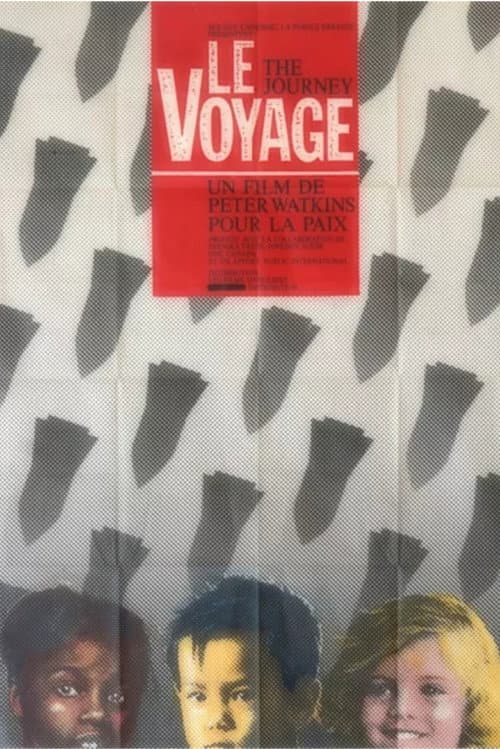
Peter Watkins' global look at the impact of military use of nuclear technology and people's perception of it, as well as a meditation on the inherent bias of the media, and documentaries themselves.
No overview available.
Documentary following Serbian football coach Zoran Đorđević as he helps form South Sudan's first national football team.
An exposed Cumbrian village by the sea surrounded by windmills, fields and factories provides a striking setting for this fairy tale of young love and the loss of childhood innocence. Over one year, the film follows the 9 year-old Laura Anne and her 11 year-old cousin, Steven as they move towards the end of their childhoods. The narrative is told in rhyme by the young female protagonist. As time passes and the seasons change, feelings and memories from all our childhoods are evoked and we wonder what time will make of Laura Anne and Steven.
The story of Severino, a man who tries to escape the misery and the drought prevailing in the rural backcountry of the Northeast of Brazil. He heads for Recife, passing through desert and forest regions, expecting to find a better life.
In the ‘poor crescent’ around Brussels one child in three lives on the poverty line. But they can find refuge with BX Brussels of Vincent Kompany – a sports and social project. Stranger follows recent immigrant Senegalese football coach Moussa as he struggles to give them hope in their sport … and in their life.
Following four Lakota families over three years, Homeland explores what it takes for the Lakota community to build a better future in the face of tribal and government corruption, scarce housing, unemployment, and alcoholism. Intimate interviews with a spiritual leader, a grandmother, an artist, and a community activist from South Dakota’s Pine Ridge Indian Reservation reveal how each survives through family ties, cultural tradition, humor, and a palpable yearning for self-reliance and personal freedom.
This is not a film about gun control. It is a film about the fearful heart and soul of the United States, and the 280 million Americans lucky enough to have the right to a constitutionally protected Uzi. From a look at the Columbine High School security camera tapes to the home of Oscar-winning NRA President Charlton Heston, from a young man who makes homemade napalm with The Anarchist's Cookbook to the murder of a six-year-old girl by another six-year-old. Bowling for Columbine is a journey through the US, through our past, hoping to discover why our pursuit of happiness is so riddled with violence.
As police and DEA agents battle sophisticated cartels, rural, economically-disadvantaged users and dealers–whose addiction to ICE and lack of job opportunities have landed them in an endless cycle of poverty and incarceration–are caught in the middle.
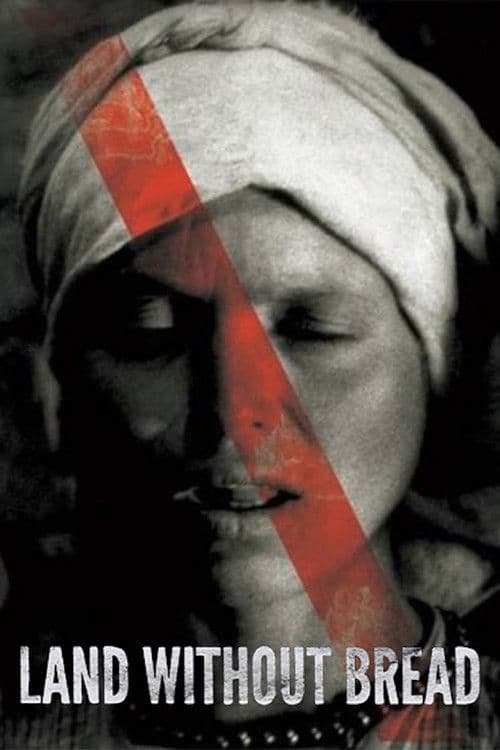
An exploration —manipulated and staged— of life in Las Hurdes, in the province of Cáceres, in Extremadura, Spain, as it was in 1932. Insalubrity, misery and lack of opportunities provoke the emigration of young people and the solitude of those who remain in the desolation of one of the poorest and least developed Spanish regions at that time.
Megacities is a documentary about the slums of five different metropolitan cities.
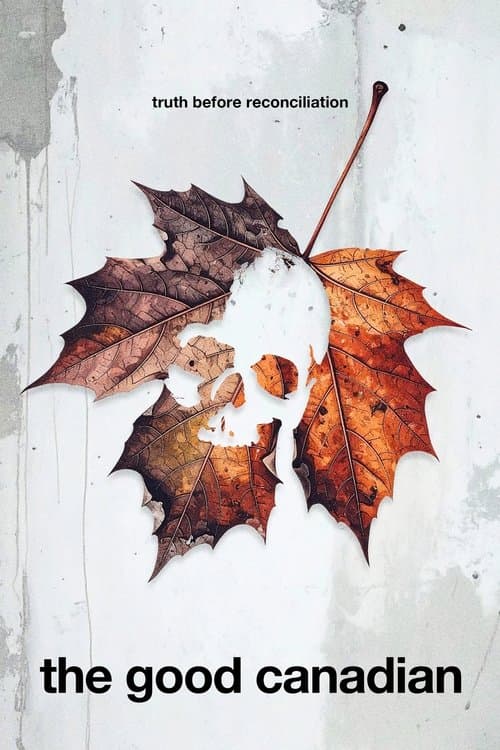
The world knows the image of the good Canadian. But what if there was a dark secret behind a national identity? THE GOOD CANADIAN exposes the truth behind the idea of a True North strong and free. In this unflinching and eye-opening documentary, directors Leena Minifie and David Paperny move us through the corridors of systemic inequity, from the Indian Act to residential schools, to modern-day family separation. Fusing shocking footage with detailed interviews with experts, advocates, whistleblowers and politicians, THE GOOD CANADIAN challenges national myth-making, while offering Canadians the chance to forge a new identity from the truth.
The documentary's title translates as "to be and to have", the two auxiliary verbs in the French language. It is about a primary school in the commune of Saint-Étienne-sur-Usson, Puy-de-Dôme, France, the population of which is just over 200. The school has one small class of mixed ages (from four to twelve years), with a dedicated teacher, Georges Lopez, who shows patience and respect for the children as we follow their story through a single school year.
In the late 1960s, with the triumph of bilingualism and biculturalism, New Brunswick's Université de Moncton became the setting for the awakening of Acadian nationalism after centuries of defeatism and resignation. Although 40% of the province's population spoke French, they had been unable to make their voices heard. The movement started with students-sit-ins, demonstrations against Parliament, run-ins with the police - and soon spread to a majority of Acadians. The film captures the behind-the-scenes action and the students' determination to bring about change. An invaluable document of the rebirth of a people.
In a Europe traumatized by the First World War, educationalists point the finger of blame: the school, which produced “brave soldiers”. The task now is to build peace and develop a new education for a generation of children who, it is hoped, will never wage war again. How can we educate them without surveillance and punishment? How can we help them to emancipate themselves? To make children happy is to make them better adults, according to those who embarked on the adventure. Their names are Rudolf Steiner, Maria Montessori, Célestin Freinet, Alexander S. Neill, Ovide Decroly, Paul Geheeb or Janusz Korczak, each of them inventing educational methods. A Swiss pedagogue, Adolphe Ferrière, brought them together in the Ligue internationale de l'éducation nouvelle.
The joys of 1960s modern education - as seen at a not-exactly-typical local comp.
The Fall of the I-Hotel brings to life the battle for housing in San Francisco. The brutal eviction of the International Hotel's tenants culminated a decade of spirited resistance to the razing of Manilatown. The Fall of the I-Hotel works on several levels. It not only documents the struggle to save the I-Hotel, but also gives an overview of Filipino American history.
This is a story about youth with music. It all happens at the Dandelion School, Beijing’s first middle school specifically established for the children of migrant workers. Every year when new pupils arrive, Ms. Yuan Xiaoyan, who has worked in the school choir for eight years, would choose a group of music-loving first-years with solid musical foundations to join the choir. A new group of children join the choir while those who have advanced to the second year have to discuss with their families their future choices. For choir members, their music career in middle school will eventually stop due to the pressure of high school entrance examinations and the inevitable parting. But along this journey accompanied by music, they have been savoring the joys and sorrows of their youth, burying them deep in their hearts, and transforming them into growth-promoting nutrients.
Self
Trailer