Antonia Quirke looks at the history of the colour film industry to find out who produced the first moving colour images.
No Trailers found.
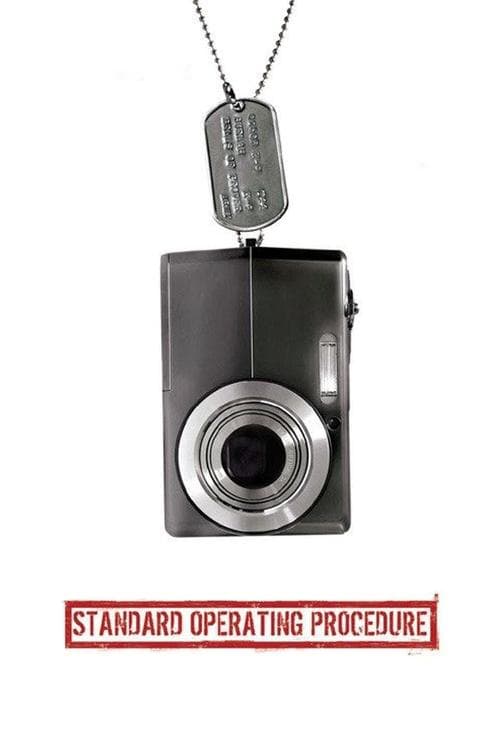
Errol Morris examines the incidents of abuse and torture of suspected terrorists at the hands of U.S. forces at the Abu Ghraib prison.
No overview available.
Shot over five years. A unique document of the creative work of the most representative artist of her generation. She is a painter (she creates a 240 m mural in the film), and a photographer of icons, which reflect everything human that the spirit contains. Life and thought of an essential artist, creator over three decades of an internationally recognized work and deserving of the National Photography Award. “The Look of Ouka Lele” is the story of how the creativity of a genius develops, his passion and his struggle in thought, painting and photography. Art and existence, united by the effort, talent and beauty of a creator in eternal struggle.
A contemplation of art and adventure in the southern wilds of New Zealand by both a landscape photographer and an adventure filmmaker. This film is the unexpected result of their two unique perspectives.
James Andersen: Over 50 Years of Taking Pictures is a culmination of photos, films that are brought to life with Andersen's own words. The James Andersen collection documents over 50 years of community life in and around Makkovik, Labrador. The stories that accompany "Uncle Jim's" work explain why for over 50 years he has never been without a camera as he documented daily rituals and life. Andersen does not shy away from telling these stories but shares them with conviction and with a voice that honours each event's importance; the church being rebuilt, fish being caught, and stories of sickness and death are each told with the same reverence.
The joys of 1960s modern education - as seen at a not-exactly-typical local comp.
A short documentary about Chun, who lives in Vienna.
Paco and Manolo are two Catalan photographers from the outskirts of Barcelona who have been working together for thirty years as if they were a single person, capturing their images in Kink magazine, a very personal photography fanzine with a homoerotic aesthetic of Mediterranean essence.
A glimpse of the pre-history of cinema starting with the projections of Etienne Gaspard Robert (also known as M. Robertson), who used magic lanterns and other optical illusions to develop the genre of the Gothic phantasmagoria in the late eighteenth century.
When the COVID-19 pandemic puts the world on lockdown, photographer Spencer Tunick reinvents his art to find a way to bring everyone together while staying apart.
A journey through the life and outstanding work of the Spanish photographer and filmmaker Ramón Masats.
The Holocaust began with the indiscriminate mass shootings by the Einsatzgruppen in the bloodlands of Eastern Europe and was perfected in the gas chambers at Auschwitz. “Bullets And Blueberries” explores the motives, methods and madness of the perpetrators, using never-before-seen images captured by the killers themselves — images that fully capture the banality of evil.
A photographer explores the seldom noticed architecture in his home town.
Legendary photographer and director Anton Corbijn is responsible for many of the most indelible and important images of the past two and a half decades. His recently released book U2 & I is a photographic retrospective of his 25 year collaboration with U2. Later this year, Anton will direct his first feature film, Control, based on the life of the late Joy Division lead singer Ian Curtis.
Bunny Yeager, 'The world's prettiest photographer', started out as a beauty contest winner and professional photographer's model in the 50's. She became one of America's top ten glamour photographers during the 50's and 60's. This pictorial shows 100 of her most glamorous models, featuring Bettie Page, and includes photographs and original footage of Bunny with the girls behind the scenes.
"Nocturnes at the Golden Gate" - invites us to discover the world and work of Irina Ionesco, a unique figure of contemporary photography. Since the early 70's, she photographer has been working in her apartment near the Porte Dorée, in Paris, principally with the female body. Scraps from the past and elements of the present come together to evoke the coherence and multiple meanings of Irina's baroque universe : the solitude of her Romanian childhood ; her youthful debut in the music hall ; her relationships with her models and her way of building images. Little by little, her work is illuminated and takes on different vibrations, though we have never left the apartment : her workspace, temple and museum.
After she discovers canisters of undeveloped film shot by her late father, Elene sets out on a journey to collaborate with him on a special project. Between the earth and the land of the dead, a darkroom becomes the only dimension where the paths of a father and a daughter can cross.
Bunny Yeager, once heralded as the world's prettiest photographer, had a huge influence in 20th-century pop culture though few people know her name. Whether by popularizing the bikini, helping discover Bettie Page, shaping the image of Playboy or inventing the selfie, Bunny was a trailblazer whose work bucked against conservative 1950s America and helped pave the way for the feminist movement and the sexual revolution. Yet the very changes she helped usher in would soon render her a forgotten relic...till now.
La Garoupe, a beach in Antibes, in 1937. For one summer, the painter and photographer Man Ray films his friends Pablo Picasso, Dora Maar, Paul Eluard and his wife Nusch, as well as Lee Miller. During these few weeks, love, friendship, poetry, photography and painting are still mixed in the carefree and the creativity specific to the artistic movements of the interwar period.
Self - Presenter
Self