In a continuation of her first film We Are Not Speaking the Same Language, Danika explains what it feels like to be displaced Indigenous urban.
No Trailers found.
No Cast found.
Too hot! The spawning fish do not come at the right time and the pepper plants end up dying in this heat. "This is a very different weather that not even the spirits can understand." From their gardens, homes, and backyards, the indigenous women of the Amazon involve us in their vast universe of knowledge while they observe the impacts of climate change in their ways of life.
In the form of a poetic love letter to its nation, this short film reveals a strong community and the anchoring of the new generation in this rich culture.
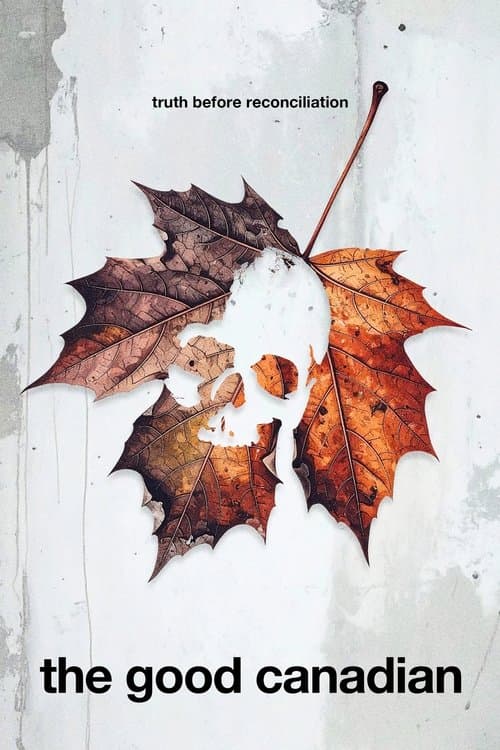
The world knows the image of the good Canadian. But what if there was a dark secret behind a national identity? THE GOOD CANADIAN exposes the truth behind the idea of a True North strong and free. In this unflinching and eye-opening documentary, directors Leena Minifie and David Paperny move us through the corridors of systemic inequity, from the Indian Act to residential schools, to modern-day family separation. Fusing shocking footage with detailed interviews with experts, advocates, whistleblowers and politicians, THE GOOD CANADIAN challenges national myth-making, while offering Canadians the chance to forge a new identity from the truth.
Brayden Olson has spent his life wondering about the father he never knew. Armed with only a name, a faded photograph, and an improbable lead, he sets out across continents to uncover the mystery of Carlos. But as each revelation brings him closer to the truth, Brayden risks unraveling the life he’s always known — especially the bond with the mother who raised him alone. Raw, intimate, and deeply human, Finding Carlos explores identity, family, and the silent epidemic of fatherlessness.
A dive into the origins of two revolutions: the rapid expansion of Hydro-Québec with the construction of the La Grande hydroelectric power plant, a project championed by Premier Robert Bourassa, and the awakening of Indigenous nations. A clash of civilizations where two worldviews collide. Quebec, buoyed by the momentum of the Quiet Revolution, takes control of its destiny. Meanwhile, in the North, young Inuit and Cree rise up for the first time to protect what is most precious to them: their land and their culture. At the heart of the conflict is the James Bay construction site, the largest of its kind in North America.
Part documentary, part drama, this film presents the life and work of Jack Kerouac, an American writer with Québec roots who became one of the most important spokesmen for his generation. Intercut with archival footage, photographs and interviews, this film takes apart the heroic myth and even returns to the childhood of the author whose life and work contributed greatly to the cultural, sexual and social revolution of the 1960s.
Sixty snowmobilers, indigenous and non-indigenous, join forces to take part in a huge snowmobiling expedition: a 3500 km journey to be completed in 16 days. The goal: to cross a large swath of Quebec to work towards reconciliation between peoples. In this choral film, which is as much a physical ordeal as a spiritual and psychological one, the participants take on the mission of raising public awareness of the issues dear to their communities. Through the challenges posed by the weather and the long daily journeys that put the group to the test, a powerful bond is forged between the participants, who face enormous adversity. A journey on the land of ancestors that reveals the strength of togetherness.
Legendary Canadian documentarian Alanis Obomsawin digs into the tangled history of Treaty 9 — the infamous 1905 agreement wherein First Nations communities relinquished sovereignty over their traditional territories — to reveal the deceptions and distortions which the document has been subjected to by successive governments seeking to deprive Canada’s First Peoples of their lands.
After marrying a settler, Mary Two-Axe Earley lost her legal status as a First Nations woman. Dedicating her life to activism, she campaigned to have First Nations women's rights restored and coordinated a movement that continues to this day. Kahnawake filmmaker Courtney Montour honours this inspiring leader while drawing attention to contemporary injustices that remain in this era of truth and reconciliation.
This short documentary depicts the formation in 1959 of the first successful co-operative in an Inuit community in Northern Québec. The film describes how, with other Inuit of the George River community, the Annanacks formed a joint venture that included a sawmill, a fish-freezing plant and a small boat-building industry.
The title of this video, taken from the texts of the architect Kengo Kuma, suggests a way of looking at everything as “interconnected and intertwined” - such as the historical and the present and the tool and the artifact. Images and representations of two structures in the Portland Metropolitan Area that have direct and complicated connections to the Chinookan people who inhabit(ed) the land are woven with audio tapes of one of the last speakers of chinuk wawa, the Chinookan creole. These localities of matter resist their reduction into objects, and call anew for space and time given to wandering as a deliberate act, and the empowerment of shared utility.
No overview available.
Yagorihwanirats, a Mohawk child from Kahnawake Mohawk Territory in Quebec, attends a unique and special school: Karihwanoron. It is a Mohawk immersion program that teaches Mohawk language, culture and philosophy. Yagorihwanirats is so excited to go to school that she never wants to miss a day – even if she is sick.
Sean and Adrian, a Two-Spirit couple, are determined to rewrite the rules of Native American culture through their participation in the “Sweetheart Dance.” This celebratory contest is held at powwows across the country, primarily for heterosexual couples … until now.
Take a breathtaking train a ride through Nothern Quebec and Labrador on Canada’s first First Nations-owned railway. Come for the celebration of the power of independence, the crucial importance of aboriginal owned businesses and stay for the beauty of the northern landscape.
Through ramshackled Nuxalk Radio in Bella Coola, the disappearance of the ooligan reveals a buried history deeper than the river itself.
From the remote Australian desert to the opulence of Buckingham Palace - Namatjira Project is the iconic story of the Namatjira family, tracing their quest for justice.
The testimonies of the Mashteuiatsh Puakuteu women's committee punctuate this intimate short film about mourning and healing. Throughout the doll-making workshops, the women share their doubts and hopes and build a space filled with strength and solidarity.
Western culture treats mental disorders primarily through biomedical psychiatry, but filmmakers Phil Borges and Kevin Tomlinson reveal a growing movement of professionals and survivors who are forging alternative treatments that focus on recovery and turning mental “illness” into a positive transformative experience.
On the morning of October 30, 1995, tension was palpable throughout Quebec. On this Referendum Day, 15 years after René Lévesque chanted "À la prochaine fois!", would the people of Quebec say yes or no to their independence?