No Trailers found.
Narrador
Documentary highlighting clips and providing historical context to surviving silent films from Uzbekistan.
No overview available.
A documentary from Recife that follows the story of five friends, transforming memories into an audiovisual time capsule. Created as a graduation project in Design by Carlos Pontes (UFPE), the film unfolds as a collective letter seeking to eternalize not only memories, but also the intensity and restlessness of those who find in art, friendship, and acceptance a way of existing.
Aníbal Alencastro worked in different cinemas in Mato Grosso in the 1950s and 1960s. Now, he recalls stories related to the job of projectionist.
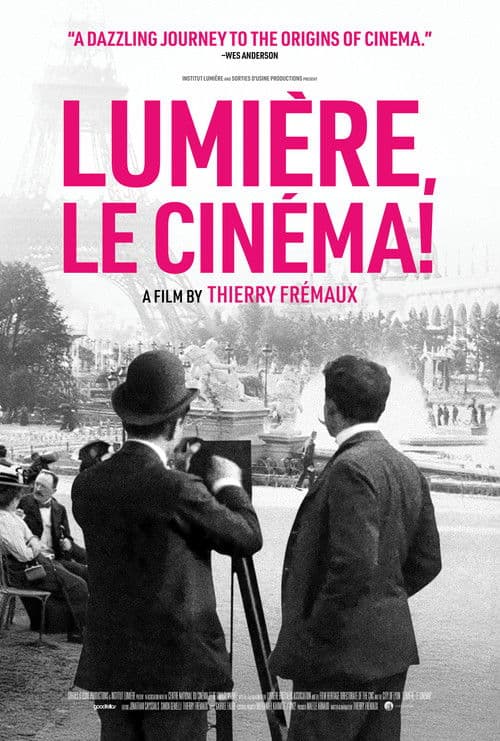
In one of those wonderful coincidences of history, lumière, the French word for “light,” was also the last name of brothers Auguste and Louis, whose brilliant invention, the cinematograph, helped to inaugurate the most beloved art form of the last 130 years. Institute Lumière director Thierry Frémaux uses Lumière, Le Cinema! to guide the viewer through over a hundred shorts—some famous, some forgotten, some never before seen—directed by Lumière and company. In the process, Frémaux illuminates how the brothers employed the camera as a creative instrument as they (and their operators) mastered framing, staging, and subject selection for quotidian and exotic microdocumentaries as well as the first ever fictional motion pictures. The result is not only a glorious re(telling) of the genesis of cinema but a profound meditation on the beautiful world captured—and the mysterious world imagined—by the Lumières.
A walk through the life and work of the brilliant French filmmaker Georges Méliès (1861-1938), pioneer of special and visual effects.
This documentary explores an unknown civilization of the Brazilian Amazon, who risk their lives to protect their forest. In order to save the exploitation of the environment by big corporations, they have to create legal institutions.
The story of Fantômas, the first villain of modernity, from his birth in 1911 as a novel character to his contemporary vicissitudes, passing through Louis Feuillade, André Hunebelle, surrealism and Moscow.
Charlie Chaplin, The Tramp. In this documentary, we will take a look at the life of actor and director Charlie Chaplin, and talk about his films and hidden symbolisms.
The epic life story of Alice Guy-Blaché (1873–1968), a French screenwriter, director and producer, true pioneer of cinema, the first person who made a narrative fiction film; author of hundreds of movies, but banished from history books. Ignored and forgotten. At last remembered.
Throughout the 19th century, imaginative and visionary artists and inventors brought about the advent of a new look, absolutely modern and truly cinematographic, long before the revolutionary invention of the Lumière brothers and the arrival of December 28, 1895, the historic day on which the first cinema performance took place.
"Iwa Wanja - Kissed by Fate, Forgotten by Everyone", is dedicated to the German film star with Bulgarian roots Ivanka Janakieva. The actress's life is full of twists, dramas and blows of fate, and her remarkable film career makes her the only Bulgarian woman with a name in European cinema from its silent period.
A collection of restored prints from the Lumière Brothers.
Documentary on the rise and fall of the Danish silent film industry.
Brazilian documentary about the pioneers Ary Severo (director, screenwriter, actor and screenwriter) and Almery Steves, his wife (actress of famous Recife Cycle films)
From 1920 to 1965, the great Buster Keaton made spectacular use of locomotives in his films. This video essay charts the course of his iconic cinematic career across the many tracks he rode along on screen: as a young man in the surge of his silent movie ascent in Our Hospitality, while making his masterpiece The General, and traversing the width of Canada on a railway speeder car as an old man in The Railrodder.
The first meeting of a U.S. president and a Mexican president took place when William Howard Taft met Porfirio Díaz on 16 October 1909, in El Paso. The meeting was celebrated in both El Paso and Juárez with parades, elaborate receptions, lavish gifts and large crowds. Shot by the pioneers of Mexican Cinema the brothers Alva. This is a typical example of newsreel material prior to the Mexican revolution. By hemerographical references we know that this footage was presented to the then president of Mexico General Porfirio Díaz in the Castle of Chapultepec, then residence of the president.
The epic and poetic tale of the early years of Italian cinema, from 1896 to 1930: how peplum was born, how the first stars shone, how many daring filmmakers were able to create an original style amalgamating literature, theater, painting and opera; a tale of splendor and decadence.