logologo
MovieVerse© 2024
Privacy PolicyTerms of ServiceContact Us
Made with ❤️ by Thathsara
movie poster
The Cinematograph: Birth of an Art
Sign in to create your own watchlist

The Cinematograph: Birth of an Art

Oct 17, 2021
0h 53m
★ 7.2

Overview

Throughout the 19th century, imaginative and visionary artists and inventors brought about the advent of a new look, absolutely modern and truly cinematographic, long before the revolutionary invention of the Lumière brothers and the arrival of December 28, 1895, the historic day on which the first cinema performance took place.

Genres

Documentary
History
TV Movie

Production Companies

ARTE
Beall Productions
Musée d'Orsay

Cast

Vimala Pons

Self - Narrator (voice)

Vimala Pons

Bertrand Lemoine

Self - Architecture Historian

Bertrand Lemoine

Vanessa Schwartz

Self - Art Historian

Vanessa Schwartz

Tacita Dean

Self - Artist

Tacita Dean

Paul Perrin

Self - Painting Curator

Paul Perrin

Mark Lewis

Self - Artist

Mark Lewis

Dominique Païni

Self - Film Curator

Dominique Païni

Marie Robert

Self - Photo Curator

Marie Robert

Thierry Frémaux

Self - Institut Lumière Director

Thierry Frémaux

Christian Petzold

Self - Filmmaker

Christian Petzold

Olivier Assayas

Self - Filmmaker

Olivier Assayas

The Cinematograph: Birth of an Art Trailers

No Trailers found.

You may also like

Figure 1
0.0

Figure 1

Jul 5, 2021

'Figure I' uses a feminist perspective to frame and deconstruct patriarchal techniques of control. This film asks: how was a patriarchal gaze construct-ed, and how has it come to effect biological processes? How have specific tools (like Dürer's Grid) come to shape our technological present and possible futures? Are modern Western scientif-ic/mathematic/technological/medical structures rooted in extractive patriarchal philosophies? 'Figure 1' is composed of re-drawn illustrations of allegorical art historical paintings and etchings, alongside archival footage, Obstetric photography, and rotoscoped animation.

Beyond Tragedies
3.0

Beyond Tragedies

Mar 16, 2022

Recalling his childhood and relationship with his mother, a film student tries to understand the origin of his love for cinema and tragedies.

The Arrival of a Train at La Ciotat
7.1

The Arrival of a Train at La Ciotat

Jun 30, 1896

A group of people are standing along the platform of a railway station in La Ciotat, waiting for a train. One is seen coming, at some distance, and eventually stops at the platform. Doors of the railway-cars open and attendants help passengers off and on. Popular legend has it that, when this film was shown, the first-night audience fled the café in terror, fearing being run over by the "approaching" train. This legend has since been identified as promotional embellishment, though there is evidence to suggest that people were astounded at the capabilities of the Lumières' cinématographe.

Clawing! A Journey Through the Spanish Horror
6.0

Clawing! A Journey Through the Spanish Horror

Jun 20, 2014

In the late sixties, Spanish cinema began to produce a huge amount of horror genre films: international markets were opened, the production was continuous, a small star-system was created, as well as a solid group of specialized directors. Although foreign trends were imitated, Spanish horror offered a particular approach to sex, blood and violence. It was an extremely unusual artistic movement in Franco's Spain.

Coperni : le couple qui révolutionne la mode
8.0

Coperni : le couple qui révolutionne la mode

Oct 5, 2024

No overview available.

A Life for Movies: Lotte Eisner
8.5

A Life for Movies: Lotte Eisner

Feb 24, 2021

Born in Berlin in 1896, Lotte Eisner became famous for her passionate involvement in the world of both German and French cinema. In 1936, together with Henri Langlois, she founded the Cinémathèque Française with the goal of saving from destruction films, costumes, sets, posters, and other treasures of the 7th Art. A Jew exiled in Paris, she became a pillar of the capital's cultural scene, where she promoted German cinema.

Nothing is Forgiven
0.0

Nothing is Forgiven

Jan 3, 2019

The story of Zineb El Rhazoui, a young Moroccan woman who, in the wake of the Charlie Hebdo attack, finds her life radically transformed : from a censored journalist in Morocco she becomes the most protected woman of France.

Queen Margot
7.2

Queen Margot

May 13, 1994

Paris, Kingdom of France, August 18, 1572. To avoid the outbreak of a religious war, the Catholic princess Marguerite de Valois, sister of the feeble King Charles IX, marries the Huguenot King Henry III of Navarre.

Klimt & The Kiss
8.0

Klimt & The Kiss

Oct 30, 2023

The Kiss by Gustav Klimt is one of the most recognised and reproduced paintings in the world. It is perhaps the most popular poster on student dorm walls from Beijing to Boston. Painted in Vienna around 1908, the evocative image of an unknown embracing couple has captivated viewers with its mystery, sensuality and dazzling materials ever since it was created. But just what lies behind the appeal of the painting – and just who was the artist that created it? Delving into the details of real gold, decorative designs, symbolism and simmering erotica, a close study of the painting takes us to the remarkable turn of the century Vienna when a new world was battling with the old.

Locations: Looking for Rusty James
3.0

Locations: Looking for Rusty James

Aug 30, 2013

A personal meditation on Rumble Fish, the legendary film directed by Francis Ford Coppola in 1983; the city of Tulsa, Oklahoma, USA, where it was shot; and its impact on the life of several people from Chile, Argentina and Uruguay related to film industry.

End of the Commune?
8.0

End of the Commune?

Jun 5, 1970

A documentary about Fassbinder and the early years of the legendary Antiteater, the group he was a member/leader of. You can here see and hear some of the actors he was going to use in his movies for the next years. The movie shows rehearsals for his play "The Coffeehouse," which also became a television movie, and you can watch unique footage from the 19th Film Festival in Berlin (1969) where "Love is Colder Than Death" was shown. As told in this documentary, his first feature movie was given a cold shoulder by many of the journalists and visitors at the festival. You can in "End of the Commune" watch Fassbinder and actor Ulli Lommel walk out on stage after the opening of "Love is Colder Than Death,” while a man in the audience is shouting "Out with the director!” In this documentary, Fassbinder also talks a lot about his father, who was a respectable doctor.

Lust for Life
7.2

Lust for Life

Sep 15, 1956

An intense and imaginative artist, revered Dutch painter Vincent van Gogh possesses undeniable talent, but he is plagued by mental problems and frustrations with failure. Supported by his brother, Theo, the tormented Van Gogh eventually leaves Holland for France, where he meets volatile fellow painter Paul Gauguin and struggles to find greater inspiration.

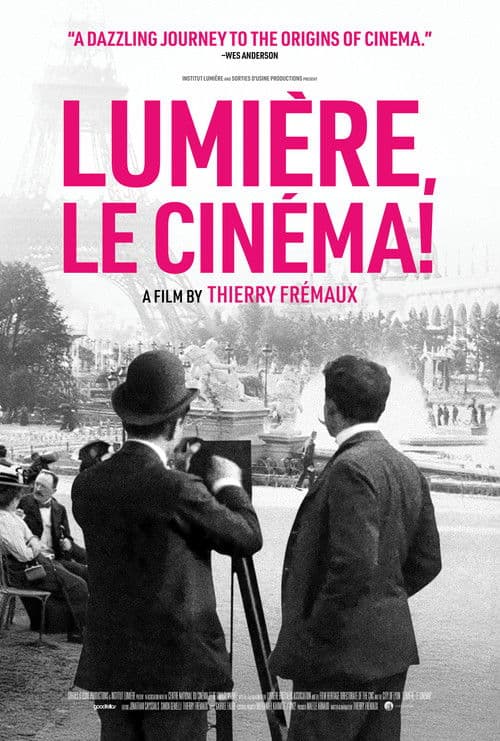
Lumière, Le Cinéma!
7.0

Lumière, Le Cinéma!

Nov 22, 2024

In one of those wonderful coincidences of history, lumière, the French word for “light,” was also the last name of brothers Auguste and Louis, whose brilliant invention, the cinematograph, helped to inaugurate the most beloved art form of the last 130 years. Institute Lumière director Thierry Frémaux uses Lumière, Le Cinema! to guide the viewer through over a hundred shorts—some famous, some forgotten, some never before seen—directed by Lumière and company. In the process, Frémaux illuminates how the brothers employed the camera as a creative instrument as they (and their operators) mastered framing, staging, and subject selection for quotidian and exotic microdocumentaries as well as the first ever fictional motion pictures. The result is not only a glorious re(telling) of the genesis of cinema but a profound meditation on the beautiful world captured—and the mysterious world imagined—by the Lumières.

Army of Crime
6.4

Army of Crime

Sep 16, 2009

This gripping historical drama recounts the story of Armenian-born Missak Manouchian, a woodworker and political activist who led an immigrant laborer division of the Parisian Resistance on 30 operations against the Nazis in 1943. The Nazis branded the group an Army of Crime, an anti-immigrant propaganda stunt that backfired as the team's members became martyrs for the Resistance.

Paris Black Night
0.0

Paris Black Night

Jan 1, 1990

No overview available.

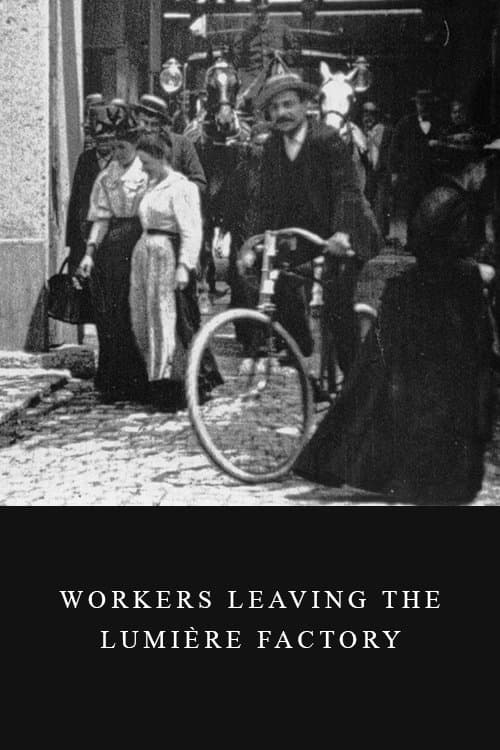
Workers Leaving the Lumière Factory
6.7

Workers Leaving the Lumière Factory

Mar 22, 1895

Working men and women leave through the main gate of the Lumière factory in Lyon, France. Filmed on 22 March 1895, it is often referred to as the first real motion picture ever made, although Louis Le Prince's 1888 Roundhay Garden Scene pre-dated it by seven years. Three separate versions of this film exist, which differ from one another in numerous ways. The first version features a carriage drawn by one horse, while in the second version the carriage is drawn by two horses, and there is no carriage at all in the third version. The clothing style is also different between the three versions, demonstrating the different seasons in which each was filmed. This film was made in the 35 mm format with an aspect ratio of 1.33:1, and at a speed of 16 frames per second. At that rate, the 17 meters of film length provided a duration of 46 seconds, holding a total of 800 frames.

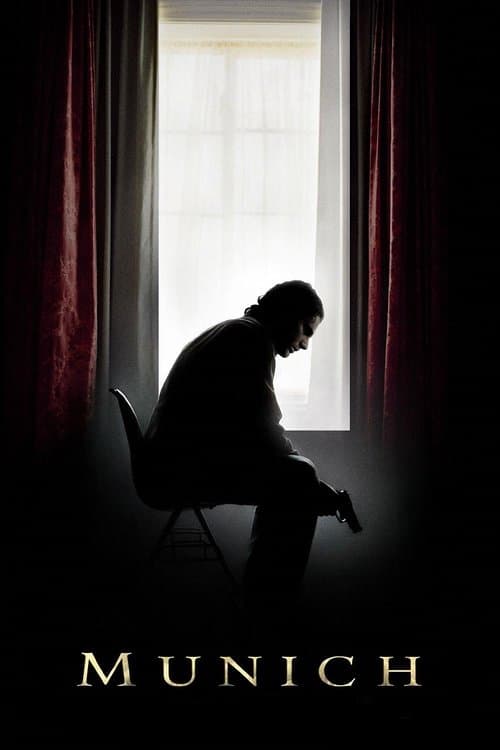
Munich
7.1

Munich

Dec 23, 2005

During the 1972 Olympic Games in Munich, eleven Israeli athletes are taken hostage and murdered by a Palestinian terrorist group known as Black September. In retaliation, the Israeli government recruits a group of Mossad agents to track down and execute those responsible for the attack.

Is Paris Burning?
7.2

Is Paris Burning?

Oct 26, 1966

Near the end of World War II, General Dietrich von Choltitz receives orders to burn down Paris if it becomes clear the Allies are going to invade, or if he's unable to maintain control of the city. After much contemplation, Choltitz ignores orders, enraging the Germans and giving hope to various resistance factions that the city will be liberated. Choltitz, alongside Swedish diplomat Raoul Nordling, helps a leader organise his forces.

Aurélien
7.5

Aurélien

May 10, 2003

France, 1920s: An affluent ladies' man finds himself in love with a homely married woman.

No Image
0.0

Omnibus: François Truffaut

Dec 2, 1973

No overview available.