Atlanta History Center explores the controversial history of the Stone Mountain carving through a documentary film and online resources.
The story behind the growth of women's and girls' volleyball in the United States and how it continues to bolster and empower young women in their development. Featuring direct interviews with players, coaches, and families, as well as footage of the 2022 Big South Qualifier tournament.
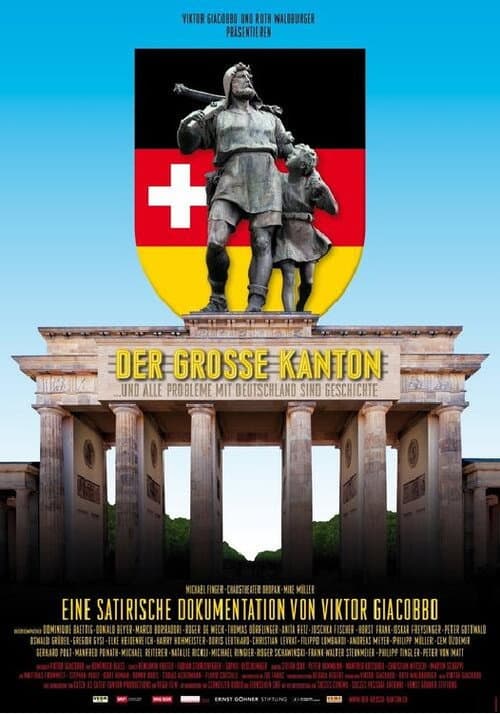
Is the solution to Switzerland's future to integrate Germany into the confederation? After all, like Michael Ringier, CEO of the Ringier media group, says, blithely ignoring all minorities, we're very close in culture and language. Oskar Freysinger takes out his guitar and sings his answer. Politicians from French-speaking Switzerland and Ticino think expanding will help the country survive. The former German foreign minister thinks the two countries' traditions are too different. The banker Oswald Grübel is worried about Germany's debts, although he'd be prepared to take over its assets. With serious interviews interspersed with gags (boat people on Lake Constance, the last Habsburger as a peasant), Giaccobbo gathers off-the-cuff reactions which reveal a lot about the different mentalities. The movie laughs at preconceived notions, redefines neutrality and reflects on what designates a nation. Switzerland, which loves to teach the world a lesson, will soon helvetize the planet, oder?
Using over 100 years of archival footage, director Sierra Pettengill explores the history of the largest Confederate monument, Georgia’s Stone Mountain.
The Gateway Arch: A Reflection of America chronicles for the first time the complete story of this great American symbol… from Thomas Jefferson, Lewis & Clark, and St. Louis’ role in westward expansion; to the eventual construction of the largest stainless steel structure in history.
Four peoples’ lives are brought together by the opioid crisis in a small Georgia city. A seasoned firefighter saves the life of a young woman looking for purpose, while grieving parents fight to provide the support their son struggled to find.
In the midst of a publishing revolution, The Atlanta Journal-Constitution, one of America's most storied institutions of journalism, is experimenting with new tools to tell stories in preparation for the end of print in the digital era.
On the occasion of the fourty years anniversary of François Mitterand's election, a look back to the relationship between the President and artists, from admiration to manipulation.
One man's hat is another man's treasure when it comes to the importance and significance of saving items of historic value.
Four Black transgender sex workers in Atlanta and New York City break down the walls of their profession.
On April 12th, 1864, at an insignificant little fort, several hundred black Union soldiers fought a hopeless battle against a Confederate general who was destined to become the first Grand Wizard of the KKK. This battle had a domino effect, trickling down the long road of history. Today, it is just a footnote in most history books; however, no other event of the Civil War has had such a profound impact on the twentieth century, especially on American culture.
Centered around the inspirational friendship of icons Andrew Young and Billy Payne—the most successful Black and White partnership in the American South in the civil rights era—“The Games in Black & White” presents the first comprehensive look at Atlanta’s Olympics from bid to legacy and the city’s transformation that followed.
This film was made out of the capture of a live animation performance presented in Rome in January 2005 by Pierre Hébert and the musician Bob Ostertag. It is based on live action shooting done that same afternoon on the Campo dei Fiori where the philosopher Giordano Bruno was burned by the Inquisition in 1600. A commemorative statue was erected in the 19th century, that somberly dominate the market held everyday on the piazza. The film is about the resurgence of the past in this place where normal daily activities go on imperturbably. The capture of the performance was reworked, shortened and complemented with more studio performances.
Cabin Fever was an innovative recording session where Before The Frost... Until The Freeze was recorded over a series of five nights at Levon Helm Studios. The sessions were filmed in front of an intimate live audience and allows the viewer into the recording studio with the band. Songwriting sessions are revealed and lots of never before seen banter and behind the scenes footage is shown.
The pride of Napoleon's victories, the Arc de Triomphe, whose first stone was laid in 1806 at the top of the Champs-Élysées, is, along with the Eiffel Tower, one of the most visited monuments in the French capital. Wanted by an emperor, inaugurated under the reign of a king (Louis-Philippe) and sanctuarized by the Republic, this patriotic temple polarizes the passions of a whole nation. A historical portrait before "packaging", which teems with anecdotes and unsuspected details.
How would you feel if the state sold the mountain above your village to a big multinational, your country's beautiful islands, its beaches or your great monuments? Strangled by debt, governments and public administrations all over Europe act like any indebted family: they try not only to reduce costs, but attempt to replenish their coffers by putting their most valued family possessions on the market. More often than not, this includes part of the countries' historical and natural heritage: castles, islands, mountains, beaches, palaces, ancient arenas and archaeological sites. But who really owns these properties? Aren't they our common heritage, our history that will end up in private or corporate hands and will no longer be accessible to all? Or is the private sector more efficient in managing these properties? And if so, who decides on the best deal? Are there democratic proceedings for the sale of our common good? The people of Europe want accountability.
“Olive” is a short documentary that follows Olive Hagemeier, an energetic woman, on her daily routine of salvaging, repackaging and redistributing food, and occasional other types of “waste”, across Atlanta, GA. Presented in a quiet observational style, this film is both a character study of a committed and enigmatic volunteer, as well as an ethnographic work that places the audience in the heart of a decentralized, volunteer-run mutual aid network in a “post-COVID” American city.
A backstage and on-stage look at Nicki Minaj's career during the Pink Friday Tour, festivals, and more.
The crew and friends of Atlanta skateshop Stratosphere skateboards' original skate video.
A celebratory exploration of the boisterous times of Freaknik, the iconic Atlanta street party that drew hundreds of thousands of people in the 80s and 90s, helping put Atlanta on the map culturally.
Just after Isidore moves to France to study filmmaking, his best friend dies back in the US. Through documentary, performance, and animation, a ghostly portrait emerges, prompting Isidore to question his relationships with his parents and his boyfriend in Paris.
Trailer