Florian
Tony
No Trailers found.
Lopitos, who is horribly inefficient but quick-witted, is invited (because of the current ambassador's superstition about 13 sitting down to a meal) to a banquet attended by the ambassadors of both superpowers. After the news of a series of coups d'état in Los Cocos arrives throughout the meal, Lopitos becomes the official ambassador. At a summit of world leaders, the representatives of the two world superpowers court the allegiances of third-world diplomats to tilt the balance of global power in their favor. The last diplomat to remain unaligned, Lopitos instead harangues the superpowers for infringing on the rights of developing countries to self determination, talking to them with his point of view as a citizen not as ambassador because he arranged his demise as ambassador one day before his speech.
Sasha is a young vampire with a serious problem: she's too sensitive to kill. When her exasperated parents cut off her blood supply, Sasha's life is in jeopardy. Luckily, she meets Paul, a lonely teenager with suicidal tendencies who is willing to give his life to save hers. But their friendly agreement soon becomes a nocturnal quest to fulfill Paul's last wishes before day breaks.
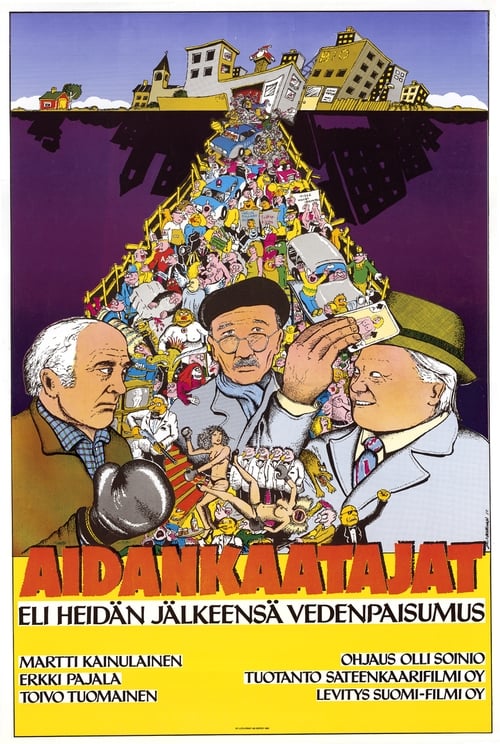
Three old men escape from the hospital and travel to Turku in search of one of the mens daughter
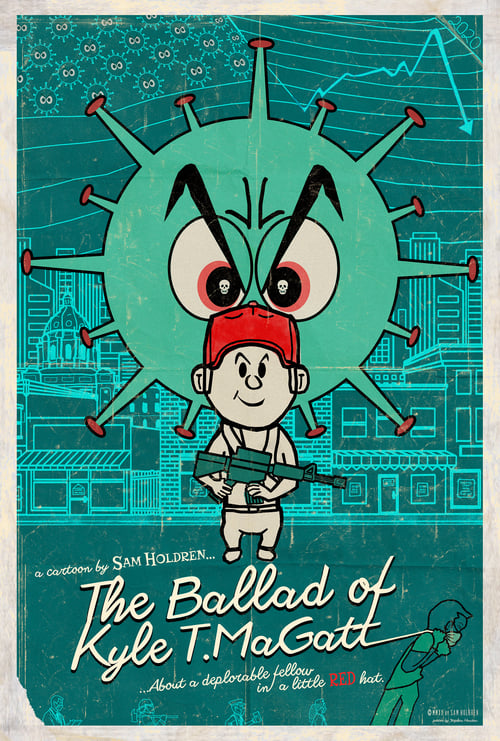
Aided by powers from a little red hat / A deplorable fellow named Kyle MaGatt / Goes hunting for Covid to save the economy / To become the hero Americans should see. / But will he succeed in this arduous task? / Or will he be forced to wear a mask?
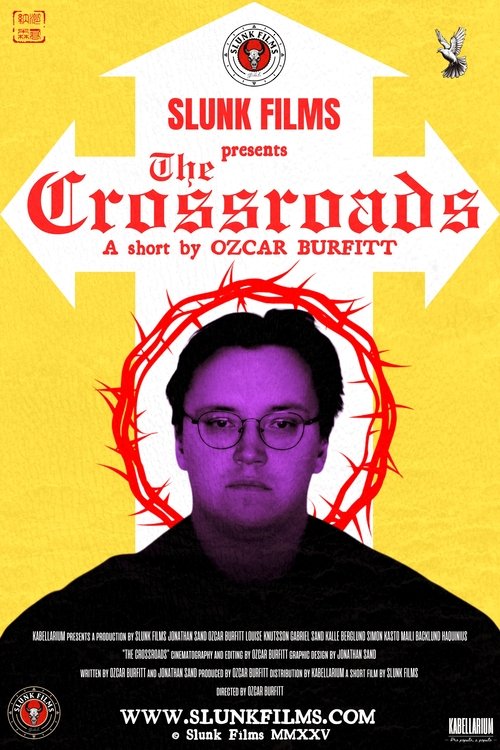
Roman Catholic priest Anders has begun to doubt his role as a clergyman due to past misfortunes and experiences when the phone at the parish hall suddenly rings.
The story of two homeless brothers and their ambitious dreams of becoming race car drivers. Amidst a harsh reality where they are invisible to society, they embark on a journey of personal development that tests the strength of their love for their dreams, challenging what the world expects of them and showcasing the love of hope and unity.
In the center of Hamburg, the discovery of an unexploded bomb from the Second World War not only leads to a far-reaching evacuation, but also to an interpersonal state of emergency.
A group of French soldiers, including the patrician Captain de Boeldieu and the working-class Lieutenant Maréchal, grapple with their own class differences after being captured and held in a World War I German prison camp. When the men are transferred to a high-security fortress, they must concoct a plan to escape beneath the watchful eye of aristocratic German officer von Rauffenstein, who has formed an unexpected bond with de Boeldieu.
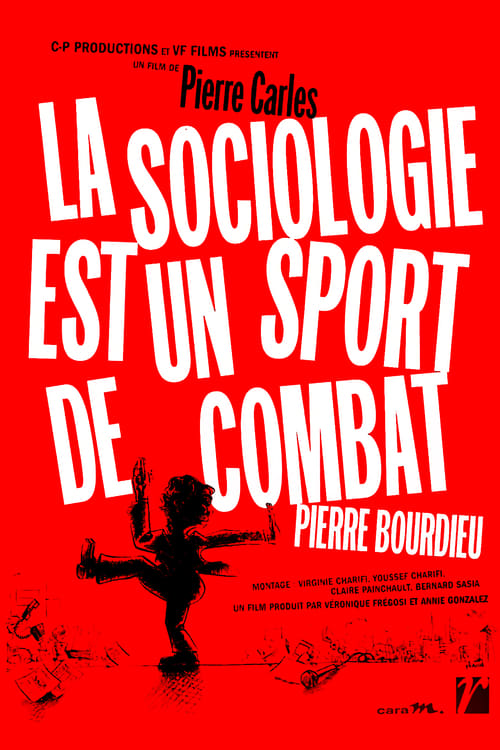
"I often say sociology is a martial art, a means of self-defence. Basically, you use it to defend yourself, without having the right to use it for unfair attacks." (Pierre Bourdieu) The world has witnesses who speak out loud what others keep to themselves. They are neither gurus, nor masters, but those who consider that the city and the world can be thought out. The sociologist, Pierre Bourdieu is one such witness." Over a three- year period, Pierre Carles' camera followed him through different situations: a short conversation with Günter Grass, a lively conference with the inhabitants of a working-class suburb, his relations with his students and colleagues and his plea that sociology be part of the life of the city. His thinking has a sort of familiarity, which means it is always within our reach. It is the thinking of a French intellectual who has chosen to think his times.
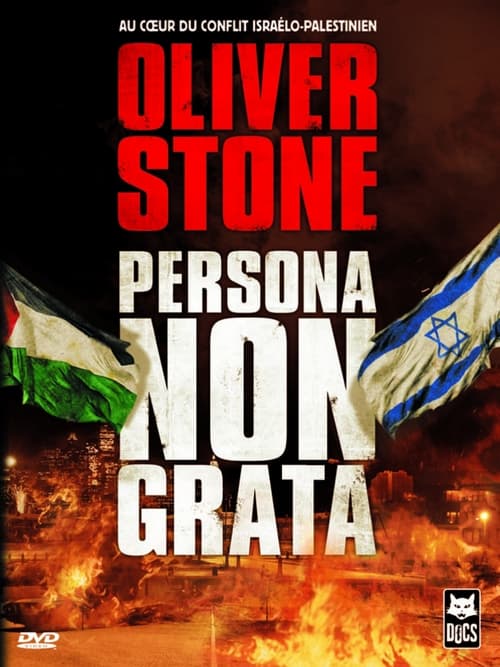
2003 documentary film produced by Oliver Stone for the HBO series America Undercover about the conflict in occupied Palestine. He speaks with Ehud Barak and Benjamin Netanyahu, former prime ministers of Israel, Yasser Arafat, late president of the Palestinian National Authority, and various Palestinian activists resisting the oppression of the zionist regime.
The debate in France about the abortion laws in 1974.
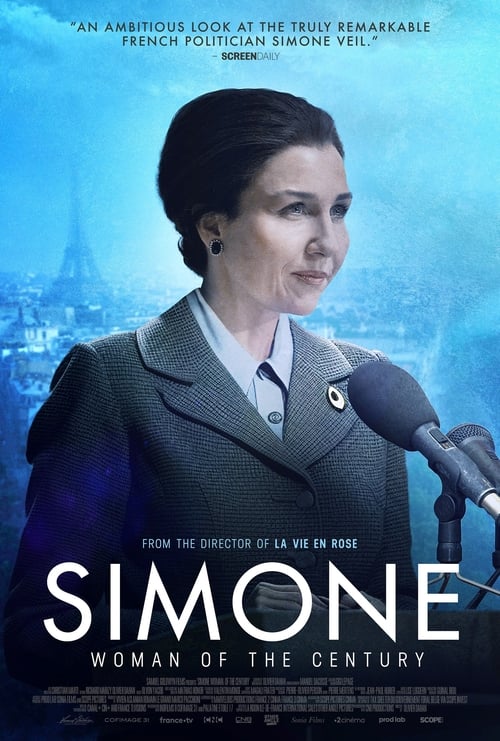
Simone Veil's life story through the pivotal events of Twentieth Century. Her childhood, her political battles, her tragedies. An intimate and epic portrait of an extraordinary woman who eminently challenged and transformed her era defending a humanist message still keenly relevant today.
No overview available.
A hero of revolution returns to civilian life to find the new society very different from the ideals he fought for.
"Well, I believe in anarchy! And I believe it will come true one day." That's what "May the Rebel," a union activist, anti-militarist, and anarchist, always ready to denounce oppression and defend victims, affirms at 85. Born in Brittany, she earned her living at age 10 delivering butter. In Paris, at 20, she became involved with the Anarchist Union. Sébastien Faure became her mentor. She used a grenade to trigger the Sacco-Vanzetti affair. A union delegate in Moscow in 1922, she sang "Hymn to Anarchy" before Trotsky. Children during the Spanish Civil War, Jews during the Second World War, conscientious objectors alongside Louis Lecoin during the Algerian War, and later, through her newspaper Le Réfractaire, the Larzac, Plogoff, and Creys-Malville protests—all these were battlegrounds for May Picqueray. To the very end, she remained true to her commitment to defending peace and individual liberties.
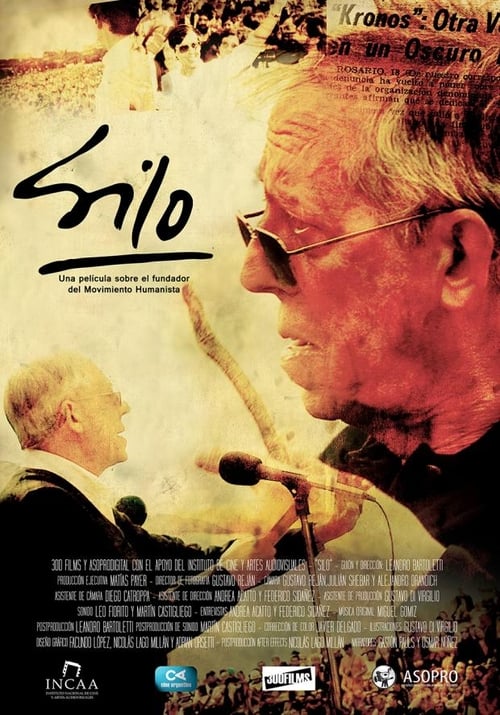
The best kept secret of The Andes will be revealed… For some, he is the thinker that set in motion a spiritual and political movement that passed through borders and extended from Argentina to India. For other, he is the leader of a sect, a skillful manipulator and demagogue. For most, he is still a mystery. Through this feature length documentary film we try to tell the life and work of this extraordinary person, posing a disturbing question: Who is Silo?
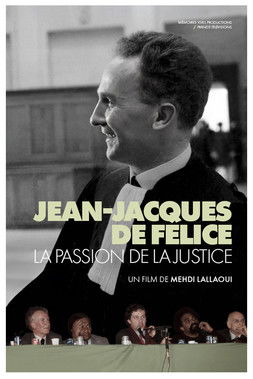
From the rights of minors before the juvenile court, young offenders from the neighborhoods of eastern Paris, or children of Algerian origin from the shantytowns of Nanterre, to the defense of colonized Kanaks and Polynesians; from the fight for conscientious objector status to the denunciation of torture and the death penalty, lawyer Jean-Jacques de Félice has been involved in every struggle. His pacifism knows no bounds: with organizations like Cimade, LDH, and the Louis-Lecoin Committee, he assists draft dodgers in numerous countries. These include Portuguese conscientious objectors refusing to fight in the wars in Angola and Mozambique, American deserters opposed to the Vietnam War, and Israeli objectors refusing to serve in the Occupied Territories. It is no surprise that, as early as 1971, he was one of the very first lawyers representing the farmers of the Larzac plateau.
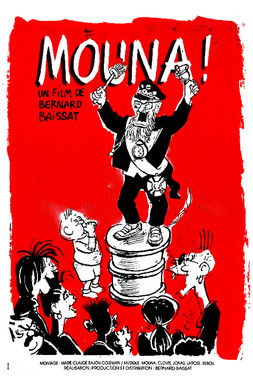
Everyone knows Aguigui Mouna, the jester who harangues the crowds on the Beaubourg esplanade in Paris and rides his bicycle through demonstrations. But many don't know the story of André Dupont, a Savoyard raised in tough conditions, forced into violence in the navy to rise to power and into resourcefulness in civilian life to survive. Antibes, 1952, the transformation: Aguigui Mouna is born. Laughter, solidarity, non-violence, humanism—Mouna has found the meaning of his existence. He will try to share them with all the robots of this "poop-pee-capitalist" society. A comic book character who, through his adventures, reveals the absurdities of his century.